Three major geopolitical developments in 2025 have fundamentally altered Europe’s international position, transforming the continent from aspiring strategic player into subordinate partner dependent on external powers. These interconnected challenges—military defeat in Ukraine, technological subordination to China, and economic capitulation to the United States—reveal structural vulnerabilities that decades of integration failed to address, leaving Europe with diminished influence precisely when global competition intensifies.
Ukraine Conflict and European Military-Industrial Aspirations
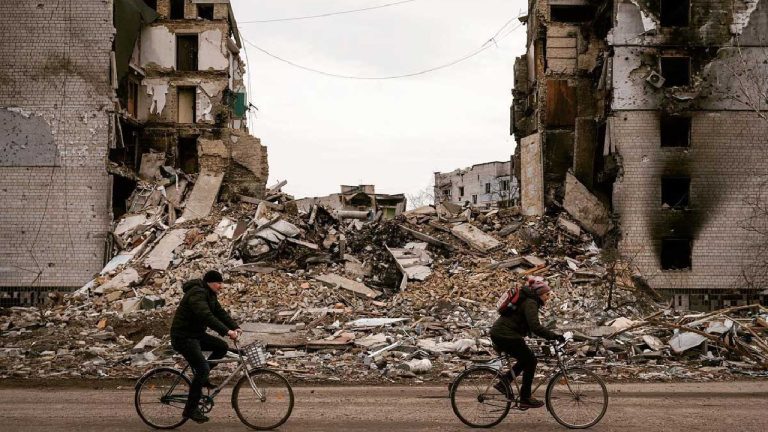
Europe’s support for Ukraine throughout the 2022-2025 conflict embodied a fundamental contradiction that ultimately proved fatal to its strategic objectives. While peace negotiations remain ongoing in December 2025, with Russia characterizing US-led talks as “constructive” and Ukrainian officials indicating acceptance of frameworks that would require territorial concessions, the trajectory clearly favors Russian objectives.
Trump’s 28-point peace plan, developed by envoys Steve Witkoff and Jared Kushner, proposes substantial Ukrainian compromises including territorial concessions in Donbas, military size limitations, and explicit renunciation of NATO membership. Chatham House analysts characterized the plan as “transmission of surrender demands from Russia with active US facilitation” rather than genuine negotiations, while CNN reports indicate negotiations center on security guarantees rather than territorial restoration.
European governments committed rhetorically to Ukrainian victory while providing insufficient resources to achieve that outcome. This approach served a dual domestic function: military Keynesianism offered a politically acceptable rationale for deficit-financed industrial policy in economies constrained by fiscal orthodoxy, while perpetuating the conflict sustained defense procurement that traditional European political coalitions had blocked. The European Union agreed to provide €90 billion for Ukraine over two years, yet this funding aimed to manage rather than resolve the conflict.
The impending settlement leaves Europe without the geopolitical justification for its nascent military-industrial expansion while facing questions about future defense posture. Whether Russia continues representing a direct military threat to Europe or not, the conflict’s conclusion removes the pretext for extraordinary defense expenditures that European publics might otherwise resist. The contradiction between promoting indefinite conflict for domestic economic reasons and achieving decisive outcomes for strategic purposes proved irreconcilable, leaving Europe with neither military credibility nor industrial momentum.
China’s Technological Advance and Supply Chain Dominance
The intensification of US-China technological competition in 2025 unexpectedly positioned Europe as the primary casualty rather than participant. Washington’s strategy combined aggressive tariff barriers to restrict Chinese market access with comprehensive embargoes on advanced semiconductors and fabrication equipment intended to cripple China’s technological development. The US imposed tariffs up to 145% on Chinese semiconductors while China retaliated with 125% tariffs and rare earth export restrictions.
China’s response proved remarkably effective through a two-pronged strategy. First, Beijing weaponized its dominance over rare earth elements and critical minerals, triggering supply chain disruptions that affected European and East Asian manufacturing more severely than American production. Second, China mobilized its “whole-nation system” toward technological autarky, producing breakthroughs that rendered Western embargoes counterproductive. SMIC and Huawei achieved advances in domestic chip production despite Taiwan adding both companies to export blacklists in June 2025.
While technical assessments indicate SMIC remains three generations behind TSMC, with 7nm production far inferior to TSMC’s 2nm capabilities, China’s progress toward targeted 50% semiconductor self-sufficiency by 2025 demonstrates resilience against Western restrictions. Research from Peking University in March 2025 announced 2D transistor breakthroughs operating 40% faster than TSMC’s 3nm devices while consuming 10% less energy, suggesting alternative technological pathways circumventing silicon-based limitations.
Europe’s position deteriorated catastrophically as Brussels dutifully implemented US-dictated sanctions against China without securing compensatory benefits. European manufacturers faced exclusion from the lucrative Chinese market for high-value goods while receiving none of the subsidies or onshoring benefits promised under the now-rescinded US Inflation Reduction Act. By functioning as a strategic subcontractor to Washington rather than pursuing independent positioning, Europe accelerated its own deindustrialization. This represented not merely a loss in trade competition but a geopolitical checkmate where Europe featured only as the losing side’s expendable piece.
US-EU Trade Agreement and Capital Extraction
The July 2025 trade agreement reached between Trump and von der Leyen in Scotland codified Europe’s subordinate economic status through what amounted to an unprecedented capital extraction treaty. The framework imposed 15% tariffs on most European exports while eliminating existing EU tariffs on US goods, representing a substantial reversal from the 1.2% average pre-existing US tariffs. Certain sectors received exemptions including aircraft, generic pharmaceuticals, and unavailable natural resources, yet core European exports including automobiles faced the full 15% levy.
Beyond tariff asymmetry, the agreement mandated $600 billion in European investment in US industry alongside commitments to purchase $750 billion in American energy—capital that can only derive from diverting primarily German investments from domestic projects to chemical facilities in Texas and automotive plants in Ohio. Von der Leyen portrayed the $600 billion figure as aggregation of existing corporate pledges, yet the formalization of these commitments within a binding framework constrains European capital allocation for years.
The agreement’s negotiation process itself demonstrated power asymmetries. Trump threatened 30% tariffs with an August 1 deadline, forcing von der Leyen to Scotland where choreography maximized her apparent supplication. European negotiators had determined 15% represented Trump’s minimum acceptable figure, abandoning earlier proposals for zero-for-zero tariff elimination. The final framework established Europe as a capital source, regulated market for US goods, and technologically dependent junior partner—transitions formalized through binding commitments stripping the bloc of sovereignty pretenses.
Atlantic Council analysis characterizes the agreement as pushing the EU farther from its longtime partner despite preventing immediate trade war escalation. Substantial ambiguities remain regarding pharmaceutical tariffs, steel quotas, and sector-specific investigations, suggesting prolonged negotiations that favor the party with greater leverage. Part of the capital Trump requires for consolidating a G2 world structured around the Washington-Beijing axis now flows contractually from Europe westward.
Synergistic Deterioration and Strategic Implications
These three developments compound each other’s effects. Europe’s Ukraine defeat revealed strategic blind spots while puncturing military Keynesian projects. Trump’s China accommodation triggered Chinese export floods toward EU markets. The Scotland capitulation extracted European capital while extinguishing hopes for transatlantic parity.
The emerging G2 framework positions the EU and UK wandering within an arena dominated by Washington-Beijing competition. Europe lacks both military capacity for independent security and economic dynamism for technological leadership, while political institutions prove incapable of coordinating systemic responses.
Strategic dependency has revealed itself as prelude to irrelevance within contemporary great power competition. Europe’s 2025 choices—prolonging Ukrainian conflict for domestic economics, implementing American sanctions without benefits, accepting asymmetric trade terms—reflected tactical calculations sacrificing long-term positioning, leaving the continent facing the 2030s with diminished leverage during fundamental global transformation.
Original analysis by Yanis Varoufakis from Project Syndicate. Republished with additional research and verification by ThinkTanksMonitor.