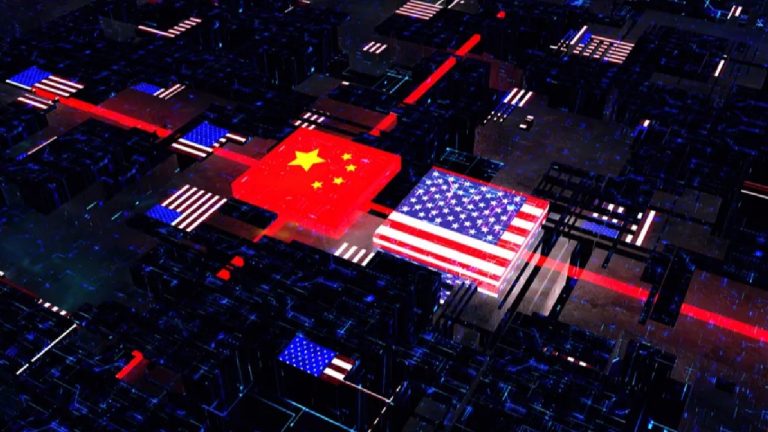
The escalating competition between Washington and Beijing over nuclear fusion technology has emerged as a defining element of 21st-century geopolitical rivalry, with implications extending far beyond energy policy into artificial intelligence capabilities, military applications, and global economic dominance. Recent developments suggest China’s fusion investments have reached at least $6.5 billion since 2023, nearly tripling the funding allocated to the US Department of Energy’s fusion program during the same period.
This technological competition coincides with surging energy demands from artificial intelligence infrastructure, creating urgent pressure for both nations to develop viable commercial fusion power. The stakes have intensified substantially in recent months, with China’s Experimental Advanced Superconducting Tokamak achieving a record 1,000-second plasma containment in January 2025, demonstrating unprecedented operational capabilities that challenge American technological preeminence. Fusion energy—the same process powering the sun—promises virtually limitless clean power without the long-term radioactive waste of conventional nuclear fission or the intermittency challenges of renewable sources.
The strategic significance extends beyond energy security. Whichever nation achieves commercial fusion viability first will likely establish technological standards, dominate supply chains, and shape the global fusion industry for generations. This pattern mirrors previous technological competitions in solar panels, electric vehicles, and semiconductors, where early advantages compounded into dominant market positions.
China’s Comprehensive Fusion Infrastructure Advantage
Beijing’s systematic approach has positioned China ahead in several critical metrics. Satellite imagery from January 2025 reveals a massive laser fusion facility in Mianyang with a containment dome twice the size of America’s National Ignition Facility. The Comprehensive Research Facility for Fusion Technology completed in 2025 enables coordinated development across multiple fusion approaches simultaneously.
March 2025 saw China’s HL-3 tokamak achieve dual temperatures exceeding 100 million degrees Celsius, meeting crucial thresholds for sustained reactions. China’s establishment of the state-owned China Fusion Energy Company with $2.1 billion in capital demonstrates Beijing’s integrated strategy linking government resources, industrial capacity, and scientific research.
America’s Response: Private Capital and Federal Reorganization
The United States has mobilized through private sector investment and federal restructuring. Private investment in US fusion startups surged to over $8 billion from $1.2 billion in 2021, funding ambitious projects including Commonwealth Fusion Systems’ SPARC tokamak.
The Department of Energy’s Fusion Science and Technology Roadmap released in October 2025 established a Build-Innovate-Grow strategy targeting commercial fusion by the mid-2030s. The creation of a standalone Office of Fusion elevated fusion development beyond basic research programs, with bipartisan legislation seeking to codify this office.
December 2025 brought the most dramatic development: Trump Media & Technology Group’s $6 billion merger with TAE Technologies. This deal provides TAE with up to $300 million and creates plans for a 50-megawatt utility-scale fusion plant beginning construction in 2026.
Critical Disparities in Talent and Supply Chains
Despite American capital advantages, China produces ten times more doctoral graduates in fusion science and holds more fusion patents than any other nation. This talent gap threatens long-term competitiveness as Western companies compete for finite labor pools.
Supply chain vulnerabilities present strategic challenges. Fusion requires specialized components—high-power magnets, advanced semiconductors, rare earth elements—where China is actively working to lock down the supply chain. Helion Energy identified semiconductor availability as the primary constraint on its prototype timeline, illustrating how material bottlenecks delay even well-funded projects.
Artificial Intelligence and Energy Security Nexus
The fusion race intensified due to exponential AI energy demands. Tech giants constructing massive data centers create urgent pressure for new energy sources. Deloitte’s analysis indicates AI energy needs are “growing exponentially,” making fusion critical for AI supremacy.
This connection explains strategic calculations driving investments. Advanced AI requires enormous computational resources demanding reliable, high-density power. Nations achieving commercial fusion first will possess advantages in AI development, creating leads across autonomous systems, advanced materials, and military applications. As one analyst noted, “while the US is ahead in AI technology, China leads on the energy front with a major surplus.”
Geopolitical Implications and Strategic Path Forward
Fusion development carries profound regional security implications, particularly in the Indo-Pacific. Chinese fusion success would eliminate energy supply vulnerabilities, fundamentally altering strategic calculations regarding Taiwan, maritime territorial disputes, and regional military deployments. Energy independence has long been central to Chinese strategic planning, and fusion capability would remove a critical constraint on Beijing’s regional ambitions.
The bipartisan Commission on Scaling concluded US fusion leadership constitutes a “geopolitical necessity” for technological supremacy and national security. This assessment reflects recognition that fusion capabilities will influence not only energy markets but also military technologies, economic competitiveness, and alliance structures throughout Asia and beyond.
American fusion development faces substantial obstacles despite recent momentum. The Government Accountability Office identified significant planning deficiencies in DOE’s commercialization efforts, noting absent metrics, timelines, and risk mitigation strategies. While DOE has initiated planning processes, implementation remains uncertain and coordination across agencies, laboratories, and private companies requires improvement. The Commission has called for $10 billion in supplemental federal funding to address infrastructure gaps, but Congressional appropriations have not matched this recommendation.
MIT Technology Review concluded that achieving commercial fusion first requires supply chain mastery and manufacturing scale rather than purely scientific breakthroughs. This assessment suggests China’s industrial advantages—rapid construction timelines, integrated supply chains, centralized planning—could prove decisive even if American laboratories achieve key technical milestones first. The challenge facing the United States involves translating scientific creativity into commercial deployment, an area where fragmented American industrial capacity contrasts with China’s state-directed approach.
The Trump Media-TAE merger represents an attempt to overcome these disadvantages through patient capital and high-level political support. However, ethics concerns about conflicts of interest persist, with watchdogs warning that federal favoritism toward a single company could undermine competitive dynamics across the broader US fusion sector.
Ultimately, the fusion race will determine which technological approaches become industry standards, where strategic dependencies emerge regarding critical components and expertise, and how fusion integrates into broader energy systems. The outcome will shape AI capabilities, military technologies, climate mitigation pathways, and the global balance of technological and economic power for decades to come.
Original analysis by Lawrence Kadish from Gatestone Institute. Republished with additional research and verification by ThinkTanksMonitor.