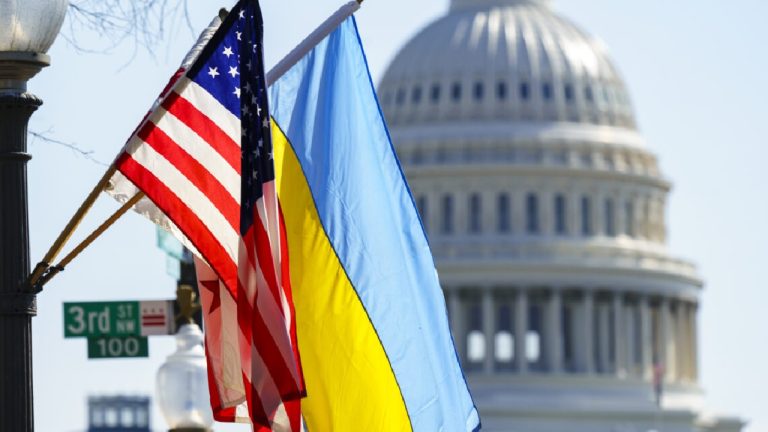
The current diplomatic fervor surrounding a potential ceasefire in Ukraine is less a path to stability than a sprint toward a photo opportunity. While the Trump administration pushes for a rapid resolution to the four-year conflict, a deeper analysis suggests the process is driven not by the realities of the battlefield, but by a desire for political legacy. By prioritizing a “quick win” over sustainable security architecture, Washington risks handing the Kremlin a strategic victory that could unravel the European Union and leave Ukraine defenseless against future aggression.
Washington’s Transactional Diplomacy
The driving force behind the renewed peace talks appears to be the White House’s ambition to secure a Nobel Peace Prize, seeking to eclipse the legacy of predecessors rather than resolve the root causes of the war. This “details-light” approach views the conflict through a purely transactional prism, where sovereign nations are treated as pawns in a great power game. The administration’s reported willingness to entertain the controversial “28-point framework”—dubbed the “Dim-Wit” plan by critics—reveals a dangerous inclination to accept Russian narratives at face value.
This strategy relies on a fundamental misunderstanding of Vladimir Putin’s objectives. By viewing the Russian president merely as a fellow strongman to be negotiated with, the administration overlooks the ideological drivers of the invasion. As evidenced by Putin’s historical essays on Ukrainian unity, the Kremlin’s goal remains the total erasure of Ukrainian statehood, not a compromise over border territories. A hasty deal that strips Kyiv of its defenses would simply provide Moscow the operational pause needed to prepare for a final, decisive offensive.
The European Awakening: Life After the Security Umbrella
For Europe, the illusions of the post-Cold War order shattered in February 2025, following Vice President J.D. Vance’s pivotal address at the Munich Security Conference. That moment signaled the effective end of the American security backstop, forcing European capitals to confront an existential reality: NATO’s Article 5 is no longer a guaranteed insurance policy.
This realization has catalyzed a dramatic shift in EU strategy. Understanding that they can no longer rely on Washington for defense, European powers have moved to “Trump-proof” their support for Kyiv. This includes the unprecedented decision to utilize immobilized Russian Central Bank assets to fund Ukraine’s defense, overriding internal opposition from member states like Hungary and Slovakia. Europe now views Ukraine not just as a neighbor in need, but as the continent’s primary defensive line. If Ukraine falls due to a coerced American peace deal, the EU project itself—founded on the rule of law and human rights—faces an uncertain future.
Kyiv’s Strategic Dilemma
Ukraine finds itself in the most precarious position of all. While publicly engaging in the peace process to avoid alienating the U.S., officials in Kyiv are acutely aware that the proposed terms could lead to domestic collapse. The “28-point” proposal, which reportedly includes colonial-style resource extraction clauses and weak security assurances, is viewed as a blueprint for capitulation.1
President Zelensky’s government understands that trading territory for peace is suicidal without “cast-iron” security guarantees—specifically, an Israeli-style model of sustained advanced weaponry supply. However, trust in the current U.S. administration is non-existent. Kyiv’s strategy has thus shifted to stalling for time, hoping that European military autonomy matures or that Russian economic instability driven by drone strikes on energy infrastructure forces Moscow to the table on more favorable terms.
A Convergence of Enemies
The release of the new U.S. National Security Strategy has further alienated traditional transatlantic allies. The document’s alignment with populist narratives—framing European liberal values as an ideological adversary—has been met with approval in Moscow, creating a bizarre geopolitical alignment where the U.S. and Russia appear united against the European mainstream.
This “Reverse Nixon” strategy, championed by factions within the administration, aims to partner with Russia against China by sacrificing European interests. Yet, this gamble ignores the reality that Putin and Xi Jinping share a revisionist agenda incompatible with Western stability. By weakening Europe to court Russia, Washington is not building a new alliance against Beijing; it is dismantling the democratic world’s most powerful economic bloc.
Conclusion
The tragedy of the current moment is the disconnect between the peace being negotiated in Washington and the war being fought in Ukraine. A peace deal that imposes neutrality on Kyiv without credible enforcement is merely a prelude to the next invasion. As Europe scrambles to rearm and Ukraine fights for survival, the West faces a critical question: Was the failure to act decisively in the earlier years of the war a mistake, or will the rush to a “hollow peace” in 2025 prove to be the fatal error that unravels the transatlantic alliance for good?
Original analysis inspired by Timothy Ash from Kyiv Post. Additional research and verification conducted through multiple sources.