Military confrontation rarely delivers the swift resolution that policymakers anticipate. When directed toward a nation like Iran—with its extensive regional networks and geographic position—such action becomes not a contained surgical operation but a cascading crisis with consequences that ripple across an entire region and into global markets. Gulf capitals recognize this fundamental truth and are approaching the scenario of US-led military action with profound concern, not because they defend Iran’s policies, but because they understand the mathematics of regional instability better than most.
The Illusion of Limited Military Intervention
The concept of a “limited strike” carries profound weaknesses when examined through the lens of Gulf security strategy. Military escalations have historically demonstrated a tendency to exceed their original boundaries, and Iran’s position within the Persian Gulf—combined with its web of proxy networks, weapons capabilities, and asymmetric response options—creates conditions for rapid transformation of localized conflict into regional crisis. What begins as a targeting operation directed at specific Iranian facilities could quickly shift the nature of confrontation across multiple theaters, converting the Gulf from a relatively stable maritime zone into an arena of sustained, unpredictable threats.
Arab Gulf states have invested considerable effort over the past two decades in maritime security enhancements, critical infrastructure protection, and territorial insulation from broader conflicts. These hard-won gains in operational security and strategic positioning face genuine jeopardy in any scenario involving open military confrontation with Tehran. The risk extends beyond temporary disruptions—policymakers in the region recognize that a military conflict could establish a new baseline of vulnerability and persistent threat that would reshape their strategic environment for years.
Economic Consequences: Far Beyond Oil Prices
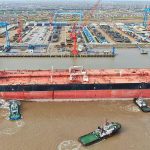
The Persian Gulf functions as more than a geographic backdrop to Middle Eastern politics—it constitutes one of the world’s most vital economic arteries. Roughly 25 percent of all seaborne oil trade passes through the Strait of Hormuz, and any sustained military action threatens to disrupt this critical chokepoint. The consequences extend well beyond petroleum markets into the full spectrum of economic activity that Gulf states have spent decades cultivating.
From a regional economics perspective, the immediate concern transcends oil price volatility. Contemporary Gulf economies depend increasingly on investor confidence, supply-chain reliability, and the region’s international reputation as a secure business environment. Research from Columbia University’s Center on Global Energy Policy indicates that multiple conflict scenarios would expose Gulf Arab states to Iranian retaliation targeting their energy infrastructure, potentially disrupting production capabilities rather than merely raising prices. The financial implications include disrupted credit markets, elevated capital costs, and deteriorated conditions for the non-oil diversification programs that Gulf states view as essential for long-term prosperity.
Gulf economies have achieved significant non-oil sector growth despite sustained low petroleum prices. Military conflict would jeopardize this progress precisely at a moment when urbanization, technology investments, and tourism expansion have created multiple engines of economic dynamism beyond oil revenues. Investor uncertainty alone could unwind years of carefully constructed economic gains, forcing governments to redirect resources from development priorities toward crisis management and security expenditures.
The Erosion of Regional Diplomatic Frameworks
Over the past decade, Gulf capitals have invested strategically in de-escalation infrastructure and dialogue channels. This diplomatic architecture did not emerge from ideological commitment to conflict resolution but rather from pragmatic recognition that managing disagreements produces superior outcomes to military confrontation in a region exhausted by decades of warfare. Gulf states view the recent phase of regional rapprochement—including initiatives toward dialogue with Tehran and reduced tensions among Gulf neighbors themselves—as strategic achievements worth preserving.
A military attack on Iran would represent not merely an isolated event but a fundamental reversal of this carefully constructed diplomatic trajectory. The attack would eliminate existing communication channels, narrow the diplomatic space available to Gulf states, and force regional actors into binary choices between competing blocs. This constraint on maneuverability represents a particular concern for states that have invested years in maintaining strategic flexibility and avoiding rigid alliance structures. The reduction in diplomatic options transforms Gulf politics from a multidimensional negotiating environment into a zero-sum competition with limited middle ground.
Strategic Instability and Long-Term Regional Fragility
Gulf policymakers distinguish between military action that achieves its strategic objectives and military action that fails to resolve underlying conflicts. A strike that hardens Iran’s defensive posture while simultaneously closing off diplomatic pathways creates precisely the scenario that regional leaders seek to avoid—permanent instability, recurring crises, and an environment where future military confrontations become increasingly probable.
The concern operates on multiple timescales. In the immediate aftermath of military action, Iran’s tactical responses would threaten maritime commerce, offshore infrastructure, and international shipping corridors. Over longer time horizons, a failed military operation could generate internal Iranian political upheaval while failing to neutralize Tehran’s military capabilities, resulting in a more unpredictable adversary operating under conditions of reduced institutional stability. This combination—a wounded actor with weakened internal coherence but intact operational capacity—creates precisely the conditions for escalatory spirals that Gulf states cannot survive economically or strategically.
Containment as Strategic Preference
The governing principle underlying Gulf strategic analysis rejects the dichotomy between “with” and “against” Tehran, instead positing a more fundamental calculus: does this option enhance regional security or accelerate regional fragility? When evaluated against this metric, the answer emerging from Gulf capitals consistently favors containment, however imperfect, over open military confrontation. Containment requires sustained diplomatic effort, economic leverage, and negotiated boundaries, but it preserves the possibility of managed relations rather than institutionalized conflict.
This preference does not reflect weakness or capitulation to Iranian preferences. Rather, it emerges from the hard mathematics of geographic proximity, economic integration, and limited military resources. Gulf states recognize that regional management of Iranian power—through negotiation, diplomatic isolation, economic pressure, and deterrence positioning—produces more durable outcomes than military destruction followed by prolonged occupation or containment operations.
The recent de-escalation initiatives undertaken by Gulf states demonstrate their commitment to reducing tensions through sustained diplomatic engagement rather than military resolution. These efforts acknowledge that force may become necessary under certain conditions, but utilizing it as an initial rather than final instrument undermines the stability that constitutes the supreme interest of Gulf state security planners. Restraint, from this perspective, operates as rational survival strategy in a region where major military gambits produce cascading consequences that regional actors cannot fully control or predict.
Forward-Looking Considerations
The current moment presents a critical juncture for Gulf regional stability. The choices made by external powers regarding military intervention will have consequences that transcend immediate tactical objectives and reshape the region’s strategic landscape for years. Gulf states, having experienced multiple rounds of military conflict and regional destabilization, approach this scenario with sober recognition of the costs involved.
The path forward depends on whether external decision-makers can be persuaded to extend the diplomatic space that Gulf actors believe remains viable. This requires sustained international engagement, commitment to negotiated settlement, and respect for the security concerns of regional actors who understand better than distant observers the true costs of military escalation. The stability of global energy markets, the prosperity of one of the world’s most dynamic emerging economies, and the security of millions of civilians ultimately depend on whether military restraint prevails over confrontation in the coming weeks and months.
Original analysis inspired by Dr. Ebtesam AlKetbi from Emirates Policy Center. Additional research and verification conducted through multiple sources.