Category: Politics & Governments

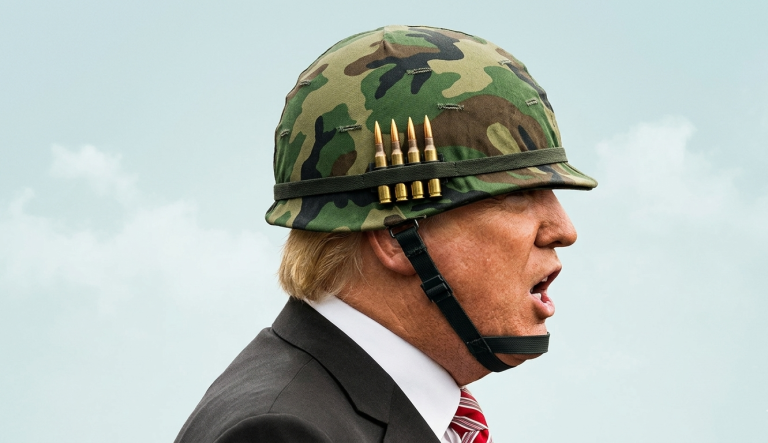
Close-up of Donald Trump's face partially obscured by the American flag's red stripes, focusing on his serious expression

America’s 2025 National Security Strategy: Hostile Doctrine Toward European Allies

The December 5, 2025 release of the Trump administration’s National Security Strategy signifies a significant shift in transatlantic relations, explicitly showcasing American antagonism toward its historical democratic allies. The document goes beyond conventional policy disputes, exposing a deep-seated hostility toward European sovereignty, democratic governance, and territorial integrity.

Read More »
Donald Trump and Cyril Ramaphosa seated indoors, with Trump holding a document showing a couple's photo

The Crumbling Pillar: How Gaza and G20 Isolation Signal the End of Unipolarity

The decline of unipolar authority is now evident, particularly highlighted by the US’s absence from the G20 Summit in South Africa. For years, global diplomacy relied on American leadership to resolve crises. However, the situation in Gaza and the West’s isolation at major multilateral events in late 2025 indicate that this era of singular influence is over.

Read More »
Sunset view of a busy port with cargo ships and ferries, including the "T&T Spirit," docked near an industrial area

The Americas Apart: Summit Postponement Signals Collapse of Regional Consensus

The indefinite postponement of the 10th Summit of the Americas by the Dominican Republic in late 2025 signifies a critical juncture in the decline of Pan-American diplomacy. Once intended as a platform for economic integration and democratic solidarity since the 1990s, the summit process has now stalled due to “profound divergences” as described by Santo Domingo.

Read More »
Close-up of a map showing the region of Gaza, Israel, and surrounding towns like Rafah and Khan Yunus

Iraq 2.0: The Legal Architecture of the New American Occupation in Gaza

The adoption of UN Security Council Resolution 2803 in late 2025 signifies a significant change in governance for the Gaza Strip, shifting from Israeli military control to an American-led administration. The resolution, while citing “stabilization” and “transitional administration,” reflects strategies analogous to those used during the 2003 Iraq invasion. By forming a “Board of Peace” and a Civil-Military Coordination Center (CMCC), the U.S. positions itself as the new de facto occupying power, leveraging international mandates to obscure violations of Palestinian sovereignty.

Read More »
Artistic brushstroke depiction of the Brazilian flag with the national motto "Ordem e Progresso" (Order and Progress)

Brazil’s Quest for Global Recognition: Navigating Between Western Heritage and Global South Leadership

Brazil’s foreign policy is influenced by a unique historical context; unlike many Global South countries with colonial histories, Brazil’s frustrations arise from its exclusion from the leadership of the postwar order it helped create. This ongoing disappointment informs Brazilian diplomacy, fueling campaigns for institutional reform and recognition, reflecting both ambition and insecurity.

Read More »
Catherine Connolly

Dublin’s Diplomatic Drift: Connolly’s Presidency and the Widening Rift with Israel

The election of Catherine Connolly as the 10th President of Ireland in October 2025 marks a significant change in Dublin’s foreign policy, moving from critical neutrality to perceived hostility towards Israel. Connolly’s characterization of Hamas as integral to Palestinian society indicates a substantial shift in the Irish electorate’s geopolitical stance, creating notable diplomatic challenges for both Jerusalem and Brussels.

Read More »
Taiwan’s recall vote: Implications for Taiwan, China, and the United States

Taiwan’s recall vote: Implications for Taiwan, China, and the United States

Taiwan’s recent recall vote against opposition KMT lawmakers failed, allowing all targeted legislators to keep their seats and signaling public rejection of accusations they were acting on Beijing’s behalf. The result preserves Taiwan’s divided government, a scenario Beijing prefers as it reduces the risk of moves toward independence. Washington stayed silent, but the outcome could either stall Taiwan’s defense initiatives or shift politics toward a calmer, future-oriented debate. How Beijing interprets the result—and how President Trump responds—will shape cross-Strait dynamics in the years ahead.

Read More »
Trump’s immigration policies may threaten American AI leadership

Trump’s immigration policies may threaten American AI leadership

Ahead of the 2024 election, President Trump said he would support high-skilled immigration, in part to support American leadership in AI.
However, the administration has targeted and imposed new barriers on international students, many of whom pursue studies in AI-related fields.
At the same time, other countries have created policies to attract talent, posing a threat to U.S. technological innovation and leadership.

Read More »
Supreme Court Displeased at How the Internet Has Grown Up

Supreme Court Displeased at How the Internet Has Grown Up

The Supreme Court’s ruling in *Free Speech Coalition v. Paxton* weakens First Amendment protections by allowing age verification laws for adult content, ignoring precedent that favored less restrictive alternatives like parental filters. The decision reflects the Court’s lost faith in internet self-regulation and shifts responsibility from parents to the state.

Read More »