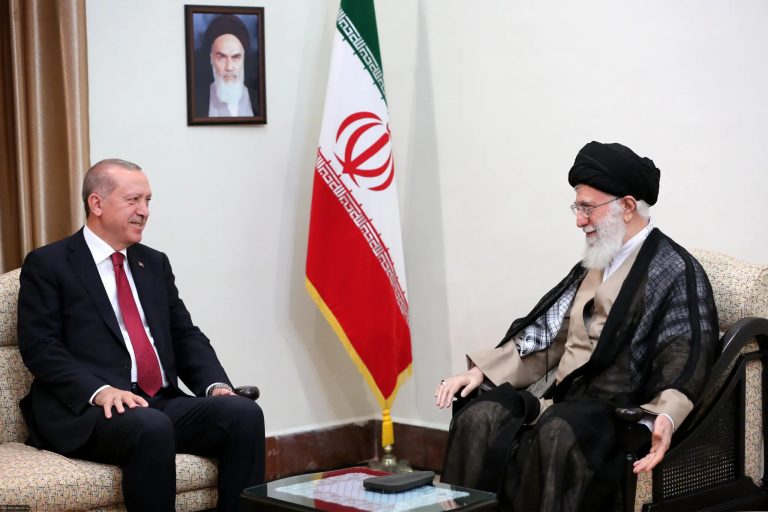
Turkey’s attempt to broker dialogue between Washington and Tehran over Iran’s nuclear program is neither an act of altruism nor a spontaneous diplomatic impulse. It represents a deliberate application of a national security doctrine that has been refined across multiple conflict theatres over the past decade. For President Recep Tayyip Erdoğan, mediation is a strategic instrument designed to prevent regional conflagrations that would threaten Turkish stability, while simultaneously positioning Ankara as an indispensable actor in a Middle Eastern order being reshaped by great-power competition.
Four Threats Driving Turkish Calculations
Western and Israeli intelligence assessments, as reported by the Jerusalem Center for Security and Foreign Affairs, identify four distinct risks that a full-scale US-Iran military confrontation would pose to Turkey. The first is the expansion of pro-Iranian militia activity in neighbouring theatres — particularly Iraq and Syria, where Turkey already maintains significant military deployments. The second is an energy crisis. Turkey imports more than 70 percent of its energy from foreign sources, with Iran serving as a leading supplier of natural gas through a shared pipeline. Any disruption to Iranian energy exports would hit Ankara’s economy directly and rapidly.
The third concern is a potential refugee wave. Turkey already hosts the world’s largest refugee population, predominantly Syrian. Iranian regime collapse or sustained military conflict could generate millions of additional displaced people moving toward Turkey’s eastern border. The fourth, and in many respects most sensitive, threat involves the Kurdish question. An estimated twelve to fifteen million Kurds live in Iran, and any weakening of the Iranian state could embolden Kurdish demands for autonomy — a development that Ankara views as a direct threat given its own Kurdish population of roughly fifteen to twenty million and the decades-long conflict with the Kurdistan Workers’ Party. A Crisis Group analysis of Turkey-Iraq dynamics underscored how deeply the Kurdish issue remains embedded in Turkey’s regional security calculations, shaping everything from its Syria policy to its stance on Iranian stability.
The Istanbul-to-Muscat Episode
The intensity of Turkey’s desire to serve as mediator was visible in the diplomatic manoeuvring surrounding the latest round of US-Iran nuclear negotiations in early February 2026. Talks were initially planned for Istanbul, with Turkey positioned as the host. But Tehran pushed for a venue change, ultimately shifting the meeting to Muscat, Oman, which Iran regarded as a more neutral and discreet facilitator. The Middle East Institute assessed the venue shift as more than logistical, noting that the decision to move from Istanbul to Muscat reflected Iran’s preference for a mediator less likely to expand the negotiating agenda beyond purely nuclear issues.
The episode exposed a tension at the heart of Turkey’s mediation ambitions. Israeli security officials, according to the JCFA analysis, assess that Ankara would prefer to keep negotiations narrowly focused on nuclear matters, avoiding discussion of Iran’s ballistic missile programme and regional proxy networks including Hezbollah, Iraqi Shia militias, and the Houthis. This is because Turkey maintains its own complex relationships with several of these actors and has no interest in a diplomatic framework that would dismantle them. The Atlantic Council noted in a broader assessment of the diplomatic landscape that the tentatively planned resumption of US-Iran talks did not mean military action was off the table, adding urgency to Ankara’s efforts to prevent escalation regardless of the chosen venue.
Mediation as Strategic Doctrine
Turkey’s bid to mediate between Washington and Tehran is not an isolated initiative but rather the latest application of a pattern visible across multiple conflict zones. Ankara intervened militarily in Syria’s civil war, deployed forces and proxy fighters to Libya in 2019-2020 to shore up the UN-recognized government, played a pivotal role in the 2020 Nagorno-Karabakh conflict between Azerbaijan and Armenia, and has maintained an active diplomatic channel with Russia throughout the Ukraine war. A December 2025 CSIS analysis of Erdoğan’s strategic ambiguity characterised Turkey as pursuing strategic autonomy by simultaneously balancing NATO membership, courting Russia and China, and asserting regional influence through both military and diplomatic instruments.
What unites these disparate engagements is a consistent logic: Turkey positions itself as indispensable by being present — and useful — in every major regional crisis. Successful mediation creates dependence on Turkish diplomatic infrastructure, while the threat of Turkish withdrawal creates leverage. Ankara’s hosting of the Black Sea Grain Initiative, its facilitation of prisoner exchanges between Russia and the West, and its back-channel communications with all sides in the Syrian conflict have all served this broader strategy. The Congressional Research Service noted that Turkey may now be the most influential foreign power in Syria, a status achieved through sustained engagement rather than decisive military superiority.
The Neo-Ottoman Framework and Sunni Leadership
Behind the pragmatic calculus of risk management lies a more ambitious ideological project. Intelligence assessments from both Western and Israeli sources, as cited by the JCFA, frame Turkey’s mediation policy within what analysts describe as a neo-Ottoman worldview — the conviction that Turkey is the natural successor to the Ottoman Empire’s sphere of influence across the Middle East, the Balkans, and North Africa. Erdoğan and his inner circle reportedly conceive of Turkish interests not in terms of sovereign borders alone but in terms of civilisational zones of influence, where diplomatic mediation functions alongside military power and soft-power projection.
A Brookings Institution analysis of Erdoğan and the Palestinian conflict described this worldview as rooted in the “sultan’s ghost” — a historical self-image that positions Turkey as the rightful champion of Muslim and particularly Sunni interests globally. This ambition places Ankara in direct competition with the Saudi-Emirati axis for leadership of the Sunni world. Turkey, which has maintained close ties to the Muslim Brotherhood and publicly supported Hamas, represents an alternative model of Sunni political leadership: Islamist-democratic rather than monarchical, populist rather than technocratic. Successful mediation between Washington and Tehran would reinforce Erdoğan’s claim to represent a bridge between the Western alliance system and the broader Muslim world — a role historically occupied by Egypt and Saudi Arabia.
At the same time, mediating between the US and Iran serves more immediate bilateral objectives. It strengthens Ankara’s standing in Washington as a vital regional partner at a moment when the relationship remains strained by Turkey’s purchase of Russia’s S-400 missile defence system, its crackdown on domestic opposition, and disagreements over Kurdish-led forces in northeast Syria. In late 2025, Erdoğan reportedly asked Moscow to take back the S-400 system to clear the path for re-entry into the American F-35 fighter programme — a move that illustrated the transactional character of Ankara’s alliance management.
The Limits of Turkey’s Neutrality
The fundamental vulnerability in Turkey’s mediation strategy is a credibility deficit. Israeli intelligence assessments, relayed through the JCFA, are explicit on this point: Turkey’s public support for Hamas, its adversarial posture toward Israel, its complex relationship with Iran, and its disputes with Greece and Cyprus over maritime boundaries and energy resources all undermine its claim to neutrality. For Israel in particular, Turkey is not a disinterested facilitator but a regional competitor whose diplomatic activism must be monitored rather than trusted.
The German Institute for International and Security Affairs (SWP) assessed Turkey’s broader reconciliation efforts across the Middle East since 2021, involving Syria, Egypt, Israel, Saudi Arabia, and the UAE. The study found that while Turkey had made genuine progress in normalising several bilateral relationships, the depth and durability of these reconciliations remained contingent on Ankara’s willingness to moderate its Islamist-leaning foreign policy positions — a constraint that creates recurring friction in its mediator role.
The risk is not only diplomatic. A failed mediation attempt could damage Turkey’s regional standing and expose it to pressure from multiple directions simultaneously. Gulf states may view Turkey’s involvement as an encroachment on their own diplomatic equities. Iran, having already rejected Istanbul as a venue in favour of Oman, has signalled limits on the role it is prepared to grant Ankara. And Washington, while welcoming any channel that facilitates communication with Tehran, has shown no inclination to outsource its Iran policy to a NATO ally whose reliability it has periodically questioned.
Mediation as Long-Term Investment
Despite these constraints, the prevailing assessment across Israeli, Western, and regional analytical communities is that Turkey will not abandon its mediation strategy. For Erdoğan, the pursuit of diplomatic centrality is not a reaction to any single crisis but a structural feature of Turkish national security doctrine — one that combines military capability, active diplomacy, and the cultivation of regional dependence. Each mediation effort, successful or not, reinforces Turkey’s relevance and prevents its exclusion from arrangements that will shape the Middle Eastern order for decades. The question is not whether Ankara will continue to pursue this role, but whether the gap between its ambitions and the trust it commands among the region’s principal actors can be narrowed sufficiently to make its mediation consequential rather than merely ceremonial.
Originally published by Yoni Ben Menachem, Jerusalem Center for Security and Foreign Affairs. Additional research and contextual analysis conducted through multiple independent sources.