Tag: China

Extreme close-up of the back of a US one-dollar bill focusing on the Great Seal.

Can the US Dollar Maintain Supremacy in the Digital Currency Era?

The global financial system is at a critical juncture as digital currencies redefine international monetary flows. To maintain dollar supremacy, Washington must transition from traditional banking models to advanced digital infrastructure, ensuring the greenback remains the primary rail for global trade amidst rising competition from China’s digital yuan.

Read More »
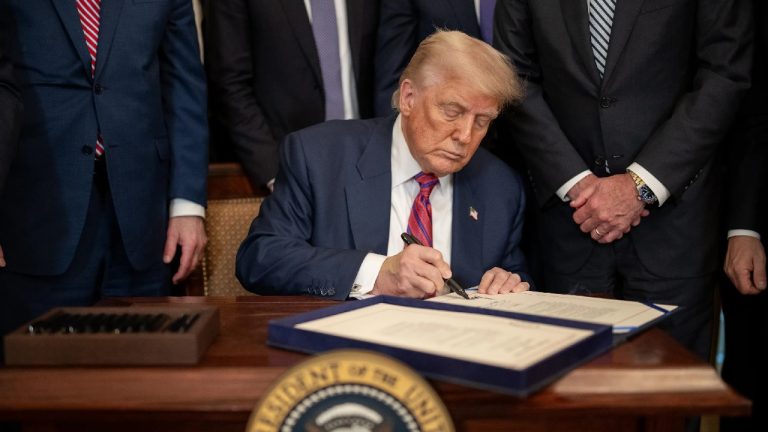
Donald Trump sitting at a dark wooden desk, focused on signing a formal document with a black pen, surrounded by people in suits.

Pacific-Centered Strategy: Trump’s National Security Approach Redefines Global Competition

Trump’s 2025 National Security Strategy prioritizes economic competition over ideological warfare, reframing China as a commercial rival rather than a systemic threat. By reviving the Monroe Doctrine and demanding allies triple defense spending, the administration seeks “low-cost hegemony” while shifting America’s strategic center of gravity toward the Pacific Rim.

Read More »
A crowded outdoor walkway lined with tall green "COP28 UAE" banners, with palm trees and a large domed architectural structure in the background.

Middle Eastern Energy Politics: Transition as Power Redistribution Rather Than Technical Evolution

Middle Eastern energy transition is not a mere technical shift but a fundamental geopolitical power redistribution. While regional players like Saudi Arabia and Qatar invest in renewables, they simultaneously leverage hydrocarbons to assert autonomous diplomacy, navigating a multipolar world where energy remains a primary instrument of strategic influence and state survival.

Read More »
Narendra Modi and Xi Jinping engaged in a conversation while standing on a wooden boat or deck with a lake and greenery in the background.

Navigating Rivalry: How India Manages Its Complex Relationship with China

As of late 2025, India’s relationship with China has evolved into a “managed rivalry.” Following the historic October 2024 border patrol agreement, both nations have completed initial troop disengagements at friction points like Depsang and Demchok. However, this tactical thaw has not resolved the underlying paradox: a hardened military standoff alongside a record-breaking trade deficit.

Read More »
The exterior of the Association of Southeast Asian Nations (ASEAN) headquarters building with lush green landscaping and the "Symbol of Unity" monument.

Indo-Pacific Strategic Geography Challenges US Extended Deterrence Framework

The Indo-Pacific has replaced the Cold War-era European theater as the primary arena for American strategic competition, presenting unique geographic and military challenges. As China targets 2027 for regional dominance and control over Taiwan, the U.S. is rapidly adapting its alliance structures with Japan, Australia, and the Philippines to counter advanced missile threats and navigate a complex new era of nuclear deterrence.

Read More »
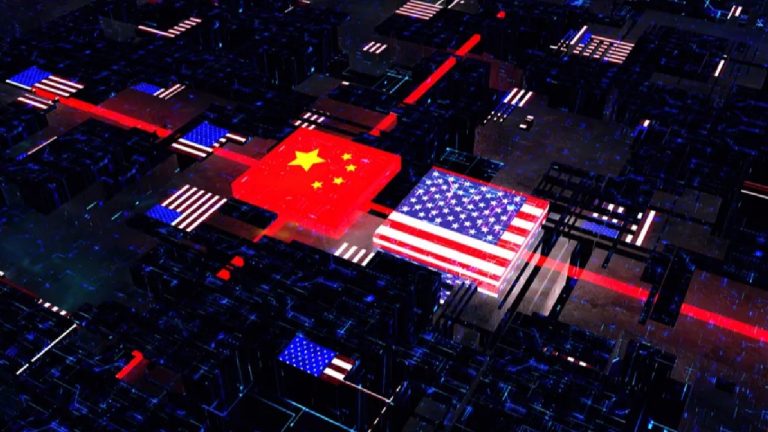
A digital circuit board concept featuring glowing flags of the United States and China connected by light rays.

Strategic Energy Competition: Nuclear Fusion Development Reshapes US-China Technological Rivalry

The competition between Washington and Beijing over nuclear fusion technology is a key aspect of 21st-century geopolitical rivalry, impacting not just energy policy but also artificial intelligence, military applications, and global economic power. China has invested at least $6.5 billion in fusion since 2023, significantly outpacing US funding. The urgency for both nations to develop commercial fusion power is intensified by increasing energy demands from AI infrastructure. China’s recent achievement of a 1,000-second plasma containment further challenges US dominance. The nation that first commercializes fusion will likely set industry standards and control supply chains, analogous to past competitions in solar panels and electric vehicles.

Read More »
Two people riding bicycles past a heavily destroyed apartment building in a war zone.

European Strategic Decline: Three Concurrent Crises Reshape Global Power Dynamics

Three key geopolitical events in 2025 have shifted Europe’s role from an aspiring strategic player to a subordinate partner reliant on external powers. The military defeat in Ukraine, technological dependence on China, and economic capitulation to the United States expose deep structural vulnerabilities that years of integration did not resolve, resulting in Europe’s reduced influence amid increasing global competition.

Read More »
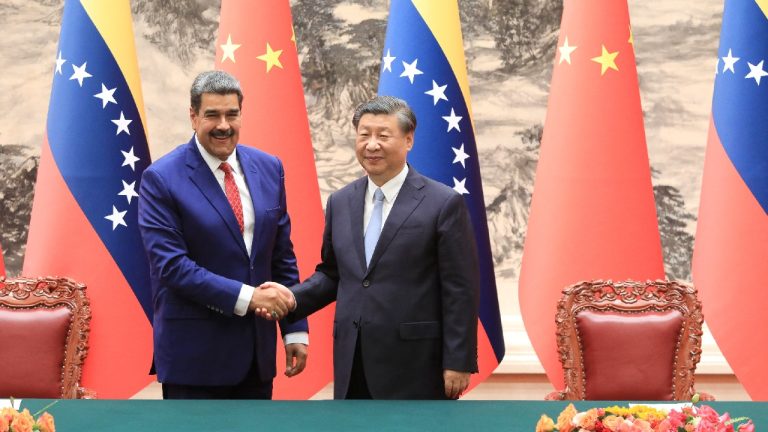
Chinese President Xi Jinping and Venezuelan President Nicolás Maduro shaking hands in front of several Chinese and Venezuelan flags

China-Venezuela Partnership: Testing All-Weather Alliance Under Pressure

Recent U.S. military actions near Venezuela have challenged China’s commitment to its partnership with Caracas, showcasing a mix of rhetorical support, economic engagement, and military cooperation, but lacking in security guarantees or substantial financial support. This situation highlights China’s strategy in managing partnerships under Western influence and the limitations of its declarations of solidarity.

Read More »
A close-up, shallow-depth-of-field shot of several small American desk flags standing in a row

America’s Strategic Recalibration: Addressing Post-Cold War Policy Insolvency

The 2025 National Security Strategy marks a significant shift from longstanding American foreign policy by recognizing resource limitations and emphasizing geographical proximity rather than global intervention. This change, while controversial, aims to address the “insolvency” issue—highlighting the disconnect between national goals and the means to accomplish them.

Read More »
A futuristic, profile-view portrait of a woman with cybernetic implants and glowing red circuitry, set against the red background and yellow stars of the Chinese flag

Beijing Positions Itself as Emerging Technology Governance Architect Through Arms Control Framework

China’s November 2025 white paper on arms control emphasizes AI, cyberspace, and outer space governance, moving from a reactive to a proactive role in these domains against Western dominance. This document coincides with the January release of DeepSeek-R1, showcasing Chinese AI capabilities on par with American models, amid potential cooperation openings due to the Trump administration’s economic rebalancing.

Read More »