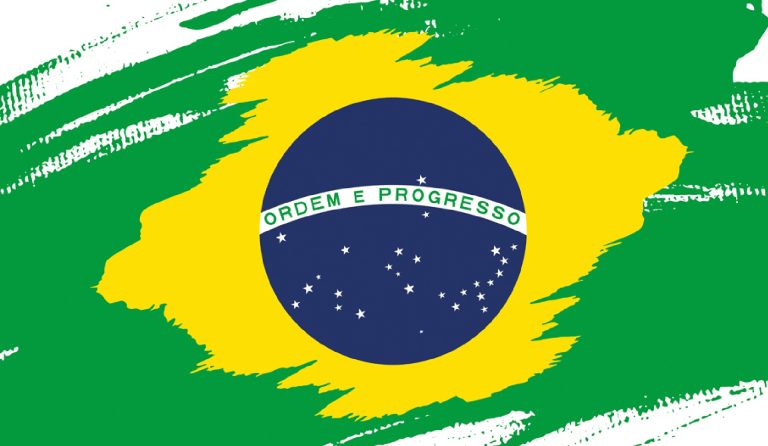
Brazil’s foreign policy emerges from an unusual historical position: unlike most Global South nations shaped by colonial grievances, Brazil’s frustrations stem from being present at the creation of the postwar order yet excluded from its leadership structures. This foundational disappointment continues shaping Brazilian diplomacy seven decades later, driving persistent campaigns for institutional reform and recognition that reveal both ambition and insecurity.
The Origins of Brazilian Resentment
Brazil’s contemporary diplomatic posture traces directly to World War II’s aftermath. As the only independent South American nation to deploy combat forces in the European theater, Brazil sent approximately 25,000 troops under direct US command to the Italian campaign. This military contribution generated expectations of commensurate influence in shaping the postwar international architecture.
Those expectations were not met. Brazilian forces arrived in Italy in September 1944 and departed in May 1945—participating meaningfully but missing the crucial negotiations that established the United Nations, Bretton Woods institutions, and postwar security frameworks. President Franklin Roosevelt had personally assured Brazilian President Getúlio Vargas at their February 1943 Natal meeting that Brazil would participate centrally in postwar settlements. Instead, Brazil found itself excluded from substantive roles in peace conferences and institutional founding.
This historical slight planted seeds of grievance that continue bearing fruit in Brazilian foreign policy. Brazil perceives itself as a Western nation with democratic institutions and liberal values, yet systematically denied leadership positions in the Western-led international order. This contradiction—Western identity but non-Western treatment—fundamentally shapes Brazil’s approach to global affairs.
The Permanent Quest for a Permanent Seat
No objective better encapsulates Brazilian diplomatic ambitions than securing a permanent United Nations Security Council seat. After failing to obtain a seat on the League of Nations Council or the original UNSC in 1945, Brazil has maintained an active campaign for Council expansion since the early 1990s.
In 2005, Brazil joined Germany, India, and Japan in proposing comprehensive UNSC reform. The proposal highlighted that the Council represented 22% of UN membership in 1945 but only 7.7% by 2005—a disparity that has since worsened. The reform plan called for expanding from 15 to 25 members, adding six permanent seats with greater geographic diversity and four additional rotating non-permanent positions. Notably, the proposal suggested limiting absolute veto power to make the Council more responsive.
Brazil’s membership in BRICS—originally conceived by Goldman Sachs economist Jim O’Neill as an investment category but subsequently formalized as a political grouping of major emerging economies—provides additional platform for this campaign. BRICS membership offers both symbolic validation as a Global South leader and practical leverage in advocating for institutional reform.
Yet decades of effort have yielded minimal progress. The UNSC’s permanent membership remains frozen in 1945 configurations, reflecting geopolitical realities that no longer exist. Brazil’s persistent failure on this signature diplomatic objective feeds the national insecurity that drives much of its foreign policy behavior.
The Psychology of “Not Being Taken Seriously”
Perhaps no phrase has penetrated Brazilian national consciousness more deeply than an alleged 1964 comment by French President Charles de Gaulle. Following a dispute over fishing rights near French Guiana, de Gaulle purportedly muttered “le Brésil n’est pas un pays sérieux”—Brazil is not a serious country. Whether or not de Gaulle actually said this remains uncertain, but the phrase’s enduring resonance reveals deep anxieties about international perception.
This insecurity manifests in constant efforts to demonstrate “seriousness” through diplomatic activism. Brazil led negotiations producing the Guadalajara Agreement with Argentina, establishing the Southern Cone as a nuclear-weapons-free zone. It has mediated border disputes throughout South America and attempted (unsuccessfully) to negotiate resolution of Iran’s nuclear program by proposing fissile material transfer to Turkey. Brazil extensively lobbied to host both the 2014 FIFA World Cup and 2016 Olympic Games as demonstrations of international stature.
The common Brazilian saying—”Brazil is the country of the future, and always will be”—captures the persistent gap between potential and achievement. This sentiment was crystallized by The Economist’s September 2013 cover story asking “Has Brazil blown it?”, examining how a nation with such promise repeatedly falls short of expectations.
Vision for Multipolar Order
Brazilian foreign policy consensus transcends partisan divisions around several core principles. Brazil envisions itself uniquely positioned to lead in an increasingly multipolar world—simultaneously inheriting Western liberal values and championing Global South interests, providing regional leadership despite cultural and linguistic distinctiveness, and maintaining respected voice on global issues.
This worldview translates into specific policy preferences. Brazil advocates vehemently for multilateralism over unilateralism, viewing the United Nations as bedrock for democratic global governance. Brazilian officials consistently critique US unilateral actions, whether military interventions or individual sanctions regimes, as violations of proper international conduct.
The Jair Bolsonaro presidency (2019-2022) represented a significant deviation from this tradition. Bolsonaro’s “Brazil above everything” philosophy led to retrenchment from regional organizations, including withdrawal from the Community of Latin American and Caribbean States, and rhetorical alignment with the Trump administration. Traditionalists viewed this period as damaging to Brazilian prestige and contrary to the country’s multilateral vocation.
President Luiz Inácio Lula da Silva’s 2023 return to office was celebrated as Brazil “coming back from the dead” by foreign policy establishment figures. Lula’s inauguration speech emphasized resuming relations “with all countries of the world,” signaling return to traditional Brazilian diplomatic approaches.
Multilateralism at Any Cost?
Brazil’s commitment to multilateral conflict resolution sometimes conflicts with principles supposedly underlying the rules-based order. Following a September 2023 Cuba visit, Lula denounced the US embargo as illegal and criticized Cuba’s designation as state sponsor of terrorism. Brazil voted against Iranian sanctions in 2010, arguing sanctions cause suffering and risk spiraling into conflict.
Most controversially, Brazil’s ceasefire proposals for Ukraine and Gaza have prioritized ending violence over addressing underlying violations of international norms. Brazil and China’s “common understandings” on Ukraine were announced immediately before Vladimir Putin stated openness to negotiations contingent on maintaining territorial gains. Similarly, Brazil’s UNSC ceasefire resolution for Gaza was vetoed by the United States for omitting language on Israel’s self-defense rights.
This pattern suggests Brazilian foreign policy evaluates outcomes against an idealized multilateral process rather than substantive justice. Any action undermining Western dominance is viewed positively as step toward more inclusive international community—what might be termed the fallacy of the false alternative, where all options are judged against utopian standards.
Brazil’s positions often align it with authoritarian powers actively seeking to undermine current international order. Lula’s assignment of equal blame to Russia and Ukraine for Russia’s invasion places Brazil alongside Beijing and Moscow—nations that do not share Brazil’s democratic values but do share interest in diminishing Western influence.
Economic Foundations and Constraints
Brazil’s economy remains dominated by commodity exports: soybeans, iron ore, crude petroleum, and agricultural products. Brazil produces nearly 40% of global soybeans and ranks among the world’s largest oil producers through state-owned Petrobras. This resource wealth has yet to translate into significant manufacturing value-added or movement up global value chains.
The concept of “custo Brasil”—the cost of doing business in Brazil—encapsulates the regulatory complexity, bureaucratic inefficiency, and political horse-trading that frustrates economic transformation. Economist Matthew Taylor describes this as “decadent developmentalism”, where domestic interest groups continuously push protectionist regulations that raise business costs while simultaneously demanding state compensation for sluggish growth.
State-owned enterprises dominate banking, energy generation, and oil/gas exploration. Powerful agricultural lobbies wield considerable political influence. Foreign multinationals maintain footholds in mining, where Brazilian firms like Vale have successfully internationalized. This complex stakeholder landscape creates contradictory pressures on economic policy.
China has navigated this complexity remarkably effectively. China serves as primary destination for Brazilian exports while providing substantial development finance and foreign direct investment. Chinese firms including Huawei in telecommunications and BYD in automotive manufacturing have established significant Brazilian presence. The latter particularly appeals to Brazil’s desire to participate in global value chains beyond raw material extraction.
Balancing Act Between Great Powers
Brazil approaches great power competition as mediator between the United States and China, with Russia treated as legitimate balancing force against American unipolarity. Brazilian policymakers believe Washington must “learn to step back” from leadership positions to accommodate rising powers, while China should be welcomed and given opportunity to prove itself as responsible actor through multilateral engagement.
The China-Brazil relationship expanded dramatically under Lula’s first two terms (2003-2010). Chinese firms embedded themselves in Brazilian physical infrastructure including fiber-optic cables connecting South America to Africa, railway construction in São Paulo and the Amazon, and nationwide public transit expansion. Nearly a dozen Confucius Institutes promote academic and cultural ties.
Bolsonaro initially antagonized China with campaign-trail visits to Taiwan and claims that “China is not buying in Brazil; it is buying Brazil.” However, pressure from agricultural sectors dependent on Chinese markets forced policy reversal. Lula’s April 2023 Beijing visit reaffirmed partnership, with Lula telling Xi Jinping: “Our relationship with China is extraordinary, and it has become more mature and stronger over time.”
Yet Brazil maintains limits on Chinese influence. Until recently, Brazil declined Belt and Road Initiative membership, though rumors suggest potential memorandum of understanding at the November G20 summit. Brazil has consistently refused Chinese proposals for direct government-to-government credit lines, having observed how such arrangements ensnared Argentina in debt dependency.
Defense cooperation reveals Brazil’s hedging strategy. The Brazilian armed forces regard the United States as preferred partner. Brazil achieved major non-NATO ally status under Bolsonaro, joining only two other Latin American nations with this designation. USS George Washington recently docked in Rio de Janeiro following joint regional exercises. Chinese military cooperation remains limited to training exchanges.
This balancing act faces increasing strain. The Huawei 5G controversy illustrated the challenge: Brazil initially banned Huawei from 5G spectrum auctions, prompting Chinese threats to withhold Covid-19 vaccines and impose enhanced agricultural inspections. Agricultural lobbies became Huawei advocates, forcing Brazilian reversal. As US-China competition intensifies, maintaining simultaneous economic ties with Beijing and security relations with Washington becomes increasingly difficult.
Recent Diplomatic Activism
Lula’s return to office has energized Brazilian multilateral engagement. Brazil endorsed BRICS expansion, which admitted four new members (though Argentina subsequently declined). As sole Western Hemisphere BRICS+ member, Brazil hopes expansion dilutes Chinese and Russian weight within the grouping.
Environmental issues provide natural alignment with Indonesia and Democratic Republic of Congo on tropical forest preservation. Brazil hosted the first Amazon Summit in Belém, encouraging cooperation among eight South American nations on sustainable development.
However, Brazil’s regional leadership faces challenges. The Venezuela crisis exposes Brazilian limitations. Following fraudulent July 2024 Venezuelan elections, Brazil attempted to lead left-leaning governments toward mediated solution, including potential election redo—a suggestion the Venezuelan opposition heavily criticized. Meanwhile, over 20 Western Hemisphere and European countries led by Dominican Republic and Panama issued stronger condemnation of electoral fraud. Brazil found itself sidelined by smaller states articulating clearer shared vision.
The Venezuela-Guyana Essequibo dispute revealed another contradiction. As Venezuela militarized claims to Guyanese territory, threatening South America’s decades-long absence of interstate conflict, Brazil called for restraint while reinforcing its own border with Venezuela. This willingness to use force regionally contrasts sharply with Brazil’s “peace at any cost” positions on Ukraine and Gaza.
The Coherence Problem
Brazil’s quest for international “seriousness” suffers from strategic incoherence. It objects to US unilateralism while courting powers—particularly China and Russia—that demonstrate even less restraint regarding territorial disputes and use of force. Brazil champions rules-based order while consistently prioritizing process over substance, advocating ceasefires that would reward aggression and undermine the very norms Brazil claims to defend.
This contradiction becomes particularly acute as great power competition intensifies. Brazil may indeed have opportunity to establish diplomatic credentials as multilateral champion, but doing so requires recognizing that engaging “with all countries” becomes impossible when some countries actively work to subvert international rules. Maintaining relations with all parties is not neutrality—it is implicit acceptance of whichever party acts most aggressively.
Brazil’s balancing act between Western identity and Global South leadership, between democratic values and authoritarian partnerships, between multilateral principle and pragmatic accommodation, may ultimately prove unsustainable. The country’s persistent campaign for recognition reflects legitimate frustration with outdated international structures. But achieving that recognition requires strategic clarity about what kind of international order Brazil actually seeks to build—and whether the partners it courts share that vision or merely exploit Brazilian ambivalence to advance incompatible goals.
Original analysis inspired by Ryan C. Berg, Henry Ziemer, and Luke Maloney from Center for Strategic and International Studies. Additional research and verification conducted through multiple sources.