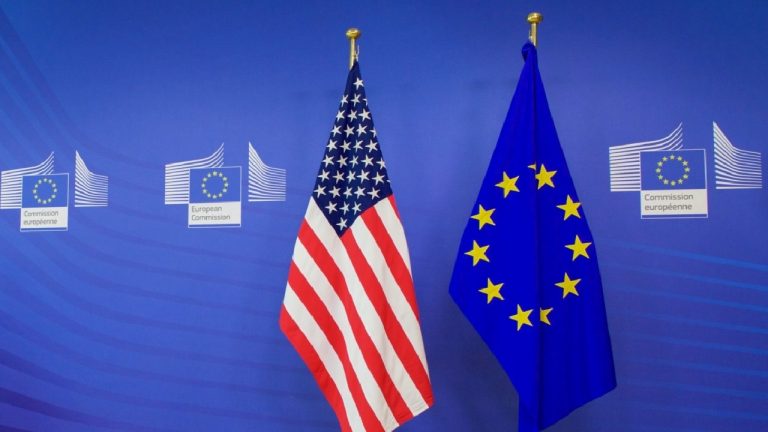
Among the defining dynamics of 2025 stands Europe’s choice to exercise restraint rather than retaliation. When Washington imposed unprecedented tariffs on European imports in April, reaching levels unseen for a century, the European Union possessed clear justification for imposing comparable counter-measures on American goods. China pursued precisely this strategy, compelling President Trump to moderate his position.
The European Union and United Kingdom opted for a different approach, choosing diplomatic restraint over economic confrontation. This decision reflected hopes of preserving American support for Ukraine while avoiding a destructive trade war. Recent American actions demonstrate this strategy may require fundamental reassessment.
Diplomatic Provocations Escalate
In the closing days before Christmas, Washington undertook two actions toward Europe that transcend normal alliance behavior. Trump appointed Louisiana Governor Jeff Landry as special envoy to Greenland, the Danish territory that he insists America must acquire citing national security requirements. This occurred despite unequivocal statements from both Copenhagen and Nuuk that neither government harbors interest in transferring sovereignty to Washington.
Typically, special envoy appointments involving bilateral matters occur through consultation with affected governments, or at minimum advance notification. Denmark summoned the U.S. ambassador to protest, expressing that the appointment came “out of nowhere” without coordination. The action demonstrated Washington’s disregard for basic diplomatic courtesy toward a NATO ally.
The second action arrived December 23 when Washington imposed travel bans on three EU citizens and two British citizens, including former EU Commissioner Thierry Breton. The administration characterized their involvement in creating and supporting the EU’s Digital Services Act, enacted in 2022, as attempts to suppress American free speech rights.
Travel restrictions typically target terrorists or hostile nation operatives, not private citizens of eight-decade allies participating in public policy debates. This follows Washington’s extraordinary August sanctions against Judge Nicolas Guillou from France and Judge Kimberley Prost from Canada, both serving on the International Criminal Court, for participating in decisions to issue arrest warrants against Israeli Prime Minister Benjamin Netanyahu.
Testing Alliance Foundations
Washington never ratified ICC membership yet claims authority to challenge its judicial decisions. The sanctions prevent Guillou and Prost from American travel while blocking their access to American-owned financial institutions, including major payment processors like Visa, Mastercard and American Express.
Debate could extend indefinitely on individual case merits: whether Washington legitimately seeks Greenland, whether the Digital Services Act and Britain’s Online Safety Act threaten free expression, whether the ICC appropriately issued Netanyahu arrest warrants as it has for President Putin. Yet these specific controversies miss the fundamental question.
The critical issue concerns how European nations and the EU should respond when their historic ally treats them as adversaries. Restraint made strategic sense earlier this year given Ukraine’s importance to European security. These actions against the ICC in summer and now against Denmark’s government and five EU and UK citizens suggest non-retaliation carried steep costs. It encouraged Washington to identify new methods for coercing Europe, exploiting its undeniable power to inflict harm or extract concessions.
European governments, whether independently or collectively through the EU, must now identify effective countermeasures. Otherwise, the coercion will intensify. Politicians and officials should utilize the holiday period to formulate appropriate responses. Optimal retaliation would occur in domains where Europe can sustain confrontation if Trump chooses escalation.
Strategic Response Options
One immediate option involves Denmark, Greenland and willing EU member states imposing reciprocal travel restrictions on Governor Landry. They can accurately state no diplomatic purpose exists for this special envoy. As the Cold War demonstrated, if American national security genuinely depended on Greenland, fellow NATO member Denmark would consider reopening former American military facilities that operated under their 1951 bilateral agreement.
India established excellent precedent in 2009 when responding to President Obama’s appointment of Ambassador Richard Holbrooke as special envoy for Afghanistan, Pakistan and Kashmir. New Delhi made clear any Kashmir involvement constituted unacceptable interference in domestic affairs, denying Holbrooke entry to India.
Another approach would borrow typical tit-for-tat methods employed against Russian and Chinese operatives by imposing travel bans on five Americans. The EU and UK possess full entitlement to forbid their most aggressive American critics from visiting and provoking disturbances. Britain should not forget that Elon Musk supported British extremist demonstrators and declared on his X platform that civil war is inevitable in Britain. This provides stronger grounds for travel restrictions than any cited against Breton or the others.
Full disclosure: I chair the board of one UK nongovernmental organization whose CEO faces banning, the Global Disinformation Index. Some Americans consequently label me part of what they slander as the “Censorship Industrial Complex.” I wear that designation as proudly as being called “communist” by the late Silvio Berlusconi.
Additional superior ideas will emerge. Some will argue Europeans should not descend to the Trump administration’s cowardly level. Maintaining high civility standards remains essential. Yet finding effective countermeasures is equally crucial.
Deterrence Beyond Russia
We must not forget these bullies openly declared intentions last month to interfere in European domestic politics. Deterrence no longer serves only to maintain safety from Russia. It now proves necessary to maintain safety from America.
An added whimsical footnote: Since Trump follows Russian and Chinese propaganda tactics of claiming “historical” grounds for demands, perhaps France could demand revisiting the Louisiana Purchase. That 1803 transaction under which Napoleon Bonaparte sold the young United States not merely Governor Landry’s state but the entire Mississippi River basin, doubling American land area under sovereignty. Surely some irregularity exists in the paperwork.
Original analysis by Bill Emmott from Asia Times. Republished with additional research and verification by ThinkTanksMonitor.