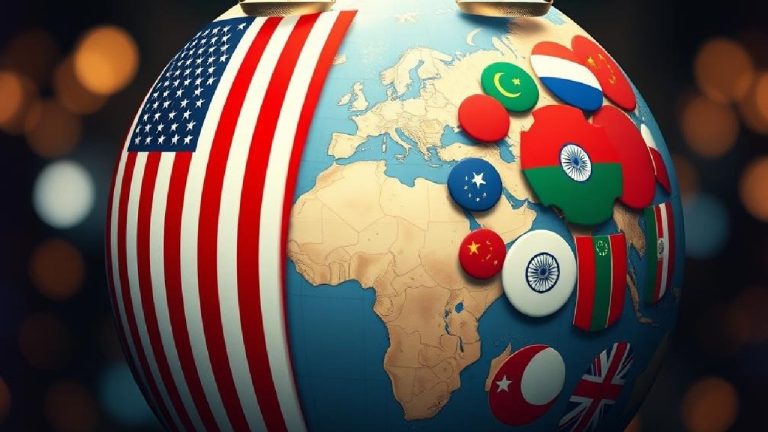
The collapse of the post-Cold War unipolar system did not result from external balancing by rival powers, military challenge from emerging competitors, or the structural inevitability predicted by classical theories of international relations. Rather, it stems from a fundamental reversal in the strategic approach that sustained American predominance for three decades: the replacement of self-binding restraint with zero-sum extraction. The system did not fall to rivals. It is destroying itself.
The Anomaly of Durable Unipolarity
The durability of American hegemony after the Soviet Union’s dissolution puzzled structural realists who anticipated rapid multipolar realignment. Conventional structural realism suggested that states motivated by relative power maximization should balance against hegemons, yet major powers generally remained content with subordinate positions in the American-led order rather than forming counter-coalitions. The expected trajectory toward multipolarity never materialized, requiring scholars to examine what mechanisms sustained American leadership despite predictions of inevitable decline.
The explanation emerged from examining American strategic practice rather than structural constraints alone. The United States did not simply impose its preferences through overwhelming material power. Instead, it invested substantially in making its leadership attractive to potential competitors through what some analysts termed a practice of strategic restraint—what might more precisely be understood as hegemonic self-binding. This approach operated through multiple mechanisms: providing security guarantees to vulnerable allies, absorbing disproportionate shares of common defense burdens, linking American prosperity to global economic integration, and generally asking less from the system than its overwhelming power permitted.
This counterintuitive strategy reflected a sophisticated understanding of hegemonic legitimacy. Contemporary hegemonic stability theory emphasizes that dominant powers can maintain order more cost-effectively through voluntary cooperation from other major states than through coercive domination, which requires constant enforcement expenditures and generates persistent resistance. The American postwar system worked precisely because it offered sufficient benefits to other major powers—security protection, economic opportunity, institutional voice—that they preferred participation to opposition.
The Institutional Architecture of American Advantage
The post-World War II institutional framework—the United Nations, International Monetary Fund, World Bank, GATT, and NATO—was not designed as neutral arbiters of international disputes. Rather, these institutions were explicitly constructed to perpetuate American structural advantages while appearing to operate through impersonal rules. The system’s brilliance lay in its ability to present American advantage as universal principle. Every institution was structured to ensure that the United States would remain not merely first among nations, but never last—always positioned to benefit even from relative decline, because the entire architecture presupposed American centrality.
This design reflected an earlier historical moment when the United States accounted for approximately half of global economic output and was the sole power with genuinely global military reach. The institutions designed in that context encoded American advantages so thoroughly that even as the country’s relative economic position eroded over subsequent decades, the structural benefits persisted. Japan and Germany, despite rapid economic growth, could never challenge American leadership so long as they remained dependent on American security guarantees and integrated into American-designed financial systems.
The genius of this arrangement from the American perspective was that it functioned almost automatically. The United States did not need to actively enforce compliance constantly; the rules and institutions did that work. Other powers accepted the system partly from genuine appreciation of its stability-producing qualities and partly from recognition that alternatives appeared worse. Most importantly, the system’s legitimacy derived not from claims of American virtue but from the perception that its rules applied with reasonable consistency to all participants—including the United States itself.
The Transformation of Strategic Calculation
This perception of American self-restraint has now evaporated entirely. The Trump administration’s explicit rejection of self-binding restraint and embrace of unilateral extraction represents not merely a policy shift but a fundamental reconceptualization of how hegemonic power ought to be exercised. The administration’s “America First” trade policy framework, implemented through unilateral tariffs and reciprocal trade measures, explicitly abandons the fiction that American economic policies serve broader systemic interests. The message conveyed is unambiguous: American power exists to extract maximum advantage for American interests, with no residual concern for maintaining the legitimacy of the broader system.
This shift represents a betrayal of what might be termed the social contract underlying unipolarity. Other powers had tolerated American leadership—sometimes enthusiastically, sometimes reluctantly—partly on the assumption that American power would be exercised with some regard for systemic stability and the interests of partner nations. The explicit reversal of this understanding destroys the informal agreements that sustained the system.
Critically, this transformation cannot be reversed through policy adjustments. The administration’s transactional approach to international relationships, treating allies as marks to be exploited rather than partners with whom long-term cooperation is mutually beneficial, reflects a consistent worldview extending across decades and electoral cycles. The shadow of the future—the concept in game theory describing how actors’ present behavior reflects expectations about future interactions—has effectively been collapsed. If leadership today signals that trust and cooperation are merely covers for extraction, other powers must rationally assume that relying on continued American restraint would be foolish.
The Cascading Loss of Voluntary Compliance
The consequences of this transformation operate with accelerating speed. When the United States ceases providing the public goods that justified its hegemonic position—security guarantees with reciprocal restraint, economic opportunities within a rules-based framework, institutional voice proportional to actual power—other nations rationally abandon strategies premised on American leadership. They do not do so from ideological conviction that multipolarity is superior; they do so because the economic and security benefits of subordination have evaporated.
The erosion of international institutional legitimacy proceeds rapidly once partner nations conclude that those institutions serve only to entrench American advantage while expecting sacrifice from others. Japan, Europe, Canada and other traditionally aligned powers face a rational choice: invest in defending institutions that now explicitly discriminate against them, or redirect resources toward building alternative arrangements. The trajectory of recent years indicates clear movement toward the latter option.
The irony embedded in this transformation is profound. The post-World War II order was designed precisely to ensure that the United States would always benefit from international cooperation, even as relative power shifted. The institutions were constructed to guarantee American advantage so thoroughly that the country barely needed to enforce compliance actively. Yet by treating those institutions as mere tools for extraction rather than genuine frameworks for coordination, the administration destroys the very system that guarantees American privilege.
Structural Consequences and System Destabilization
The emerging multipolar system will not be benign. Unlike the unipolar order, where the hegemon’s overwhelming power constrained competition and made conflict between rival great powers systemically difficult, multipolarity creates fundamentally different incentive structures. Regional powers will pursue influence aggressively, knowing that American security guarantees are no longer reliable. The proliferation of security dilemmas—situations where defensive measures by one state appear threatening to others—becomes inevitable in the absence of a dominant arbiter.
Moreover, the institutions designed to manage conflict in a unipolar world become dysfunctional in multipolarity. The United Nations Security Council, structured to reflect post-World War II power distributions, cannot effectively govern a world where power has decentralized and legitimacy has eroded. The international monetary system, built around American currency dominance, faces challenge from alternative arrangements as confidence in American stewardship erodes. Trade systems designed around American manufacturing dominance become irrelevant as production networks reorganize around new centers of power.
The Path Forward: Salvage or Collapse
A different American leadership might yet manage graceful hegemonic transition—gradually accepting a world of reduced American primacy while leveraging remaining advantages to secure favorable positions within emerging multipolar structures. The architecture of international institutions was designed with sufficient flexibility that even a declining hegemon could maintain substantial advantages and influence, provided it approached decline as inevitable evolution rather than as a contest to be won or lost through predatory extraction.
That option is no longer available. Once the fundamental premise of American hegemony—that American leadership serves broader systemic interests—has been explicitly rejected, reconstruction of voluntary compliance becomes extraordinarily difficult. Other powers will construct alternative arrangements. These arrangements will likely be less efficient, less prosperous, and more conflict-prone than the system they replace. This degradation is not inevitable from structural causes; it results from a deliberate choice to privilege short-term extraction over long-term stewardship.
The most successful blow to American primacy will not come from external challengers operating through mechanisms realist theory long predicted. It will have come from Americans themselves, choosing to dismantle the voluntary cooperation infrastructure that sustained unipolar order decades after American material capabilities had declined below the threshold for unilateral dominance. The world that follows will be poorer, less stable, and more dangerous—not because multipolarity is inherently destabilizing, but because the transition was managed by subordinating systemic stability to immediate advantage-seeking.
Original analysis inspired by Paul Musgrave from Kyiv Post. Additional research and verification conducted through multiple sources.