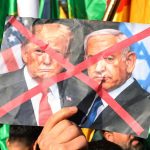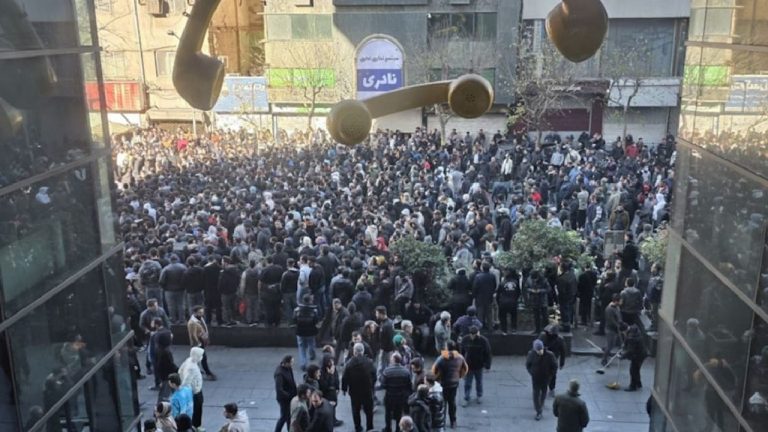
The dramatic devaluation of Iran’s currency and subsequent market shutdowns in Tehran are generating simplistic interpretations in Western capitals. Policymakers in Washington and Tel Aviv are framing these events as evidence of impending regime failure. However, empirical evidence points to a fundamentally different story: these demonstrations represent the desperation of a society whose economic foundation has been systematically destroyed through prolonged international economic pressure.
The Systematic Destruction of Iran’s Economic Core
The principal catalyst driving Iran’s current economic catastrophe is well documented. America’s weaponization of global finance through its “maximum pressure” campaign targeting Iranian oil exports has directly attacked the financial security of ordinary Iranian citizens—teachers, healthcare workers, and small business proprietors.
Research utilizing synthetic control methodology demonstrates that between 2012 and 2019, economic sanctions caused Iran’s middle class to shrink by an average of 17 percentage points annually. This represents far more than mere economic pressure; it constitutes structural annihilation. Millions of citizens who previously comprised the stable, politically moderate center of Iranian society have been pushed into poverty.
When essential goods ranging from medicines to basic foodstuffs become unaffordable, the social compact breaks down through external coercion rather than internal dysfunction. The rial plunged to historic lows of 1.42 million per dollar in December 2025, with inflation reaching 42.2% and food prices surging 72% year-over-year.
External Pressures Create Security State Conditions
This economic siege operates within a larger geopolitical vise. Regional military confrontation with Israel, marked by targeted killings within Iran’s borders and the June 2025 twelve-day war involving direct American and Israeli strikes against Iranian facilities, has compelled Tehran into a permanent defensive security stance.
Academic analysis of Iran’s economic militarization indicates that such external threats create ideal conditions for state-connected entities to consolidate control over diminishing resources under national defense justifications. Rather than encouraging reform, this external aggression stifles it.
Moreover, recent public declarations by Israeli intelligence services claiming support for Iranian demonstrators serve only to undermine the legitimacy of genuine economic grievances. Such interventions enable hardline international actors to reframe popular demands for economic relief as anti-state insurrection, thereby justifying intensified economic warfare.
The Counterproductive Logic of Economic Warfare
Western policymakers frequently assume that sufficiently intense economic pressure will produce orderly regime transition. Empirical research using two decades of data contradicts this assumption. Analysis reveals that while severe sanctions reduce the probability of organized civil war and coup attempts—partly through nationalist rallying effects against perceived foreign enemies—they simultaneously function as pressure cookers for civil unrest and terrorism.
Economic sanctions do not facilitate governmental change; they generate more polarized and unstable societies. When citizens witness their currency losing half its purchasing power while news of endemic corruption circulates, the opportunity cost of protest approaches zero.
In highly networked digital societies, these disparities become impossible to conceal, as recent scholarly work confirms. The impoverished middle class can now observe in real time the chasm between their hardship and the elites profiting from the shadow economy sanctions create.
Distinguishing Reform Demands from Collapse Scenarios
It is essential to differentiate between Iranian citizens’ calls for institutional reform and Western desires for state failure. The Iranians currently demonstrating are not requesting their nation’s dismemberment; they are demanding restoration of dignity, economic relief, and an end to the collective punishment that has gutted their livelihoods.
The tragedy of current American-Israeli strategy is that it has eliminated precisely the social segment—the middle class—most capable of advocating for stable, reformist, and less confrontational futures. By weakening this center, external powers combined with domestic structural failures including widespread corruption have destroyed the moderate buffer that typically favors incremental change over chaotic upheaval.
The rial may eventually stabilize, but social cohesion cannot be repaired so easily. Between a political system prioritizing survival and a Western alliance deploying economic warfare, ordinary Iranians are being excluded from their own future.
The evidence demonstrates that the current crisis is a symptom of a society under siege. Until the policy of collective punishment is replaced by genuine diplomacy, the cycle of instability will only intensify.
Original analysis by Mohammad Reza Farzanegan from Middle East Eye. Republished with additional research and verification by ThinkTanksMonitor.