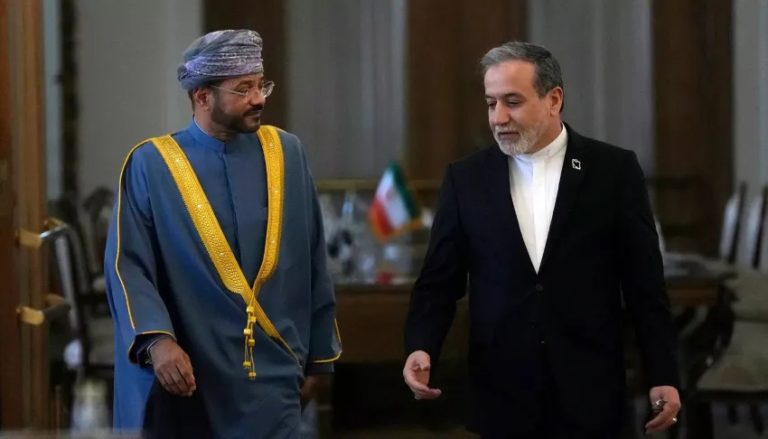
The chaotic diplomatic signals surrounding the latest round of Iran-US engagement—with the venue abruptly shifting from Istanbul to Muscat amid conflicting reports about whether talks would happen at all—may appear to casual observers as mere logistical confusion. In reality, where these negotiations take place reveals as much about Tehran’s strategic calculus as what is actually discussed at the table. Iran’s insistence on Oman as its preferred diplomatic setting reflects a carefully calibrated approach to managing vulnerability, controlling agendas, and preserving strategic autonomy during moments of acute pressure.
Muscat’s Unique Position in Iran’s Diplomatic Architecture
Oman’s role as the indispensable facilitator of US-Iran contact predates the current crisis by well over a decade. Secret talks hosted in Muscat beginning in 2012 under the late Sultan Qaboos laid the groundwork for what eventually became the 2015 Joint Comprehensive Plan of Action—arguably the most significant US-Iran diplomatic achievement in the post-revolutionary era. That backchannel succeeded precisely because Oman offered qualities that Tehran considers non-negotiable in any mediator: genuine impartiality, operational discretion, and limited independent ambitions.
Unlike regional powers that leverage mediation to enhance their own geopolitical standing, Muscat has historically confined its facilitative role to transmitting messages, creating space for exploratory dialogue, and helping parties identify common ground without injecting its own policy preferences. Crucially, Oman does not host permanent US Central Command installations, a factor that distinguishes it from neighboring Gulf states in Tehran’s assessment of mediator credibility. This combination has made Oman uniquely acceptable to an Iranian leadership that is hypersensitive to any perception of negotiating under coercion or within frameworks shaped by adversarial interests.
The consistency dimension is equally significant. Muscat has remained engaged across wildly different phases of the US-Iran relationship—through periods of escalation and détente, through leadership changes in both capitals, and through the collapse and attempted revival of multiple diplomatic frameworks. For a state as institutionally suspicious as the Islamic Republic, this reliability reduces a critical variable: the risk that a mediator will abandon the channel at the first sign of political difficulty.
Why Istanbul Raised Red Flags
The initial proposal to convene talks in Istanbul, reported by Bloomberg in early February, triggered a rapid reassessment in Tehran that illuminates how Iran evaluates alternative mediators. Turkey under President Erdogan is not viewed primarily through the lens of its NATO membership—though that alliance affiliation carries weight. Rather, Tehran regards Ankara as a strategically autonomous regional power with expansive ambitions that could intersect uncomfortably with the substance of nuclear negotiations.
An Istanbul setting risked embedding the talks within a broader regional diplomatic theater where Turkey’s own positioning—in Syria, Gaza, and across the Eastern Mediterranean—could shape the negotiating environment in ways Tehran could not control. The prospect of a more public, regionally visible format threatened precisely the conditions Iran seeks to avoid: agenda expansion beyond the nuclear file, increased political exposure before any substantive progress, and the possibility that facilitation could evolve into political brokerage with Turkish interests attached.
Iran’s approach to Turkey contrasts instructively with its assessment of Qatar as a potential intermediary. Doha has proven effective at facilitating bounded, transactional arrangements—most notably the 2023 prisoner exchange that transferred approximately $6 billion in frozen Iranian oil revenues from South Korean accounts into restricted humanitarian channels in exchange for detained American citizens. However, because Tehran views Qatar as deeply embedded within Washington’s regional security architecture, Doha-mediated channels are considered more susceptible to American agenda-setting—making them suitable for discrete, issue-specific deals but inappropriate for comprehensive nuclear bargaining where controlling the scope of discussion becomes paramount.
Venue as Strategic Instrument
The shift to Oman that was ultimately confirmed by both sides after a day of conflicting signals illustrates a broader pattern in Iranian diplomatic behavior: venue selection functions not as a logistical detail but as a core instrument of negotiation strategy. By choosing where engagement occurs, Tehran shapes what can realistically be discussed, who can influence the proceedings, and how much flexibility each side retains to adjust positions without domestic political consequences.
This matters acutely in the current environment because the diplomatic track is unfolding alongside unprecedented military signaling, internal turmoil within Iran, and intense regional friction. Under such conditions, the risk of “linkage”—nuclear discussions becoming a gateway for broader demands encompassing missiles, proxy networks, human rights, and regional normalization—represents Tehran’s primary procedural concern. A narrow negotiation channeled through a discreet, familiar mediator allows for incremental trade-offs that can be framed domestically as reversible and proportionate. A broad negotiation in a high-visibility setting invites maximalist expectations, multiplies stakeholders, and transforms the process into a public test of resolve that hardliners within the Iranian system can exploit to scuttle progress.
The confused messaging that preceded the venue decision—talks announced, then seemingly cancelled, then revived at Oman—should itself be understood as a form of diplomatic hedging rather than mere dysfunction. When negotiations unfold amid deep uncertainty about their viability, both parties have powerful incentives to preserve bargaining space, probe the other side’s flexibility, and avoid locking themselves into commitments before the contours of a possible agreement become clear.
The Limits of Process Management
Understanding Iran’s mediation preferences clarifies how Tehran manages diplomatic risk, but it does not resolve the structural tensions driving the confrontation. The fundamental disagreement over scope—Washington seeking comprehensive discussions covering missiles, proxies, and regional behavior; Tehran insisting on an exclusively nuclear agenda—predates the venue dispute and will outlast it. Agreeing on Muscat creates conditions under which diplomacy can function; it does not guarantee that diplomacy will produce results.
Moreover, Iran’s defensive approach to mediation reflects a deeper structural reality. The Islamic Republic engages adversaries it fundamentally distrusts from a position of perceived weakness compounded by internal instability, economic deterioration, and the degradation of its regional proxy network. Process management—controlling venues, formats, agendas, and mediator selection—represents one of the few instruments through which Tehran can exercise agency in an otherwise highly constrained diplomatic environment. The insistence on Oman is therefore not obstructionism but a rational attempt to reduce variables that Iran cannot otherwise control.
Whether Muscat can sustain a workable channel through what promises to be an extraordinarily volatile period remains genuinely uncertain. The talks may advance incrementally, stall under the weight of expanded demands, or collapse entirely amid renewed military escalation and domestic political upheaval. What the venue dynamics reveal, however, is that for Iran, the architecture of diplomacy is never secondary to its substance—it is, in the most meaningful sense, where diplomacy actually begins.
Original analysis inspired by Hamidreza Azizi from Iran Analytica. Additional research and verification conducted through multiple sources.