President Donald Trump’s return to office in 2025 positioned Middle East as test of his pledge to restore American strength abroad while avoiding costly foreign entanglements. With Gaza ceasefire secured after threatening “all hell” would be unleashed if hostages weren’t released before inauguration, Trump administration now faces more daunting challenge of advancing next phase including Hamas disarmament, Israeli military withdrawal and assembling international security force. As Gaza truce hangs by thread, administration also juggles battered Iran intent on rebuilding nuclear and missile programs while attempting to mediate unrelenting Sudan war fueled by regional allies. Without progress on Palestinian statehood, Trump’s much-desired Israel-Saudi deal remains out of reach.
After dispatching incoming Middle East envoy Steve Witkoff to help outgoing Biden administration negotiate ceasefire in mid-January that saw dozens of Hamas-held captives released and surge in humanitarian aid to Gaza before it broke down two months later, it would be seven more months before United States and regional allies brokered more permanent ceasefire that Trump touted as start of “historic dawn of new Middle East.” Under October 9, 2025 deal signed in Sharm el-Sheikh, Egypt, Hamas freed all but one remaining hostage in return for Israel’s release of nearly 2,000 Palestinian prisoners and military pullback to “yellow line” bisecting Gaza.
Gaza Ceasefire Implementation Challenges
Implementation has lagged on ceasefire’s second phase envisioning Hamas-free governance in Gaza, multinational force overseeing security, reconstruction of war-battered enclave and Israeli military’s full withdrawal. No country has publicly committed to sending troops, and Hamas has given mixed messages on whether it will disarm as required. “I’m confident it’ll happen,” Secretary of State Marco Rubio told reporters December 19, 2025. “We’re very committed to it, and so is everybody else. Everybody else in region understands that there is no plan B.”
October 9 agreement called for immediate ceasefire upon Israeli government approval, suspension of all military operations including aerial and artillery bombardment, and within 72 hours of Israeli forces withdrawal, release of all Israeli hostages living and deceased held in Gaza. Hamas released 20 living hostages October 13 but only four of 28 deceased hostages. In exchange, Israel released 250 Palestinian security prisoners, over 1,700 Gazans detained during war who were uninvolved in October 7, 2023 onslaught.
Task force was formed of representatives from United States, Qatar, Egypt, Turkey and other countries to follow-up on implementation with both sides. However, two months in, ceasefire has been tested repeatedly with both Hamas and Israel accusing each other of violations. Nearly 400 Palestinians have been killed by Israeli military since it went into effect in October, according to Palestinian Ministry of Health. Israeli military says three soldiers were killed by Hamas militants in same period.
Iran Nuclear Program Uncertainty
Trump began administration with executive order reimposing “maximum pressure” strategy of sanctions targeting Iran from his first term. Months later, United States and Iran began holding indirect talks mediated by Oman over potential deal to limit Tehran’s nuclear ambitions in exchange for lifting some economic sanctions. Formal nuclear negotiations were derailed when United States joined Israel’s 12-day war against Iran, carrying out strikes on Iranian nuclear facilities of Fordow, Natanz and Isfahan.
Trump insisted strikes “obliterated” Iranian nuclear program, but Tehran has banned international inspectors from visiting targeted nuclear facilities to verify that. Amid uncertainty over Iranian nuclear program, Israeli officials have warned Trump administration that Iran has restored ballistic missile capabilities damaged in June attacks. Last month, Trump suggested Iranians were interested in resuming talks with United States: “They’d like very much to make deal with us, and they call us, and we’ll end up probably doing that.” Iranian Foreign Minister Abbas Araghchi, however, told Al Jazeera his country is “not in hurry” to return to negotiating table.
Abraham Accords Expansion Stalls
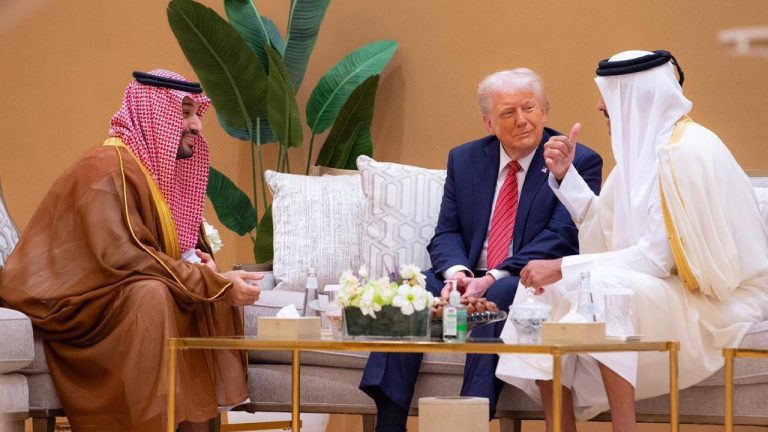
Speaking in Riyadh in May, Trump said it was his “dream” for Saudi Arabia to join Abraham Accords, normalization pacts between Israel and Arab states that he brokered in his first term. There are no signs that Saudi Arabia is close to recognizing Israel, move that would open door for other Arab and Muslim-majority countries to do same. Saudi Crown Prince Mohammed bin Salman told reporters at White House last month that his country joining Abraham Accords first requires meaningful progress on Palestinian statehood, non-starter under current right-wing Israeli government.
In November, Trump announced Abraham Accords would expand to include Kazakhstan, country that’s maintained diplomatic ties with Israel since 1992. Senior Trump administration official told Al-Monitor to expect additional signatories in coming months.
Sudan Civil War Mediation Efforts
Trump administration has sought to end Sudan’s civil war, which has killed tens of thousands and displaced nearly 13 million people since April 2023. Humanitarian emergency worsened after Rapid Support Forces, paramilitary group backed by United Arab Emirates, captured Sudanese city of el-Fasher in late October. “What’s happening there is horrifying; it’s atrocious,” Rubio said in his year-end press conference, adding, “One day story of what’s actually happened there is going to be known, and everyone involved is going to look bad.”
Trump tasked envoy Massad Boulos to handle Sudan file. But it was only after Trump’s November meeting with Saudi crown prince, who briefed him on war, that he appeared to take personal interest in ending what Trump later described as “tremendous atrocities” in Sudan. In September, United States, Saudi Arabia, Egypt and UAE proposed humanitarian truce meant to pave way for durable ceasefire between RSF and Sudan’s armed forces. Earlier this month, Rubio described new year as “great opportunity” for two sides to agree on truce.
Syria Sanctions Relief and Engagement
After dismissing Syria in his first term as nothing more than “sand and death,” Trump has thrown his full support behind country’s new leader, President Ahmed al-Sharaa. In May, Trump met with Syrian leader after announcing he would be lifting decades of economic sanctions imposed on Syria during President Bashar al-Assad’s dictatorial rule to give country “a chance at greatness.” Shortly after, Trump announced US Ambassador to Turkey Tom Barrack would take on additional role as special envoy for Syria.
In months since, Trump administration revoked US terrorist designation on Sharaa’s Hayat Tahrir al-Sham rebel group and successfully lobbied UN Security Council to lift its designation of Sharaa. Last month, Trump hosted Sharaa for historic meeting at White House—first time Syrian leader had set foot in Oval Office since Syria’s 1946 independence. In mid-December, Trump signed Congress’ year-end defense bill which included provision permanently repealing Caesar Act sanctions.
Treasury Department removed 518 Syrian individuals and entities from Specially Designated Nationals list after June 30 executive order. United States also removed Sharaa (formerly known as Abu Mohammed al-Julani) and Syrian Interior Minister Anas Hasan Khattab from Specially Designated Global Terrorist designations in November. Syria formally confirmed it would join global coalition against ISIL, becoming its 90th member, and United States allowed Syria to resume operations at its embassy in Washington to better coordinate on counterterrorism, security and economic issues.
Original reporting by Elizabeth Hagedorn from Al-Monitor. Republished with additional research and verification by ThinkTanksMonitor.