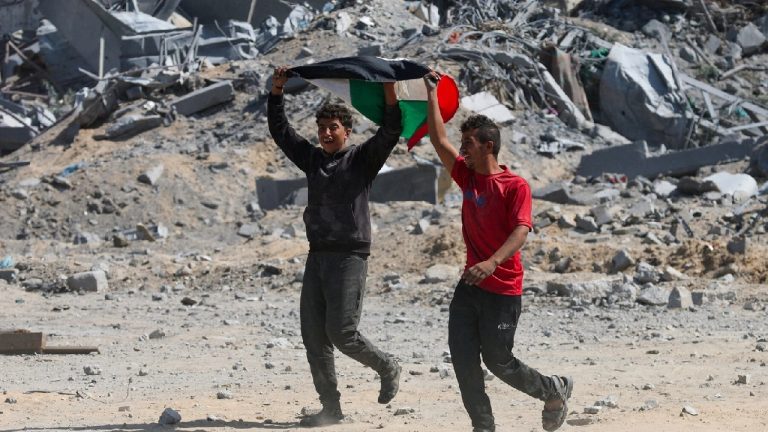
The twenty-point Gaza peace agreement has achieved significant immediate objectives: halting active hostilities after two years of conflict and facilitating hostage returns. However, as the framework transitions from ceasefire to implementation phase, fundamental questions emerge about whether its organizational complexity can substitute for addressing underlying power dynamics and political realities.
Architectural Comprehensiveness Versus Strategic Coherence
The plan encompasses multiple components: immediate ceasefire, Gaza demilitarization, international stabilization force deployment, transitional governance by Palestinian technocrats, large-scale reconstruction, and conditional pathway toward Palestinian statehood. This comprehensive scope addresses virtually every dimension traditionally included in peace frameworks.
Yet comprehensiveness differs from strategic coherence. The plan creates elaborate institutional structures—Board of Peace, executive board, technocratic government—without clearly resolving how these entities acquire actual governing authority. Administrative architecture cannot substitute for addressing fundamental questions about sovereignty, security provision, and power distribution among competing actors.
The International Force Dilemma
The UN Security Council-authorized International Stabilization Force represents the plan’s operational centerpiece. More than two months post-ceasefire, however, no nation has formally committed troops. Initial interest from countries including Indonesia and Azerbaijan has dissipated amid political complications.
The reluctance reflects structural contradictions: Muslim-majority nations resist appearing to cooperate with Israeli forces while those forces remain in Gaza, and few states want to be perceived as fighting Hamas on Israel’s behalf. Historical UN peacekeeping experiences demonstrate that effective stabilization requires both mandate clarity and political will among contributing nations—neither currently evident.
This deployment failure exposes deeper implementation challenges. The plan calls for Hamas disarmament while providing no realistic enforcement mechanism. Armed movements rarely disarm voluntarily absent either military defeat or political settlement addressing their core objectives. Hamas retains significant military capacity and governing authority in Gaza, yet the framework attempts to bypass rather than address this reality.
Governance Without Authority
The proposed governance structure features Trump chairing a Board of Peace including approximately ten Arab and Western leaders, an executive board with Tony Blair, Jared Kushner, Steve Witkoff and participating country officials, and a Palestinian technocratic government of 12-15 individuals with business and management experience but no Hamas, Fatah, or political faction affiliation.
This arrangement prioritizes technical competence over political legitimacy. However, effective governance requires not merely administrative capacity but actual authority—the ability to make decisions, enforce rules, provide services, and maintain order. Technocrats, however capable, cannot govern without either popular legitimacy or force capacity.
The Palestinian Authority, which theoretically possesses West Bank legitimacy, has been systematically weakened and lacks Gaza credibility. Hamas, which actually controls Gaza through armed force, faces complete exclusion. The international community, supposedly providing security guarantees, cannot muster single battalion. This creates governance vacuum that organizational charts cannot fill.
Statehood Aspirations and Political Evasion
The framework’s Palestinian statehood language reveals strategic ambiguity serving multiple diplomatic purposes. The agreement states that if reconstruction proceeds and Palestinian Authority implements reforms, this “may” create conditions for “credible pathway to Palestinian self-determination and statehood.”
This carefully hedged formulation provides minimum necessary for Arab and European support while offering Netanyahu’s coalition assurance that nothing concrete has been promised. Palestinians receive recognition of aspirations without timeline, borders, capital, or guarantees. Israelis obtain assurance that statehood remains contingent on preconditions unlikely to be met.
The international community celebrates brokering “comprehensive” plan while deferring most difficult decisions indefinitely. This pattern—acknowledging Palestinian aspirations while avoiding concrete commitments—has characterized multiple previous frameworks without producing sustainable outcomes.
Elements of Legitimate Strategic Reassessment
Certain aspects of current Middle East analysis reflect genuine strategic realism. Recognition that American energy independence has reduced regional centrality to US interests represents overdue adjustment. Acknowledgment that lecturing Arab monarchies about governance has proven counterproductive departs from democracy-promotion orthodoxy. Understanding that regional partners must assume greater security responsibility aligns with more restrained conception of American power.
However, recognizing that the Middle East should not dominate American foreign policy differs from believing sustainable peace emerges through personal relationships and transactional diplomacy. The current approach assumes cultivated ties with Arab leaders will generate necessary troops, funding, and political cover. It presumes willingness to threaten Hamas substitutes for realistic assessment of what force can achieve in Gaza’s complex environment.
Personalized Diplomacy and Institutional Fragility
The plan’s deep personalization around Trump creates multiple vulnerabilities. He chairs the Board of Peace. His son-in-law sits on the executive board. His special envoys negotiate details. This structure ties agreement legitimacy to Trump’s political fortunes rather than institutional frameworks surviving political transitions.
It suggests maintaining the ceasefire depends more on Trump’s personal attention and pressure than on self-sustaining conflict resolution mechanisms. It reinforces perception that this represents American-Israeli plan with Arab and European buy-in rather than genuinely regional initiative with American support.
The comparison to Trump’s first-term [“Peace to Prosperity” plan](https://trumpwhitehouse.archives.gov/peacetoprosp erity/) proves instructive. That framework also promised to transform the Israeli-Palestinian conflict through economic development and regional normalization while deferring statehood questions. It failed because it ignored political realities making the conflict intractable. Current framework risks repeating this error by assuming administrative structures and reconstruction funding substitute for addressing sovereignty, security, and power questions.
Missing Prerequisites for Sustainable Stabilization
Genuinely realistic Gaza stabilization would require several elements conspicuously absent:
Honest Assessment of Hamas’s Role: Hamas cannot be administratively bypassed. Sustainable governance requires either incorporating Hamas into power-sharing arrangements or creating Palestinian security force capable of marginalizing it—neither addressed by current framework.
Israeli Long-Term Intentions: The plan assumes Israeli forces withdraw but provides no mechanism ensuring this occurs or defining subsequent arrangements. Is Gaza to be reoccupied, annexed, or maintained in permanent limbo? Strategic ambiguity may facilitate agreement signing but undermines implementation.
Concrete Regional Commitments: If Egypt and Jordan train Palestinian security forces and contribute to international force, they require clear terms of reference, rules of engagement, and burden-sharing assurances. Vague participation promises prove insufficient when deployments require political capital and potential casualties.
Meaningful Progress on Palestinian Aspirations: This need not mean immediate statehood recognition but requires more than conditional, distant possibilities hedged with endless qualifications. Without tangible political horizon, Palestinian cooperation remains uncertain and Hamas retains legitimacy as resistance organization.
The Agreement-Versus-Peace Distinction
The international community has developed unfortunate habit of celebrating agreement signings as if they represent final solutions rather than fragile beginnings of difficult processes. The Oslo Accords, Camp David talks, Wye River Memorandum, Road Map, and countless other initiatives represented genuine diplomatic achievements. None produced lasting peace because none addressed fundamental incompatibilities between parties’ core demands.
Trump’s plan risks joining this litany—lauded for comprehensiveness, undermined by evasions. Whether urgency stems from Nobel Peace Prize aspirations or other motivations, the conflation of peace agreements with actual peace produces frameworks celebrating form over substance.
Requirements for Substantive Progress
For the framework to succeed, several developments must occur beyond current trajectory:
Trump must exert sustained pressure on Israel, not merely Hamas, to comply with agreement terms. Arab states must move beyond diplomatic statements to concrete troop, funding, and political capital commitments. European powers must insist on accountability mechanisms and progress benchmarks rather than allowing indefinite transition drift.
Most fundamentally, all parties must honestly assess gaps between plan aspirations and regional realities. Strategic realism means assessing what American power can achieve, what regional partners will undertake, and what objectives prove genuinely attainable. It means recognizing that ending American military involvement differs from securing sustainable peace—and that half-measures dressed as comprehensive plans often worsen situations.
The Restraint Advocate’s Dilemma
Those advocating more restrained American foreign policy face particular challenge: avoiding applauding plans simply because they claim different approaches from previous administrations. Genuine strategic realism requires honest assessment of implementation feasibility, not merely rhetorical departure from past policies.
The danger is that this framework becomes another example of ambition exceeding strategy, organizational complexity substituting for clear thinking, and desire for diplomatic wins overriding sober possibility assessments. For restraint advocates, the challenge involves articulating alternatives avoiding both missionary interventionism of previous decades and transactional deal-making mistaking agreements for solutions.
The Gaza plan is comprehensive, ambitious, and enjoys broad international support. What it lacks is strategic coherence addressing actual power dynamics, institutional capacity, and political will necessary for implementation. In the Middle East, that deficit typically asserts itself at inopportune moments, transforming celebrated diplomatic achievements into cautionary tales about aspiration divorced from reality.
Original analysis inspired by Leon Hadar from Asia Times. Additional research and verification conducted through multiple sources.