Leadership decisions emerge not from formal deliberation but from informal networks of affirmation. When a national executive repeatedly poses the same question to trusted advisers—“Is this a winner?”—the psychological effect gradually shifts the framing of complex geopolitical choices from analytical assessment toward emotional validation of predetermined action. This dynamic has particular relevance to recent U.S. military operations and escalatory threats in the Middle East, where personality-driven impulse increasingly shapes foreign policy at the expense of institutional wisdom.
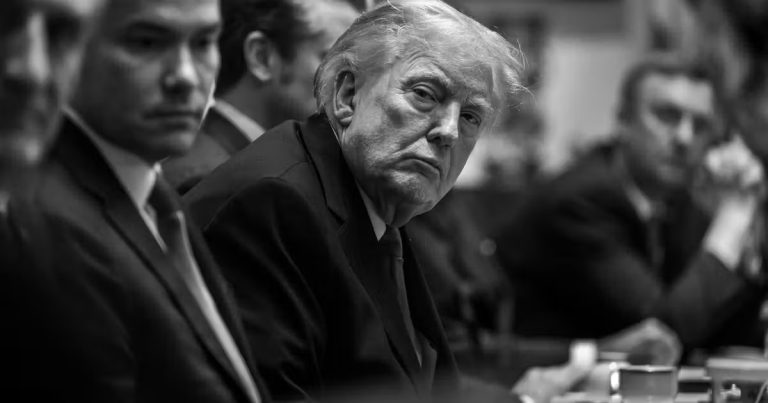
Senior policymakers rely extensively on unrecorded phone conversations to clarify their thinking and test propositions among trusted confidantes. Trump biographer Michael Wolff has documented this pattern extensively, observing that the president’s “internal thinking is external” and manifested through “a series of his constant calls.” When a leader asks identical questions to the same circle—“Were they going to win? Is this a winner? Is this game-over?”—the cumulative effect of affirmative responses creates psychological momentum toward action, regardless of underlying strategic risk.
This telephone-mediated conviction-building operates outside formal interagency processes, which typically include institutional skeptics, intelligence assessments, and legal considerations. The informal channel privileges speed, emotional affirmation, and tribal loyalty over rigorous analysis. Research on decision-making under uncertainty demonstrates that leaders who rely on narrow circles of advisers systematically underestimate adversary resilience and overestimate the likelihood of swift victory.
The Failed Sabotage and Covert Operations Template
In January 2026, Iran experienced a two-pronged destabilization attempt: simultaneous military strikes against air-defense infrastructure and coordinated civil unrest designed to create the appearance of state collapse. The military component involved precision attacks on Iranian short-range air-defense systems using infiltrated operatives equipped with smuggled small drones and anti-tank weaponry. The civil dimension relied on professional operatives inserted into urban centers to escalate spontaneous protests into organized violence.
The operational design followed a established template: covert agents provocateurs infiltrate gatherings of legitimately aggrieved citizens (in this case, merchants and youth angered by currency devaluation), then escalate confrontations through carefully orchestrated violence. Women in the mob film scenes of violence while screaming incitement; armed operators fire from elevated positions to create reciprocal violence between security forces and civilians. The effect, if successful, produces media imagery of a state “slaughtering its own people”—a narrative frame intended to justify external military intervention.
This playbook has been deployed across multiple countries and relies on a critical technological infrastructure: secure, encrypted satellite communications that external coordinators cannot jam. Intelligence assessments indicated that Starlink satellite terminals smuggled into Iran (estimated at 40,000 units) provided this command-and-control capability for distributed protest cells.
The Immediate Collapse as Forensic Evidence
The Iranian government’s response—severing international telecommunications, disabling mobile-network connectivity, and blocking satellite internet—produced a dramatic result: within 70 hours, organized riots ceased almost entirely across all Iranian cities. No new unrest emerged; instead, mass demonstrations of support for the state appeared. Videos circulating after this point were largely archival, redistributed from external hubs outside Iran’s borders.
This abrupt termination reveals the organizational structure of the unrest. Genuine grassroots uprisings, born from authentic grievance, display adaptive resilience: they shift to alternative communication methods, decentralize leadership, and sustain momentum even when a single technology is disrupted. The instantaneous collapse upon satellite-link severance indicates that external coordinators, lacking redundant channels, lost operational control of distributed cells simultaneously.
The World Bank’s research on civil unrest identifies three prerequisites for externally-directed uprising: economic grievance, information dominance by external actors, and secure operational coordination. All three were engineered in Iran’s case: currency devaluation of 30–40 percent (likely orchestrated via short-selling from financial hubs outside Iran), media narrative control via captured footage, and satellite-based command channels.
The Currency Weapon and Economic Coercion
The timing of the Rial’s collapse—late December 2025, coinciding with Netanyahu’s visit to Mar-a-Lago—suggests coordination between Israeli and U.S. leadership. Short-selling of Iran’s currency, potentially executed through Dubai-based financial actors, devastated merchants dependent on stable exchange rates and pushed middle-class youth into relative poverty. Economic distress, historically, serves as the kindling for civil unrest; external actors exploit this window to introduce operatives and escalate spontaneous grievance into organized violence.
Iran’s response—supported by Turkish intelligence in apprehending armed Kurdish fighters crossing from Syria and Iraq—neutralized the armed component of the destabilization attempt. But the critical breakthrough came through severing the technological backbone of external coordination.
The Doctrine of the “Perfect War”
Wolff’s reporting reveals that Trump repeatedly invoked the concept of a “perfect war”: militarily decisive, swift in execution (“in-boom-out”), generating favorable media coverage (“It has to play well”), and avoiding significant casualties (“Nobody dies”). This fantasy of clean, costless conflict reflects narcissistic thinking patterns wherein reality is subordinated to narrative and psychological satisfaction.
Trump’s June 2025 strikes on Iranian uranium-enrichment facilities appeared, in his framing, to fit this template. The operation was labeled a success because it “played”—achieved media visibility without triggering immediate escalation. However, the subsequent 12-day military exchange (initiated by Iranian missile strikes) revealed the limits of the “perfect war” concept: adversaries do not cooperate with scripted scenarios.
Institutional Constraints and Escalatory Risk
Despite the psychological momentum for renewed strikes, structural obstacles persist. The U.S. military establishment has traditionally resisted attacks on nuclear-adjacent targets, citing escalation pathways and uncertain outcomes. Congressional authorization for sustained conflict remains uncertain. Regional allies—particularly Gulf monarchies—have signaled preference for negotiation over escalation.
These institutional guardrails have not prevented military action, but they have constrained its scope and delayed its execution. Trump’s current dilemma—how to project strength and dominance without triggering wider conflict—reflects the collision between psychological needs for visible victory and strategic realities that resist clean resolution.
Conclusion: When Narrative Trumps Analysis
The attempted destabilization of Iran reveals how personality-driven foreign policy can override institutional wisdom and factual constraint. When leaders rely on repetitive telephone affirmation from narrow circles rather than rigorous interagency deliberation, the risk of strategic miscalculation rises substantially. The swift failure of both the military sabotage and the civil-unrest components demonstrated Iranian institutional resilience and highlighted the vulnerabilities of external destabilization strategies.
Whether Trump will authorize renewed strikes depends partly on whether institutional resistance can contain impulse-driven decision-making. The psychological need for a “big deal” victory, however, may override rational calculation of risk—a dynamic that threatens wider regional escalation regardless of strategic logic.
Original analysis by Alastair Crooke, Geopolitika (January 2026). Restructured and expanded by ThinkTanksMonitor.