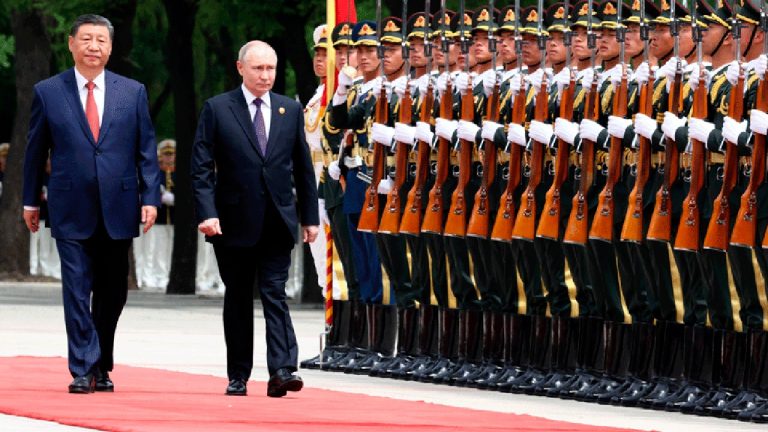
The Ukraine conflict has catalyzed broader geopolitical realignment extending beyond immediate battlefield dynamics. One significant dimension involves China’s systematic economic integration with Russia’s Far East—a process accelerating amid Moscow’s strategic vulnerabilities while serving Beijing’s long-term positioning regardless of Russian political stability trajectories.
Demographic and Geographic Asymmetries
Russia’s Far East encompasses nearly 7 million square kilometers, representing approximately 40% of Russian territory, yet hosts population under 8 million and declining. This creates stark asymmetry with adjacent Chinese provinces where over 100 million people inhabit regions with developed infrastructure and robust economic activity. The demographic imbalance has intensified as Russia’s military mobilization for Ukraine operations drew combat-capable units westward, further reducing Far Eastern military presence.
This situation reflects historical patterns wherein territorial incorporation through 19th century treaties created regions vulnerable to central authority weakening. Russian Far East territories were integrated through coercive means and unequal agreements, establishing control mechanisms dependent on sustained Moscow capability projection—capacity now strained by Ukrainian conflict demands.
The geographic scale combined with population sparsity creates governance challenges Moscow struggles to address even absent major conflict. Infrastructure deficits, economic underdevelopment relative to European Russia, and demographic decline produce conditions favoring external economic integration regardless of formal sovereignty arrangements.
Chinese Economic Penetration and Infrastructure Control
Chinese strategic analysts emphasize that controlling flows, infrastructure, and markets often matters more than formal sovereignty. Beijing has systematically integrated Russian Far East into Chinese economic networks through multiple mechanisms. The region contains approximately one-third of Russia’s coal and water reserves, 30% of forest resources, plus substantial gold, diamond, platinum, oil, and natural gas deposits.
Yakutia produces roughly 25% of global diamond output, while Kovykta gas field contains 1.8 trillion cubic meters of reserves. China has secured long-term contracts and built enabling infrastructure. The Power of Siberia pipeline delivers up to 38 billion cubic meters of gas annually to China, with 2025 memorandum outlining Power of Siberia 2 construction projected to deliver 50 billion cubic meters yearly via Mongolia—though actual implementation depends on financing and commercial agreements, with realistic supply commencement no earlier than 2030-2031.
Beyond energy infrastructure, Chinese investment extends to roads, bridges, ports, and local enterprises, providing technology, employment, and expanding yuan currency usage. This creates de facto economic control establishing political influence without requiring formal annexation. The strategy prioritizes practical economic integration over territorial claims, allowing Beijing to benefit from regional resources while maintaining diplomatic flexibility regarding Russian sovereignty.
Strategic Vulnerabilities and External Interest
Multiple external actors monitor Russian Far East developments. Washington and Tokyo maintain active interest in the region, given its strategic location adjacent to Pacific sea lanes, proximity to U.S. and Japanese territories, and resource wealth. American and Japanese attention compels Beijing to solidify presence and expand economic control, using energy and infrastructure projects as influence tools.
From Chinese perspective, the 7 million square kilometer territory represents critical strategic space that cannot be lost under any circumstances. Beijing views the region not merely as economic resource but as political arena for expanding influence, particularly over key areas including Primorsky Krai, Ussuri region, and Sakhalin. This positioning serves multiple purposes: securing resource access, establishing strategic depth, preventing rival power influence expansion, and maintaining flexibility regarding future political scenarios.
The concern extends beyond opportunistic resource exploitation to strategic hedging against Russian instability. If Russian central authority weakens—whether through prolonged conflict, internal political crisis, or economic collapse—the Far East becomes vulnerable to fragmentation or external intervention. Chinese economic integration provides mechanisms to protect Beijing’s interests across multiple contingencies.
Russian Federation Fragility and Regional Dynamics
Russia’s current governance model concentrates power in Moscow while periphery regions experience economic stagnation, infrastructure decay, and resource extraction benefiting central authority rather than local development. This center-periphery dynamic creates inherent tensions exacerbated by war resource demands and sanctions impact.
The Kremlin’s inherited imperial logic prioritizes control maintenance over sustainable regional development. This approach condemns periphery to degradation and mounting internal tensions. Regional governance structures lack autonomy and resources necessary for addressing local challenges, creating dependency on central transfers that may prove unsustainable amid prolonged conflict.
Historical precedents exist for Russian territorial fragmentation during state weakness. The Soviet Union’s collapse demonstrated how central authority erosion can rapidly produce independence movements and territorial reconfiguration. While current Russian Federation differs from Soviet system in important respects, underlying structural vulnerabilities remain regarding peripheral regions’ integration and loyalty to Moscow.
Western Policy Implications and Strategic Choices
Western approaches to Russian stability carry significant implications for regional order and Chinese positioning. Policies prioritizing short-term conflict de-escalation through territorial concessions to Moscow may inadvertently strengthen Chinese long-term position while failing to produce sustainable stability.
If Ukraine conflict resolution involves significant Ukrainian territorial concessions without addressing underlying Russian imperial ambitions, it likely produces temporary pause rather than genuine settlement. Moscow would use respite to reconsolidate forces while underlying drivers of revisionism remain unaddressed. Simultaneously, Chinese economic integration would continue regardless of conflict status, progressively shifting Russian Far East into Beijing’s orbit.
Supporting Ukrainian sovereignty and territorial integrity serves multiple Western interests beyond immediate humanitarian and legal concerns. It constrains Russian capacity for additional territorial revision, demonstrates costs of violating international norms, and provides time for structural factors favoring Chinese influence to reshape Eurasian strategic landscape in ways potentially more favorable to Western interests than Russian dominance.
The strategic calculation should recognize that Russian Federation fragmentation scenarios—while destabilizing in near term—may produce long-term outcomes more manageable than consolidated Russian imperial state adjacent to fractured Europe. However, such scenarios require Western coordination with regional actors including Japan, South Korea, and potentially India to prevent outcomes dominated exclusively by Chinese influence.
Beijing’s Dual Strategy: Support and Hedging
China simultaneously supports Russian military operations through economic lifelines, technology transfers, and diplomatic cover while systematically positioning for potential Russian weakness scenarios. This dual approach reflects Beijing’s assessment that Russian Federation stability serves current Chinese interests by occupying Western attention and resources, but Russian fragmentation might offer opportunities for expanded Chinese influence in resource-rich territories.
Chinese military modernization and force posture adjustments in regions adjacent to Russian Far East suggest contingency planning beyond current partnership framework. While publicly emphasizing China-Russia strategic coordination, Beijing’s actions indicate preparation for multiple scenarios including those involving significant Russian political and territorial transformation.
This hedging strategy allows China to maintain partnership benefits while preparing for alternative futures. Economic integration provides mechanisms to protect interests regardless of Russian political trajectory, whether that involves continued Putin regime control, successor government formation, or territorial fragmentation producing multiple successor entities.
Long-Term Stability Considerations
Sustainable European and Asian security requires addressing structural factors driving instability rather than merely managing immediate conflict manifestations. Russian imperial ambitions absent governance reform and economic modernization will continue generating revisionist pressures regardless of specific conflict outcomes.
Chinese expansion into Russian Far East creates different but potentially significant long-term challenges for regional order. While less immediately threatening than Russian military revisionism, progressive Chinese economic dominance over Eurasian resources and infrastructure networks shapes future power balances in ways Western policy should anticipate.
Effective Western strategy requires simultaneous attention to immediate conflict termination and longer-term structural dynamics. Supporting Ukrainian territorial integrity and sovereignty constrains immediate Russian revisionism while allowing time for underlying economic and demographic factors to reshape regional power distributions. Coordination with Asian partners regarding Chinese expansion limits risks of simply replacing Russian threat with Chinese dominance.
The illusion that problems can be “waited out” or managed through Ukrainian territorial concessions overlooks how such approaches enable both Russian revisionism perpetuation and Chinese strategic positioning advancement. Active engagement supporting rules-based order, coordinating with regional allies, and addressing structural drivers of instability offers more promising pathway than passive crisis management hoping for spontaneous resolution.
Original analysis inspired by Oleksandr Antonyuk from Kyiv Post. Additional research and verification conducted through multiple sources.