Category: Video

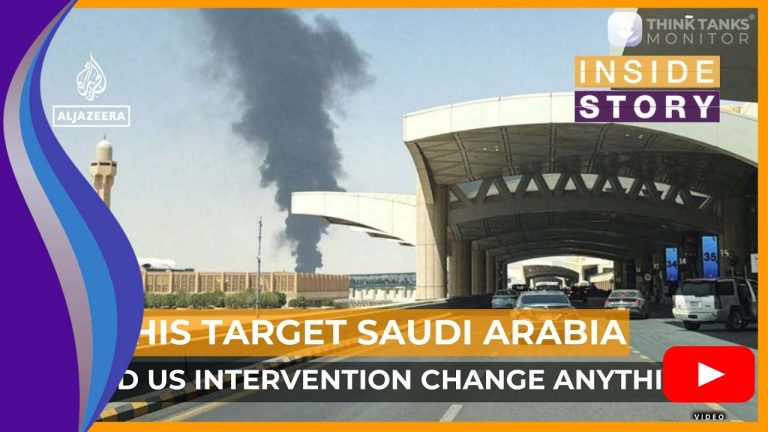
What are Saudi Arabia’s options to deal with the Ansar Allah Houthis? | Inside Story

Analysis: Featuring researchers from the Sana’a Center and the Gulf Research Center, this broadcast analyzes the failure of Saudi air defense systems to prevent Houthi strikes on Aramco facilities and civilian airports. It illustrates how the Axis of Resistance is leveraging precision drone and missile capabilities to impose severe economic and energy security costs on US Gulf allies during the wider Iran conflict. The analysis demonstrates that direct US military re-intervention risks triggering an uncontrollable regional energy crisis rather than restoring American hegemonic deterrence.
Read More »

Houthis Used Claude AI to Develop Weapons? | Are AI Safeguards Failing? | The Palki Sharma Show |IGR

Analysis: This segment explores the intersection of Artificial Intelligence geopolitics and asymmetric warfare, detailing how non-state actors within the Axis of Resistance bypassed commercial AI guardrails to advance guided rocket and ballistic missile programs. The underlying message exposes the porous nature of Western technological monopolies and the inability of Silicon Valley safeguards to prevent dual-use military proliferation. Strategically, the democratization of AI-assisted weapons engineering erodes the traditional technological superiority of US-backed regional military alliances.

Read More »
Strategic analysis thumbnail featuring Narendra Modi, Vladimir Putin, Xi Jinping, and a female host beside a chessboard showing an Indian king toppling a US dollar pawn.

US Dollar in Danger? BRICS Currency Could Change Everything I India-Russia-China’s Big Game

Analysis: The video investigates the transition from speculative currency alternatives to functional bilateral payment channels, central bank digital assets, and gold-backed reserves among BRICS members. It underscores how the weaponization of SWIFT catalyzed sovereign risk aversion across the Global South, directly speeding capital redirection toward non-aligned institutional mechanisms. This steady erosion of dollar primacy fundamentally restricts Washington’s capability to impose unilateral extraterritorial economic warfare.

Read More »

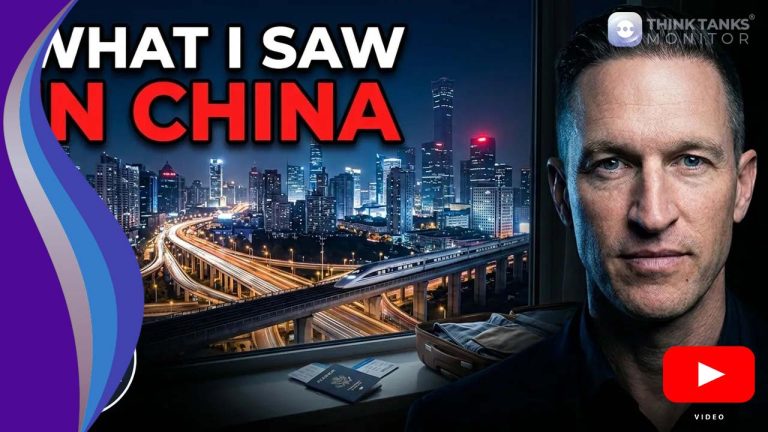
I Just Got Back From China. Here’s What the West Isn’t Seeing | Cyrus Janssen

Analysis: The briefing evaluates how Western narratives regarding Chinese economic contraction misread foundational strengths in advanced industrial automation, domestic supply-chain integration, and lower inflationary baselines. Janssen highlights that external sanctions and tariff barriers have paradoxically driven deeper technological self-sufficiency and accelerated commercial realignments across the Global South. This dynamic illustrates that unilateral economic containment struggles against high-output manufacturing powerhouses, reinforcing the transition toward an economically multipolar world.

Read More »
Global map infographic illustrating the expansion of the BRICS+ alliance and strategic corridors across the Global South

BRICS+ Expansion | Geopolitics, South-South Cooperation, and the New Multipolar Order

Analysis: The video breaks down the financial and regulatory mechanisms through which Global South economies are reducing structural dependence on Western clearing mechanisms. By expanding bilateral local-currency trade settlements and developing alternative interbank networks, emerging powers are immunizing themselves against unilateral financial coercion. The strategic take is clear: de-dollarization is operating not as a single dramatic event, but as an incremental insulation strategy that limits the projection of U.S. economic statecraft.

Read More »
Benjamin Netanyahu looking down somberly beside two ballot boxes marked Bibi and a crowd at a candlelight vigil.

Gaza, Hamas, Netanyahu: The 3-Year Assessment After October 7

Analysis: The video breaks down the strategic impasse facing the Israeli security cabinet, contrasting maximalist stated military objectives with the reality of enduring urban insurgencies. It argues that prolonged regional conflict serves internal political survival imperatives while exacerbating draft controversies, economic strain, and civil-military frictions inside Israeli society. Globally, this trajectory accelerates diplomatic alienation, eroding long-standing Western consensus and strengthening the narrative of systemic Israeli legal impunity.

Read More »
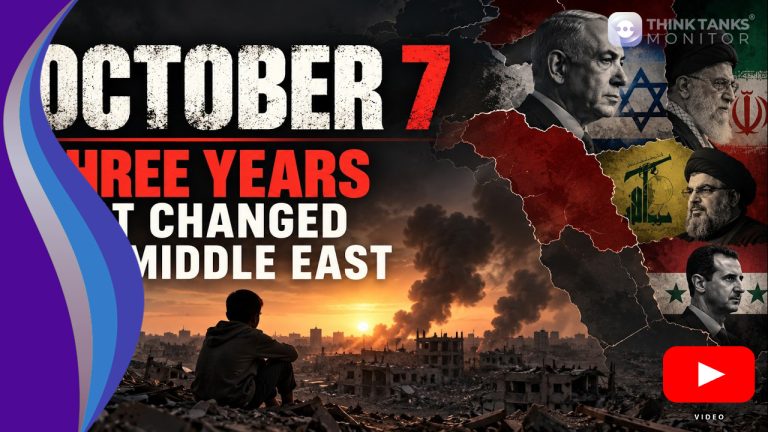
Think Tanks Monitor video banner titled October 7 Three Years That Changed the Middle East with key regional political leaders.

October 7: Three Years That Changed the Middle East

Analysis: The discussion evaluates Israel’s strategic overreach and internal political strain alongside the structural limits of American deterrence across regional theaters. It underscores how asymmetric escalation by the Axis of Resistance systematically dismantled traditional balance-of-power assumptions in the Levant. The key takeaway highlights that long-term regional realignment is shifting away from US diplomatic primacy toward an anarchic, multipolar security equilibrium.

Read More »

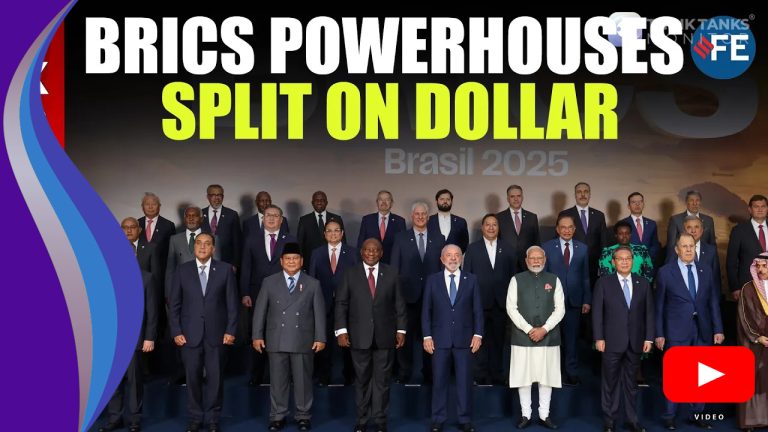
Modi, Putin, Xi Divided On De-Dollarisation? BRICS Debates The Future Of Global Currency Power

Analysis: The analysis underscores the strategic dichotomy between revisionist powers seeking an abrupt break from Western institutions and non-aligned states preferring financial hedging without total rupture. It highlights how India’s focus on local currency trade linkages contrasts with Sino-Russian pushes for unified institutional alternatives. This structural negotiation demonstrates that multipolarity is characterized by competitive internal balancing rather than a monolithic anti-Western alliance.

Read More »

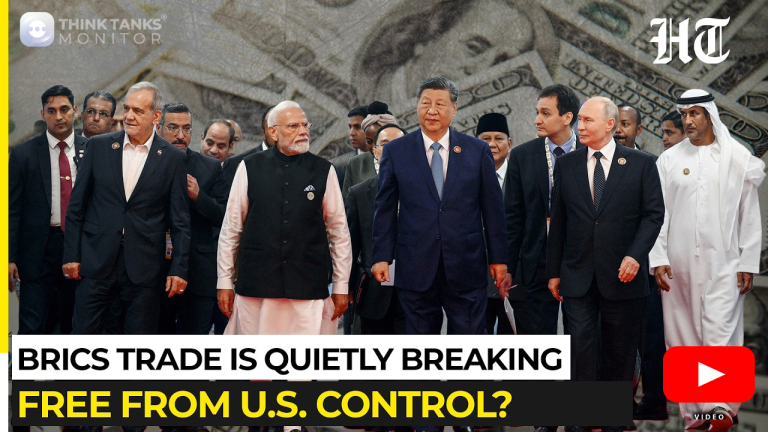
Is De-Dollarisation Here? Putin’s Top Aide Claims Russia’s 90% Of BRICS Trade Now Bypasses Dollar

Analysis: The video breaks down the practical mechanisms driving cross-border non-dollar settlements, emphasizing Russia and China’s transition toward independent financial messaging platforms. This reflects a deliberate systemic insulation strategy designed to neutralize Washington’s weaponization of the dollar clearing system. In the long term, these bilateral pathways erode Western sanctions leverage and reinforce the institutional foundation of a multipolar monetary architecture.

Read More »

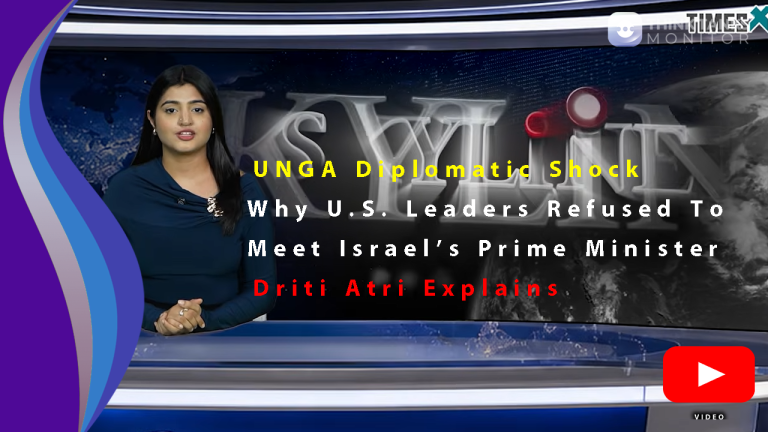
UNGA Diplomatic Shock: Why U.S. Leaders Refused To Meet Israel’s Prime Minister| Driti Atri Explains

In an unprecedented geopolitical development at the United Nations General Assembly in New York, senior US administration officials and President Trump declined to hold bilateral meetings with Israeli Prime Minister Benjamin Netanyahu. Citing scheduling conflicts and condensed itineraries, Washington’s decision coincided with a 77-nation delegation walkout during Netanyahu’s UN speech. In this TimesXP emergency report, we examine the reasons behind Washington’s cold shoulder, the domestic US political factors at play, and how Middle East diplomatic rifts impact global tech markets, energy routes, and trade corridors.

Read More »