Category: Persian Gulf Countries

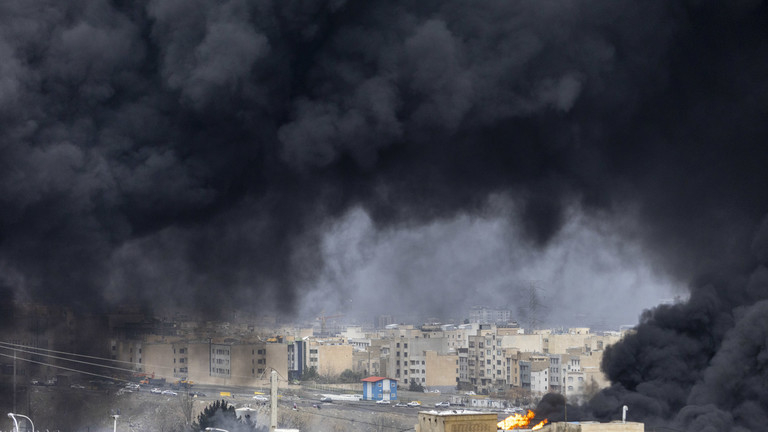
A nighttime view of a city skyline with a large, dark plume of smoke and fire rising from the center. The city lights are visible across the horizon under a dark sky.

When the Strait Closes: Food, Water, and the Hidden Cost of War

The closure of the Strait of Hormuz has triggered a global crisis extending beyond oil, paralyzing a third of the world’s fertilizer trade and threatening desalination plants critical for drinking water. This disruption risks long-term food inflation, compromised harvests, and severe economic strain on millions far from the conflict.

Read More »

Iran’s Attack on Qatar’s Gas Fields Shatters Gulf Neutrality

Iran’s strike on Ras Laffan shattered Gulf neutrality. By targeting Qatar’s LNG lifeline, Tehran turned a mediator into an adversary. This “miscalculation” is welding the GCC to Washington’s military campaign. As neutrality shrinks, the Gulf’s focus has shifted from ending the war to ensuring Iran is permanently defanged.

Read More »
Thick black smoke rising from industrial oil storage tanks near a port facility.

US is Using Clone Drones for False Flag Attacks on Gulf States

Iran claims the U.S. and Israel are staging false‑flag attacks on Gulf states using LUCAS drones — an American system modeled on the Shahed. The allegation, unverified but strategically potent, aims to sow doubt among Gulf partners already shaken by the war and to fracture Washington’s fragile regional alignment.

Read More »
A large oil tanker at sea with black smoke billowing from its deck and a rescue boat nearby.

Reopening Hormuz: The Military Puzzle With No Quick Solution

Iran has shut the Strait of Hormuz with cheap drones and mines, while the U.S. lacks the ships, minesweepers, and escorts needed to reopen it quickly. Insurance markets have collapsed, oil supplies are plunging, and every delay strengthens Iran’s leverage. Some battlefields can be bombed open; Hormuz isn’t one of them.

Read More »
Stylized graphic of Donald Trump's face superimposed on a waving American flag.

Is Iran the Suez Moment That Ends American Hegemony?

Iran’s retaliation has exposed the limits of U.S. power: Gulf allies were hit despite hosting American bases, the Strait of Hormuz is shut, and global markets are recalibrating around a less reliable Washington. The war’s political and economic fallout accelerates a shift toward multipolarity — a moment many now compare to America’s Suez.

Read More »
Man walking with a briefcase in front of a massive black smoke plume from a burning warehouse.

Gulf States Face an Impossible Reckoning After Iran’s Barrage

Iran’s unprecedented barrage on all six GCC states has shattered the Gulf’s belief that they could host U.S. bases, court Tehran diplomatically, and stay insulated from war. Missiles have crippled refineries, LNG exports, and data centers, while trust in both Washington and Tehran collapses — forcing Gulf rulers into a strategic reckoning they long tried to avoid.

Read More »
A group of over twenty diplomats and officials in suits and traditional Arab attire standing for a formal group photo on a red carpet in front of a large white banner that reads "2nd INDIA-ARAB FOREIGN MINISTERS' MEETING, Saturday, 31st January, 2026, New Delhi."

India’s Multipolar Gamble With the Arab World

The revival of the India–Arab Foreign Ministers’ Meeting after a decade isn’t just a diplomatic reunion. It’s a sign that both India and the Arab world are trying to position themselves in a world where the Western-led order is cracking from within — and where Washington’s reliability can no longer be assumed.

Read More »
A horizontal conceptual digital art piece featuring a hooded figure on the left, a red map of Iran in the center, and a detailed bronze Chinese dragon head on the right, all set against a background of digital binary code and a faded Israeli flag.

Beijing Builds a Digital Great Wall to Shield Iran From Mossad

China is no longer treating Israeli covert operations inside Iran as a distant regional issue. For Beijing, the recent wave of sabotage, assassinations, and radar penetrations has revealed a new model of warfare — one that blends cyber infiltration, internal disruption, and precision strikes. And because Iran sits at the heart of China’s Belt and Road energy corridor, Beijing now sees Iranian vulnerability as Chinese vulnerability.

Read More »