Category: Middle East

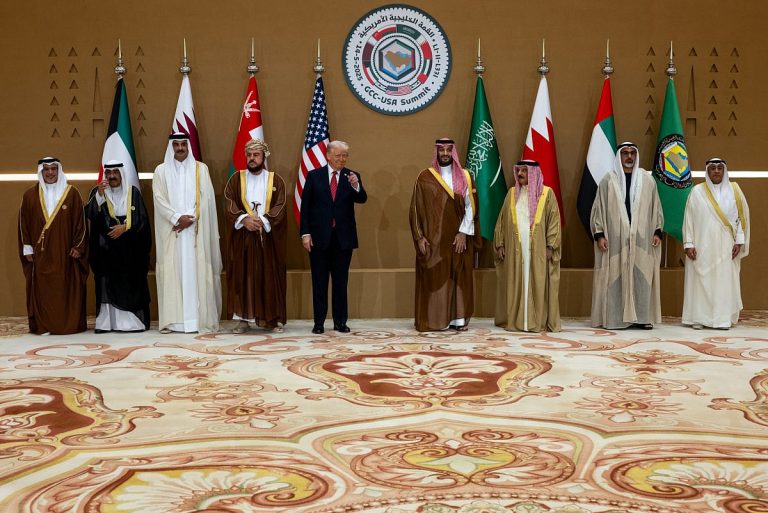
Leaders of the Gulf Cooperation Council (GCC) at a summit, symbolizing the growing economic and political competition between Saudi Arabia and the UAE.

Saudi-UAE Regional Competition: Economic Hub Rivalry and Political Divergence Risk Gulf Stability

The competition between Riyadh and Abu Dhabi has shifted from healthy rivalry to a high-stakes struggle for regional gravity. As Saudi Arabia lures 675 global headquarters with tax incentives, it directly challenges the UAE’s hub model. This economic friction, mirrored in political clashes over Sudan and Yemen, threatens to destabilize Gulf integration and overall regional security.

Read More »
Donald Trump, Mark Savaya, and JD Vance standing together and smiling in front of American flags.

Trump’s Iraq Strategy: Unconventional Envoy Appointment Signals Transactional Diplomacy Shift

In a major shift toward “business-oriented diplomacy,” President Trump has appointed Detroit entrepreneur Mark Savaya as the U.S. Special Envoy to Iraq. A Chaldean-American with deep regional ties but no traditional diplomatic background, Savaya is tasked with stabilizing Iraq’s economy and curbing Iranian influence. His mission—focused on disarming militias and opening Iraqi oil and energy markets—signals a pragmatic, deal-driven era for U.S.-Iraq relations that prioritizes economic sovereignty over conventional foreign policy.

Read More »
A portrait of Ze'ev Jabotinsky in a hat and glasses, superimposed over a faded background of historical Middle Eastern figures and conflict scenes.

Revisionist Zionism’s Iron Wall Doctrine: Ideological Foundations of Netanyahu’s Strategy

Vladimir Jabotinsky’s “Iron Wall” essay remains the cornerstone of Revisionist Zionism, arguing that regional peace can only be achieved through an unbreachable military presence. From its early ideological ties with nationalist movements to Benjamin Netanyahu’s current hardline policies, this doctrine prioritizes military dominance and settlement expansion over negotiated compromise, framing the Israel-Arab conflict as a perpetual struggle for security and sovereignty.

Read More »
A line of UK police officers in yellow high-visibility vests facing a street with Palestinian flags and a red double-decker bus at night.

UK Intifada Chant Arrests: Free Speech Tensions and Anti-Palestinian Discrimination Concerns

The December 2025 decision by UK police to arrest protesters for chanting “globalise the intifada” has ignited a fierce debate over democratic erosion and selective enforcement. While authorities cite security concerns following recent global tensions, legal experts and activists warn that criminalizing political speech without evidence of violence constitutes institutionalized bias, threatening the fundamental right to peaceful mobilization and free expression.

Read More »
Iraqi Prime Minister Mohammed Shia' al-Sudani speaking at a green podium with a construction crane logo, surrounded by officials.

Iraq Government Formation: US-Iran Competition Over Militia Influence

As Prime Minister Al-Sudani navigates a fractured parliament following the November 2025 elections, Iraq has become the ultimate battleground for US and Iranian influence. With the Trump administration demanding the exclusion of sanctioned militias and Tehran leveraging its strategic assets, the race for the premiership—featuring figures like Nouri al-Maliki and Qasim al-Araji—will determine whether Iraq can maintain its sovereignty or fall deeper into a high-stakes geopolitical confrontation.

Read More »
Three people, including two children, painting the "Free Syria" flag on a large white wall.

Syria’s Transitional Government: International Recognition Amid Domestic Fragility

Ahmed al-Sharaa’s administration in Syria marked its first anniversary by achieving diplomatic milestones and facing internal strife post-Bashar al-Assad’s fall. Key successes include gaining Western backing, with the U.S. and U.K. removing Sharaa from terrorist lists, and normalizing relations through significant meetings, notably with President Trump. These diplomatic efforts led to sanctions relief under the Caesar Act and Syria’s return to SWIFT, fostering prospects for economic recovery amid challenges in asserting control over the diverse sectarian landscape.

Read More »
Aerial view of a completely devastated urban area with destroyed buildings and rubble-filled streets.

Gaza “Ceasefire” Enables Continued Israeli Genocide Through Territorial Annexation

Israel’s October 10 ceasefire is viewed as a tactical adjustment rather than a move toward peace, as it continues systematic genocide through starvation, land seizure, and violence under the guise of humanitarian efforts. Since the ceasefire began, at least 401 Palestinians have been killed, including 67 children, revealing the deceptive narrative of peace as Israel strengthens its permanent occupation of 58% of Gaza.

Read More »
Protesters holding a large banner that reads "NO STAGE FOR GENOCIDE" with Palestinian flags in a crowded city square.

Eurovision’s Israeli Participation Exposes Western Double Standards on Genocide

Five countries—Iceland, Ireland, Netherlands, Slovenia, and Spain—are boycotting Eurovision 2026 in protest of Israel’s participation, following UN reports of genocide in Gaza. This marks the largest withdrawal from the event since 1970, although 35 countries are still confirmed to participate, highlighting inconsistencies in Europe’s cultural sanctions against nations involved in mass atrocities.

Read More »
The flag of Iraq and the United Nations flag standing side-by-side in front of a wall with a large, faded UN emblem.

Regional Mediation and Civilizational Cooperation: Revising Huntington’s Framework

The conclusion of the UN Assistance Mission for Iraq’s 22-year mandate signifies a critical moment in Middle Eastern political dynamics. It encourages a reevaluation of how regional actors might resolve ongoing conflicts through mediation and cooperation instead of confrontation, highlighting the potential for regional diplomatic leadership to offer new conflict resolution frameworks beyond conventional great power intervention.

Read More »