Category: Middle East

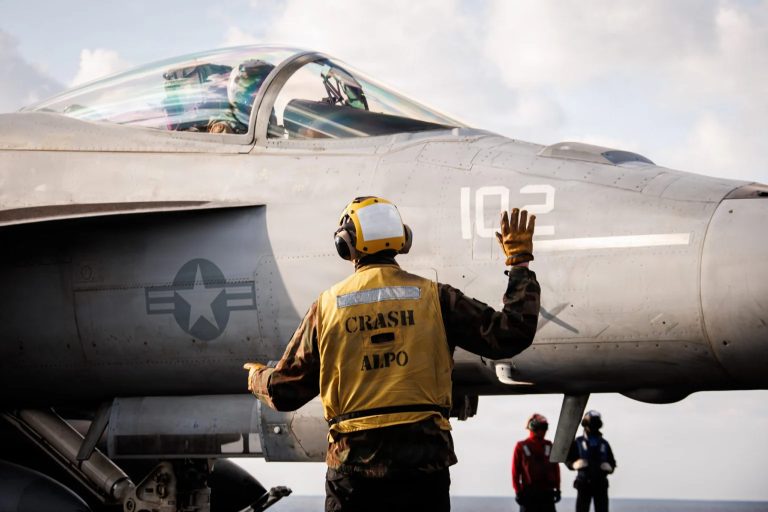
A deck crew member in a yellow safety vest signaling to a fighter jet pilot on an aircraft carrier.

Striking Iran’s Grid Won’t Win the War, It’ll Expand It

The strategic calculus in the Persian Gulf has shifted from a “nuclear denial” mission to a high-stakes “infrastructure ultimatum.” With President Trump’s 8:00 PM ET deadline only hours away, the threat to “decimate” Iran’s power plants and bridges carries risks of regional contagion that far outweigh the intended military benefits.


Read More »
Spanish Prime Minister Pedro Sánchez speaking at a podium during a parliamentary session.

Madrid’s Defiance in the US-Israel War on Iran

The defiant stance of the Sánchez administration in Madrid has become one of the most significant diplomatic obstacles for the U.S.-led coalition. Spain remains the most vocal Western opponent of Operation Epic Fury, citing the “illegal and reckless” nature of the strikes on Iran.

Read More »
Silhouette of a large cargo ship on the ocean at sunset with a massive orange sun partially covered by clouds.

Iran’s Strait of Hormuz Gambit Is Working

The world is currently 10 hours away from what President Trump has called a “final, final” deadline for Iran to reopen the Strait of Hormuz. The “Hormuz Gambit” has not only held, it has escalated into a global economic hostage crisis that the 40-nation coalition is struggling to break.

Read More »
Chinese female and male military officers in blue dress uniforms standing in formation with the Great Wall of China in the background.

How the Iran War Is Handing China an Industrial Crown

Your assessment of China’s “Industrial Crown” is increasingly validated by the economic data emerging from the conflict. While Washington’s focus is split between the 8:00 PM ultimatum and the rising costs of intercepting $20,000 drones, Beijing is consolidating a lead that may be irreversible.

Read More »

A War Both Sides Expected to Win Quickly, Neither Did

The conflict, now entering its sixth week, has evolved into a “Cost-Asymmetry Trap” that neither Washington nor Tehran originally envisioned. The war has reached a critical “Ultimatum Hour” that could determine if the region faces total systemic collapse or a forced diplomatic off-ramp.

Read More »
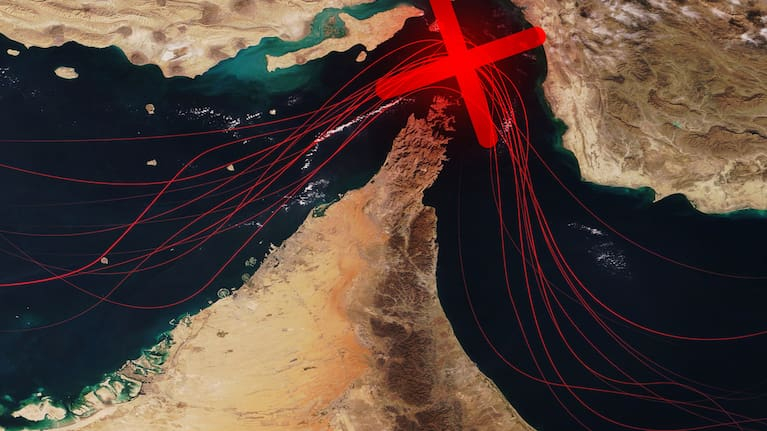
Satellite map of the Persian Gulf with red trajectories crossing through the Strait of Hormuz and a large red 'X'.

Washington’s Retreat From the Strait of Hormuz

The strategic withdrawal of the United States from the Strait of Hormuz—once the bedrock of global energy security—has reached a tipping point. President Trump’s “Go Take It” directive has effectively dismantled the Carter Doctrine, leaving a 40-nation coalition to manage a waterway that has become the world’s most dangerous “insurance trap.”

Read More »
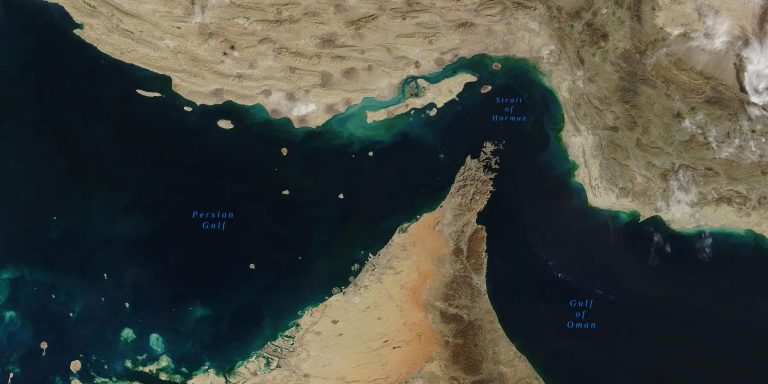
Satellite view of the Strait of Hormuz, Persian Gulf, and Gulf of Oman.

Iran’s Masterplan for the Strait of Hormuz

The shift in the Strait of Hormuz from a traditional military chokepoint to a formalized “Sovereign Toll Zone” represents the most significant change in maritime law since the 1982 UNCLOS. Tehran is moving to institutionalize what was once a temporary blockade into a permanent economic engine designed to bypass Western sanctions forever.

Read More »
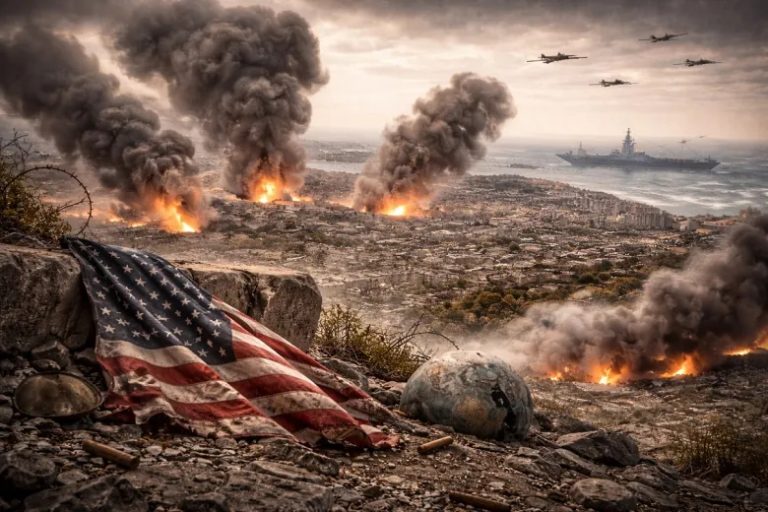
Dramatic digital art of a coastal conflict with an American flag in the foreground and a damaged globe.

The Gulf Conflict and the Accelerating Shift to Multipolarity

The second month of the 2026 Iran War marks more than just a regional military crisis; it is the catalyst for a fundamental reordering of global power. The conflict has acted as a “stress test” for 20th-century security models, and the results have accelerated a shift toward a multipolar world where American unilateralism is being replaced by regional self-reliance and alternative financial networks.

Read More »
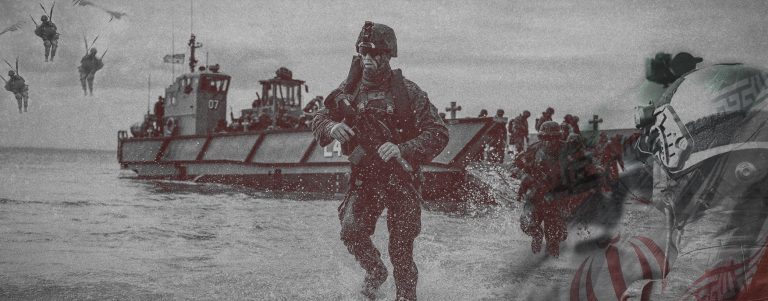
Soldiers in military gear during a coastal landing operation with a transport vessel.

Iran’s Special Forces: A Decentralized Defense Strategy

The Iranian military response to Operation Epic Fury has confirmed what many analysts suspected: the “Mosaic Defense” doctrine is not just a theoretical framework, but a functional, decentralized reality. While Western intelligence spent decades focused on the Quds Force, the first month of the 2026 war has demonstrated that Iran’s true resilience lies in its provincial special forces and maritime commandos.

Read More »
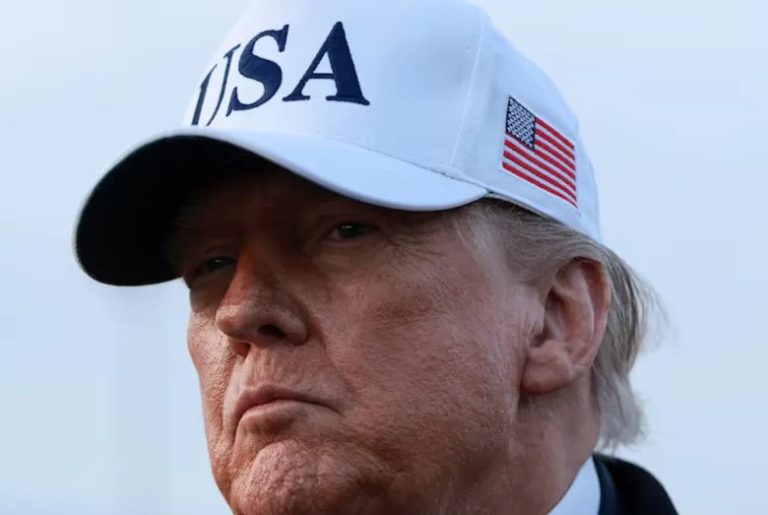
Close-up portrait of Donald Trump wearing a white "USA" hat with an American flag on the side.

America Lit the Fire and Now 40 Nations Are Cleaning Up

The geopolitical fallout of the Iran war has entered a phase of “fractured leadership.” While the United States remains the primary military aggressor, it has become a secondary actor in the diplomatic and maritime cleanup, leaving a coalition of 40 nations to navigate the chaos left in the wake of Operation Epic Fury.

Read More »
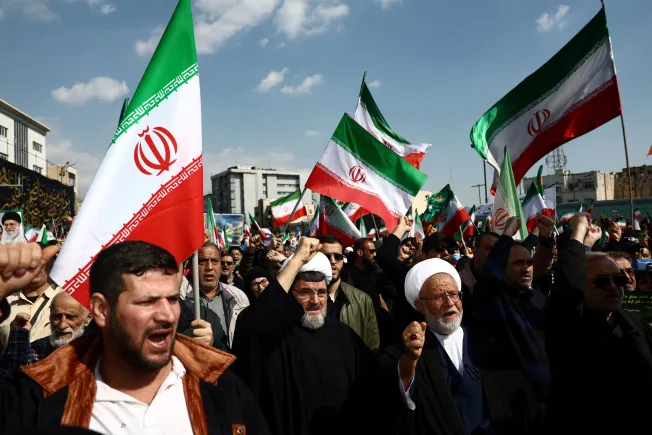
A large crowd of people in Iran waving Iranian flags and chanting during a demonstration.

Iran’s Peace Blueprint: Bold Enough to Work, or Too Late?

The publication of Mohammad Javad Zarif’s peace blueprint in Foreign Affairs on April 3, 2026, represents the most significant diplomatic opening since the start of Operation Epic Fury. While Zarif currently holds no official government title, his role as a key ally to reformist President Masoud Pezeshkian suggests this is a “cleared” trial balloon from Tehran’s remaining diplomatic corps.

Read More »