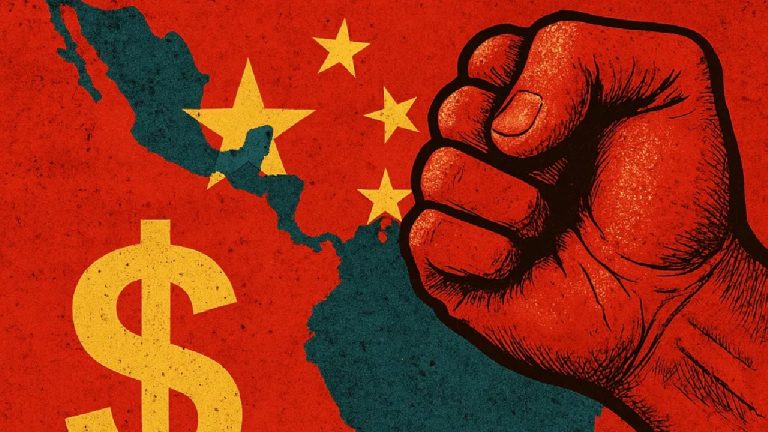
Across Latin America, a wave of right-leaning political movements has swept into office, creating a surface appearance of alignment with Washington’s geopolitical ambitions. Yet beneath this apparent ideological convergence lies a fundamental economic reality that Washington may be underestimating: the region’s deep dependence on Beijing as a market, investor, and development partner cannot be easily severed through diplomatic pressure or political affinity alone.
The Limits of Political Realignment in Foreign Policy
The resurgence of conservative governments throughout South America over the past two years has prompted optimism in some Washington policy circles. However, this political shift does not automatically translate into compliance with the Trump administration’s foreign policy objectives. The ideological parallels between these regional leaders and the current U.S. administration—often centered on law-and-order campaigns, skepticism toward progressive policies, and resistance to unrestricted migration—do not address the fundamental economic architecture that shapes bilateral relations.
A significant portion of political movement toward the right in the region has been driven by concerns similar to those that propelled the Trump presidency in the United States. Rising migration pressures, associated crime waves, and public anxieties about social stability created openings for candidates advocating tougher security approaches. These shared political currents suggest potential for coordination on migration enforcement and security matters. However, they obscure a more significant structural difference: the economic relationship between regional capitals and Beijing has become so deeply embedded that ideological preference carries minimal weight when markets and livelihoods are at stake.
The Quantifiable Scope of Chinese Economic Integration
The scale of Chinese economic penetration into South America represents perhaps the most significant obstacle to any decoupling strategy Washington might pursue. Between 2005 and 2024, Chinese entities provided more than $222 billion in direct investment across the region, establishing a presence that far exceeds what Washington has historically offered or is likely to mobilize. In terms of trade volume, China’s bilateral commerce with the CELAC bloc reached $515 billion in 2024, positioning Beijing as the dominant trading partner for most South American economies.
The transformation of Brazil’s trade profile illustrates this shift most vividly. In 2000, less than 2 percent of Brazilian exports flowed toward Chinese markets. By 2023, Brazil directed more than 30 percent of its total exports to China, a 15-fold proportional increase over two decades. For Chile, another major commodity exporter, the transformation has been similarly dramatic, with the share of exports destined for Chinese buyers rising from approximately 5 percent in 2000 to more than 39 percent by 2023. These shifts reflect not political preference but rather the commercial logic of resource extraction and sales.
Latin American exports to China totaled approximately $190.9 billion in 2024, while Chinese goods imported into the region reached $286.7 billion, demonstrating a substantial two-way relationship that encompasses both raw material sourcing and consumer goods distribution. For individual commodities, the concentration is even more pronounced. Chile’s copper ore and concentrate exports to China exceeded $21 billion in 2024, representing the largest market outlet for the nation’s primary export commodity.
Case Study: Argentina’s Constrained Options Under Pressure
The experience of Argentine President Javier Milei offers perhaps the clearest illustration of how even genuine ideological alignment with the Trump administration cannot override economic necessity. Milei has cultivated a remarkably strong personal relationship with Trump and has embraced a pro-American foreign policy orientation more explicitly than most regional counterparts. This alignment was rewarded with substantial U.S. support: the Trump administration extended a $20 billion currency swap line to Argentina at a critical moment in 2025, when the Argentine peso faced destabilizing pressure that threatened Milei’s broader economic and political agenda.
In response to this lifeline, Milei demonstrated his willingness to constrain Chinese influence in specific sectors. His government cancelled plans inherited from the previous administration to acquire Chinese-Pakistani fighter aircraft and instead purchased secondhand American F-16 fighters. Argentina also halted construction of a Chinese radio telescope facility and froze plans for Chinese involvement in nuclear reactor development. The government further blocked Chinese companies from competing in a major tender to deepen the Paraná River shipping channel, a critical waterway for grain exports.
Yet even this constellation of anti-Chinese measures has failed to eliminate Beijing from Argentina’s strategic landscape. The Chinese military maintains an operational space surveillance facility in Patagonia—a presence that continues to generate concern within the U.S. national security establishment. More significantly, Argentina’s central bank continues to maintain a currency swap arrangement with China’s People’s Bank, a financial lifeline that Washington has repeatedly pressured Buenos Aires to terminate.
The clearest demonstration of Argentina’s economic pragmatism came through its agricultural export policy. Shortly after receiving the $20 billion U.S. support package, the Milei government eliminated export taxes on soybean sales to China and negotiated a substantially enlarged trade agreement with Beijing. Between November 2024 and November 2025, Argentine agricultural exports to China surged 57 percent, expanding far faster than sales to the United States. This sequence of events—accepting U.S. financial support while simultaneously deepening trade engagement with China—generated considerable frustration within Washington and among American agricultural constituencies.
Mexico and Brazil: Resistance Despite Pressure
The experiences of Mexico and Brazil further underscore the limited leverage available to Washington in compelling decoupling. Mexico presents perhaps the most straightforward case of U.S. pressure achieving tactical compliance on specific issues without fundamentally altering economic orientation. The leftist administration of President Claudia Sheinbaum, ideologically distant from the Trump administration, nevertheless implemented tariffs reaching 50 percent on imported Chinese goods after explicit Washington pressure. Additionally, Mexico blocked factory construction plans by BYD, the world’s largest electric vehicle manufacturer, which had proposed a substantial manufacturing facility within Mexican territory.
These measures, while politically costly to Sheinbaum’s government and economically damaging to Mexican consumers and businesses, reflect Mexico’s particular vulnerability to U.S. economic leverage. The United States absorbs approximately 80 percent of Mexican exports and represents roughly 30 percent of Mexican GDP—a dependency structure that leaves little room for resistance to presidential demand. This extraordinary asymmetry distinguishes Mexico from its South American counterparts and limits its applicability as a model for other regional governments.
Brazil’s trajectory diverges more substantially. During the presidency of Jair Bolsonaro, who cultivated an unusually warm personal relationship with Trump and aligned closely with the MAGA agenda, the Trump administration nevertheless imposed punitive tariffs on Brazilian exports following the Brazilian judiciary’s prosecution of Bolsonaro for allegedly plotting a military coup. Despite this ideological alignment and presidential-level rapport, Bolsonaro continued expanding Brazil’s economic relationships with China throughout his tenure. Brazil’s trade shares with Chinese buyers and suppliers actually increased during Bolsonaro’s presidency, demonstrating that even a leader otherwise sympathetic to Washington’s strategic objectives found resistance to deeper Beijing engagement politically and economically impossible.
Transatlantic Leverage Mechanisms and Their Limitations
The United States has deployed various strategic mechanisms to discourage or prevent Chinese investments in critical infrastructure sectors across the region. In 2021, Biden administration officials successfully pressured Chile to annul a contract with a Chinese company for manufacturing national identification cards and passports, warning that retention of such an arrangement would jeopardize Chile’s participation in the U.S. visa waiver program—a valuable privilege for Chilean citizens requiring frequent international travel. The specificity of this threat and the tangible consequences of noncompliance made compliance feasible.
Similarly, the first Trump administration applied pressure on Chile to reject Huawei proposals for trans-Pacific fiber-optic undersea cables, successfully channeling the project toward Google instead. These successes, however, address relatively discrete projects rather than the broader pattern of commercial engagement. More broadly, military and security establishment figures, including Laura Richardson, former commander of U.S. Southern Command, have warned that the Chancay port in Peru—developed by the Chinese state-controlled shipping company Cosco—could potentially accommodate Chinese naval vessels, introducing additional security concerns into regional calculations.
Despite these sporadic victories in blocking specific projects, Washington has not successfully reversed the underlying trajectory of deepening South American integration into Chinese economic networks. The structural imbalance between what Beijing offers—sustained, predictable market access and substantial investment capital—versus what Washington provides—primarily diplomatic favor and security cooperation—tilts heavily in China’s direction.
The Strategic Incompatibility of Coercion and Competition
The Trump administration’s approach to Latin American decoupling relies substantially on pressure tactics and negative incentives: threatened tariffs, warnings about visa waiver status, and exclusion from critical infrastructure projects. These mechanisms have yielded limited results because they address symptoms rather than the underlying economic reality. Latin American policymakers recognize that China represents an indispensable market outlet for commodity exports that generate the foreign currency necessary for debt servicing, infrastructure development, and economic stability.
The CSIS analysis of China’s latest policy paper on Latin America indicates that Beijing explicitly positions itself as opposing “decoupling” and competing through sustained economic engagement rather than coercive diplomacy. This competitive framework offers regional governments a choice between economic collaboration yielding tangible benefits and geopolitical confrontation carrying immediate costs.
The political reality facing regional leaders across the ideological spectrum is straightforward: constituents care about employment, agricultural market access, investment in infrastructure, and currency stability. These tangible concerns dwarf abstract geopolitical alignment with Washington. A Chilean government, regardless of its ideological composition, cannot redirect copper exports away from China without destroying the economic foundation of the country. A Brazilian administration, whether progressive or conservative, cannot afford to alienate the market that absorbs nearly one-third of its exports without triggering a balance-of-payments crisis.
Looking Forward: Economic Realism as an Unavoidable Constraint
Multiple rightward-leaning governments have assumed or are expected to assume power in the near term across Peru, Colombia, Ecuador, Honduras, Bolivia, and Chile. Each of these administrations, potentially more ideologically sympathetic to Trump’s worldview than their predecessors, faces identical structural constraints regarding Chinese economic integration. The electoral victories of conservative candidates across multiple national contexts do not alter the commodity export patterns, investment flows, or trade dependencies that shape economic policy.
Washington’s strategic options for encouraging decoupling are constrained. Offering development finance comparable to Chinese investment would require substantially increased congressional appropriations and a long-term commitment that American political cycles make uncertain. Providing preferential market access comparable to what China offers would necessitate tariff reductions and regulatory harmonization contrary to the Trump administration’s trade protectionist orientation. Neither option appears compatible with current policy priorities.
The fundamental tension is this: the Trump administration simultaneously seeks to isolate China from Latin American markets while pursuing protectionist trade policies and threatening tariffs on regional exports. This posture creates a logical trap wherein regional governments, unable to access either market equally, will rationally prioritize the relationship offering more reliable economic benefits. China’s demonstrated willingness to sustain large-scale resource imports and provide continuous investment capital creates a compelling alternative to American offers of confrontation and pressure.
Original analysis inspired by Eduardo Porter from Foreign Policy. Additional research and verification conducted through multiple sources.