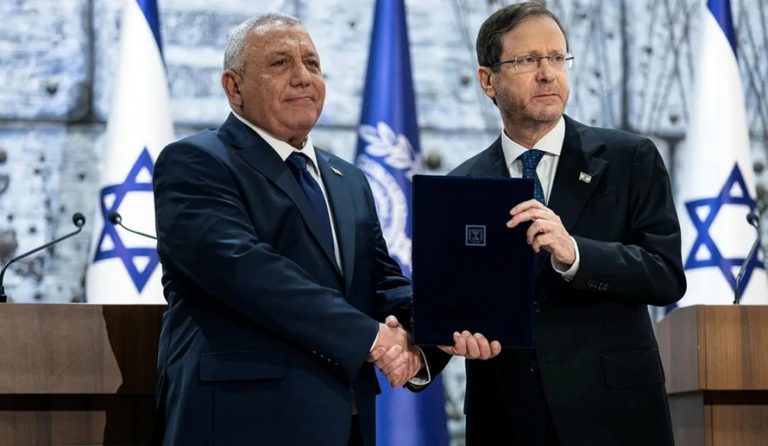
Following the October 2026 legislative elections and President Isaac Herzog’s decision to task Yashar party chairman Gadi Eisenkot with forming the next governing coalition, Israeli politics faces a definitive crossroads. As Haaretz’s editorial emphasizes, any genuine national emergency government must break with exclusionary doctrines and include the United Arab List (UAL), led by Mansour Abbas, within its ranks.
The Democratic Deficit of Excluding Arab Representation
For decades, mainstream political negotiations in Israel have treated the votes of Arab citizens as second-class expressions of the electorate. With the Joint List and the UAL securing a combined 19 seats in the 26th Knesset, hundreds of thousands of citizens have signaled their clear intent to participate meaningfully in the country’s governance. Automatically disqualifying Arab parties from coalition participation effectively devalues those votes and deepens systemic inequality under the guise of political convention.
As the UAL proved during the 2021–2022 “government of change,” inclusion yields practical, stabilizing governance. Mansour Abbas’s faction prioritized critical civilian infrastructure, municipal budgeting, and combating violent crime within the Arab sector—advancements that benefited Israeli society as a whole. Leaving such a constructive political partner on the sidelines simply to appease exclusionary or racially motivated vetoes—such as those voiced by Yisrael Beiteinu leader Avigdor Lieberman—harms democratic integrity and national security alike.
Building an Unconventional Coalition for a New Era
Gadi Eisenkot has vowed to take creative and unconventional steps to unify the country after years of polarization and crisis. Fulfilling that promise requires moving past the outdated dogma of Jewish supremacy that sidelines nearly a fifth of the electorate. Just as Yitzhak Rabin argued decades ago that democracy and exclusion fundamentally contradict one another, a true emergency government must reflect the entire coalition of citizens who voted for change.
If Eisenkot and his partners intend to build a durable administration capable of healing national divisions, they must firmly reject political gatekeeping and embrace the UAL as an equal partner in shaping Israel’s future.