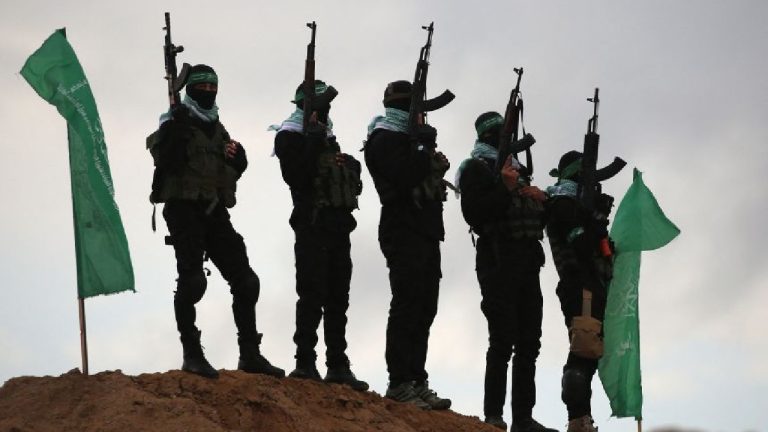
Contemporary conflict settlements face a critical implementation challenge: ensuring that disarmament agreements produce actual security transformation rather than enabling covert militarization under civilian administrative cover.
Governance Frameworks and Shadow Authority Structures
Post-conflict Gaza governance arrangements reflect competing visions for territorial administration. International frameworks have proposed technocratic governance models intended to separate civilian administration from militant control structures, yet evidence suggests armed organizations can maintain effective authority through alternative mechanisms. The Trump administration’s Gaza peace proposal designates governance through a technocratic committee comprising Palestinian civilians responsible for municipal services, ostensibly removing armed groups from formal governmental positions.
However, implementing such arrangements depends entirely on whether implementation mechanisms can prevent armed organizations from exerting de facto control through informal channels. Security officials have documented patterns suggesting that armed groups operating in post-conflict environments frequently maintain influence over nominally civilian bureaucracies through coercive mechanisms targeting officials’ families and livelihoods. Gaza currently employs approximately 40,000 government and municipal employees who continue receiving compensation from existing organizational sources—creating leverage points for armed groups seeking to influence administrative decisions without assuming formal responsibility.
This governance model mirrors arrangements developed in other conflict environments, where de facto control persists despite formal governmental transitions. Hezbollah’s governance approach in Lebanon exemplifies how militant organizations can exercise substantial authority over territory and population while maintaining the fiction of civilian governmental primacy. Rather than displacing governmental structures, such organizations embed themselves within existing administrative systems while maintaining autonomous military capabilities that genuine governance entities cannot constrain.
Military Disarmament and Weapons Retention Strategies
Armed organizations facing settlement agreements consistently attempt to negotiate provisions permitting partial weapons retention under humanitarian justifications or security guarantees. Recent negotiations surrounding Gaza conflict settlement indicate that militant leadership insists weapons constitute “resistance” rather than militarization subject to disarmament requirements, creating semantic disagreements masking substantive disagreements about security arrangements.
Security analysts assess that proposed disarmament frameworks anticipate nominal compliance—surrendering primarily older weaponry, smaller caliber systems, and already-degraded rockets—while retaining advanced systems, manufacturing capacity, and undocumented arsenals. Estimates suggest armed groups would likely retain thousands of operatives in civilian clothing while maintaining access to weapons manufacturing equipment and accumulated stocks. This selective disarmament approach preserves military capacity enabling rapid rearmament while maintaining compliance with technical agreement language.
The pattern extends beyond Gaza specifically. Analysis of militant disarmament precedents in Lebanon documents how Hezbollah’s formal agreement to respect governmental authority coexisted with substantial autonomous military capabilities that Lebanese security forces cannot practically contest. Similar arrangements in other environments demonstrate that armed organizations can satisfy international settlement requirements while preserving capacity for unilateral escalation.
Revenue Generation and Smuggling Networks
Post-conflict stability fundamentally depends on preventing armed organizations from generating substantial revenues through illicit trade. However, geographic conditions and humanitarian needs create legitimate justification for significant supply flows that sophisticated smuggling operations can exploit. Gaza currently receives approximately 600 humanitarian aid trucks daily—nearly four times UN benchmark levels—generating substantial extraction opportunities through taxation, diversion, and smuggling.
Analysts document sophisticated smuggling operations camouflaged within humanitarian supply chains, involving dual-use materials, consumer goods for taxation, and materials exploitable for weapons manufacturing. The Rafah crossing represents a particular vulnerability, as its reopening would substantially increase supply flows and create proportionally larger opportunities for diversion and smuggling-based revenue generation. Militant organizations operating in such environments have consistently demonstrated capacity to extract significant revenue even under restrictive inspection regimes.
Before the 2023 conflict escalation, documented evidence indicated that smuggling operations sustained substantial militant organizational capacity despite international monitoring frameworks. The intersection of humanitarian imperatives and security requirements creates inherent vulnerabilities—restricting supply flows generates humanitarian catastrophe, while permitting substantial supply flows enables systematic resource diversion supporting covert militarization.
The Regional Precedent and Control Mechanisms
Security analysts identify a specific governance model that militant organizations in post-conflict environments increasingly attempt to replicate. The Lebanese governance arrangement whereby Hezbollah exercises effective territorial control while Lebanese governmental institutions retain formal authority over civilian administration represents the template for post-conflict survival strategies. This model permits armed organizations to satisfy international settlement requirements regarding governmental transitions while maintaining military capacity enabling both local coercion and broader strategic autonomy.
Implementation of such arrangements depends on several factors: access to consistent revenue sources supporting militia maintenance, ability to constrain local competitors through military dominance, capacity to influence governmental institutions without directly controlling them, and external patronage providing diplomatic protection. Hezbollah’s hybrid model integrating irregular warfare capabilities, social service networks, and political participation created resilience enabling sustained institutional influence despite periodic external military pressure.
The Gaza context presents particular implementation challenges given the territory’s geographic isolation, limited economic capacity, and direct Israeli military presence. Yet organizational leadership has invested substantially in civilian institutional development, social service provision, and community engagement mechanisms supporting the foundation for sustained influence despite formal governance transitions.
Reconstruction Conditions and Implementation Capacity
Israeli security frameworks explicitly condition territorial reconstruction on demonstrable disarmament progress, recognizing that physical rebuilding creates opportunity for covert militarization and weapons proliferation. Netanyahu’s explicit statements conditioning reconstruction on completed demilitarization reflect recognition that physical reconstruction investment generates resources and construction access enabling weapons manufacturing capability development.
The practical effect of reconstruction conditions involves indefinite Israeli security control over Gaza until disarmament objectives are achieved. However, the incentive structure embedded in such arrangements creates perverse effects—insufficient reconstruction generates humanitarian pressure supporting international opposition to Israeli security control, while expanded reconstruction generates militarization concerns sustaining Israeli restrictions. Neither pathway supports successful implementation of governance transitions.
The UN Security Council resolution framework for Gaza addresses these tensions by requiring Palestinian Authority reform alongside disarmament provisions and post-conflict capacity development, acknowledging that isolated security requirements divorced from institutional capacity-building create unsustainable arrangements. Yet implementation depends on coordination among actors with fundamentally conflicting interests regarding final territorial status, governance arrangements, and security responsibility distribution.
Strategic Implementation Challenges
The Gaza governance arrangement represents a test case for post-conflict settlement implementation in contested territories. The fundamental challenge involves preventing disarmament agreements from creating surface-level compliance while permitting substantive militarization through alternative organizational mechanisms. International precedents suggest that success requires:
Continuous verification mechanisms documenting not merely weapons surrenders but sustainable capacity constraints preventing rearmament; governance oversight preventing informal armed group influence over administrative decision-making; revenue control mechanisms preventing smuggling-based militarization financing; and external security guarantees enabling enforcement of disarmament provisions despite internal coercive pressures. The absence of any single element undermines the entire arrangement, as militant organizations consistently identify and exploit implementation gaps.
Original analysis inspired by Yoni Ben Menachem from JCFA. Additional research and verification conducted through multiple sources.