
Martin Rowson on the summits in Shenzhen and Brussels – cartoon
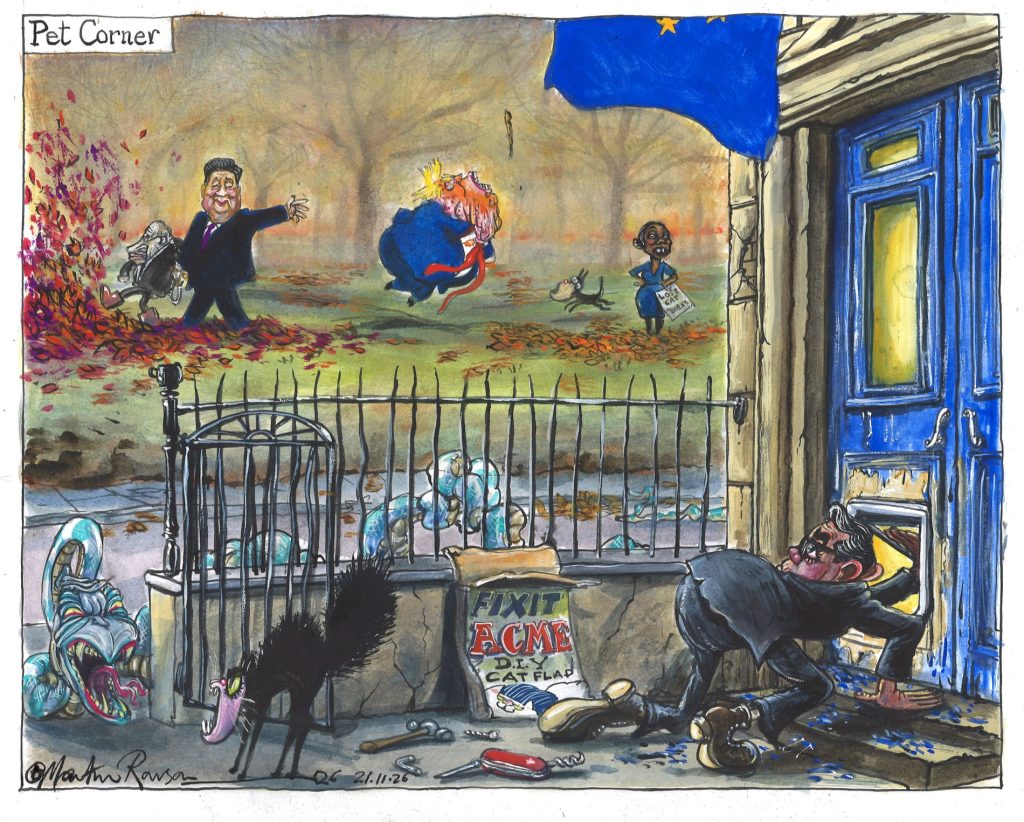
Analysis: Visually, Rowson depicts Xi Jinping walking Vladimir Putin on a lead while tossing Donald Trump a bone, contrasted with British politician Andy Burnham sneaking through a cat flap beneath an EU flag while glancing back at Nigel Farage portrayed as a snake. The cartoon’s strategic angle strips away diplomatic pageantry to argue that Beijing now dictates the terms of great-power alignment, reducing Moscow to a junior partner and Washington to a transactional supplicant. It matters because it captures Europe’s acute vulnerability—sidelined from Shenzhen’s power-brokering while internally fractured over its own continental security and economic reset.
PLO LUMUMBA: Trump, Putin & Xi Jingpin New World Order | Battle for Global Power
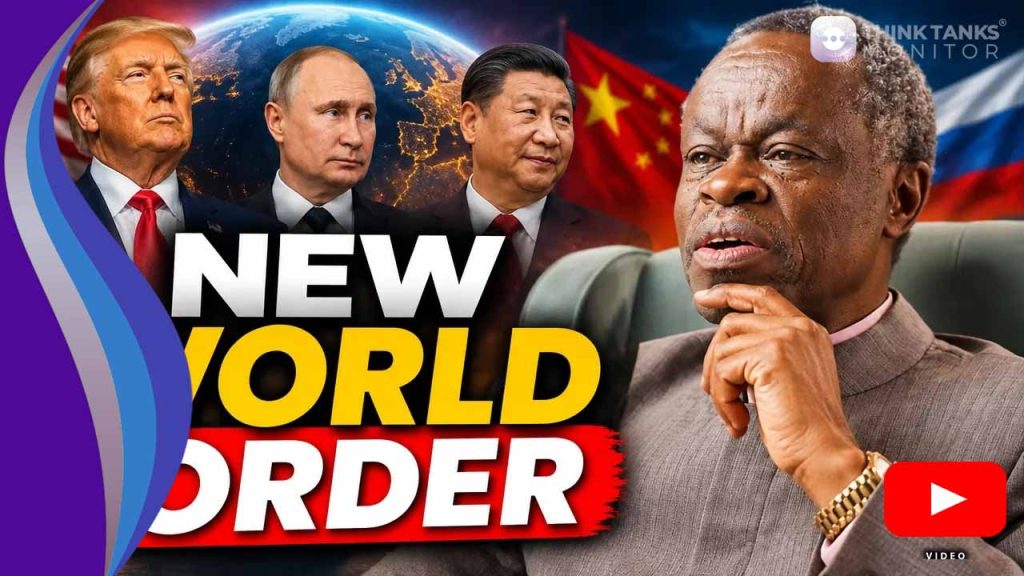
Analysis: Drawing a historical parallel to the 1945 Yalta Conference, Lumumba frames the Trump-Xi-Putin meeting in Shenzhen as a transactional bargain driven by US domestic fatigue after midterm losses and the economic toll of the US-Israel-Iran war on the Strait of Hormuz. He underscores how China’s advances in artificial intelligence and semiconductors, alongside BRICS and African alternative payment systems, are accelerating de-dollarization and compelling Washington to negotiate with Moscow and Beijing. This perspective matters because it captures how Global South analysts view Europe’s strategic marginalization and the institutionalization of a post-hegemonic order.
The resilience gap: Are Europe’s societies ready for the next crisis?

Analysis: Hosted by Chatham House Director Bronwen Maddox with General Sir Richard Barrons, Isabella Wilkinson, and Grégoire Roos, this episode shifts the European security debate from conventional rearmament to societal resilience against hybrid threats like hacked infrastructure, arson, and drone incursions. Its underlying message is that military spending alone fails if civilian trust, energy grids, and digital networks remain exposed to state-sponsored disruption. This analysis matters because Europe faces mounting strategic isolation amid US-Russia-China bilateralism, forcing policymakers to harden domestic institutions for prolonged gray-zone conflict.