
ChatGPT Advertising Raises Questions About Unequal Exposure

As ads enter conversational AI, new research suggests users in lower-income areas face higher exposure. Beyond clear labeling and user trust, this early audit highlights the urgent need to examine automated delivery systems and algorithmic bias in chatbots.
Starlink Dispute Exposes a Gap in US Accountability

Controversy over Starlink in Ukraine reveals the strategic risks of military dependence on private tech. With disputed authority and disrupted defenses, this dispute exposes an urgent need for legal clarity, contract accountability, and reliable alternatives.
El Niño Exposes the Stakes of America’s Forecasting Cuts

Budget cuts to NOAA and the National Weather Service are colliding with an active El Niño season. From broader storm risks to critical gaps in multilingual warnings, here is how reduced federal forecasting capacity threatens public safety and local preparedness.
Palestinian Rights Face a Test Beyond Israel’s Election

As Israel votes, Palestinian citizens fear growing far-right pressure. Parliamentary elections may shift political power, but they leave deeper inequalities in law, housing, and civil rights unresolved. Here is why the real test for democracy goes beyond the ballot box.
Gaza Policy: The Cost of Leaving US Leverage Unused

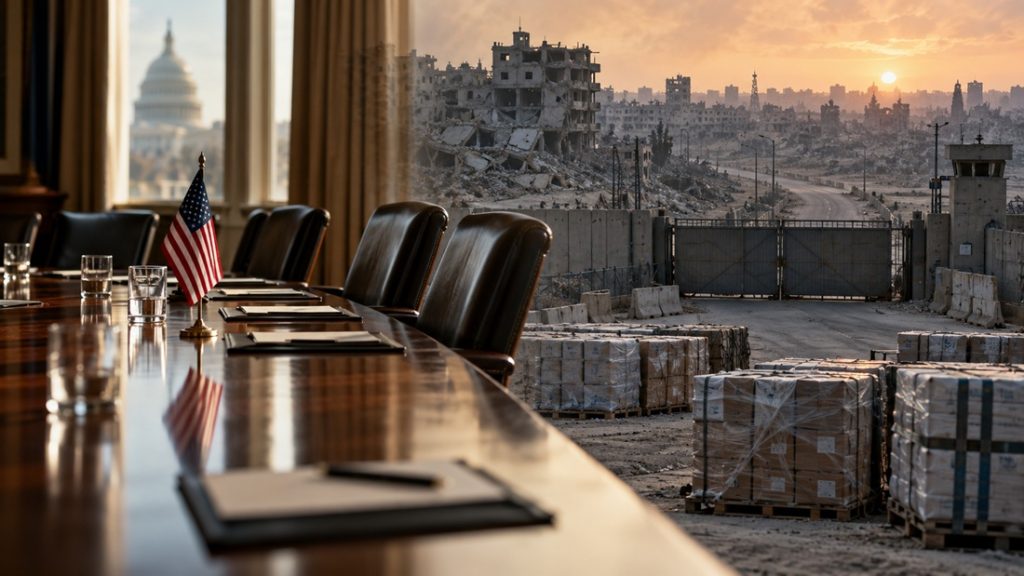
Debates over Washington’s Gaza policy raise a critical question: did the US fail to use its diplomatic leverage effectively? While officials debate the impact of conditionality, civilian protection and aid access show the real costs of leaving American influence untested.
Yemen War: Why Syrian Reinforcements May Not Deliver Victory
Reports of Syrian reinforcements supporting Saudi Arabia highlight Riyadh’s ongoing border security struggle. Yet extra manpower cannot fix Yemen’s deep political divisions or substitute for a lasting diplomatic settlement. Here is why military expansion may fail to deliver real victory.
Israeli elections – hard choices
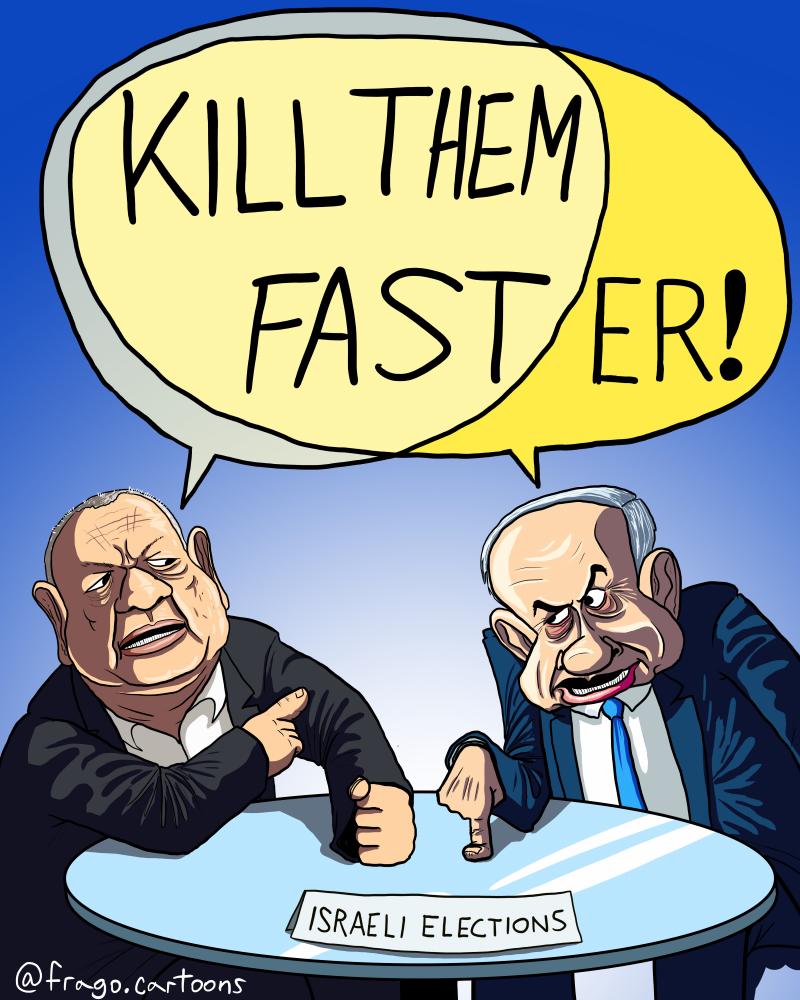
Analysis: Visually depicting veteran Prime Minister Benjamin Netanyahu and former military chief Gadi Eisenkot leaning tensely over an election table while maps and rubble of Gaza lie trampled underneath, the artwork satirizes the absence of genuine political alternatives. The strategic commentary exposes how Israeli internal political competition is fundamentally decoupled from peace initiatives, functioning instead as a tactical contest over military management rather than altering the expansionist status quo. This visual intervention matters because it exposes the structural dead-end of Israel’s domestic politics to international observers, demonstrating that institutional militarism and Palestinian disenfranchisement will persist irrespective of coalition realignment.
Israel’s Lobby vs US Democracy | A Special Roundtable
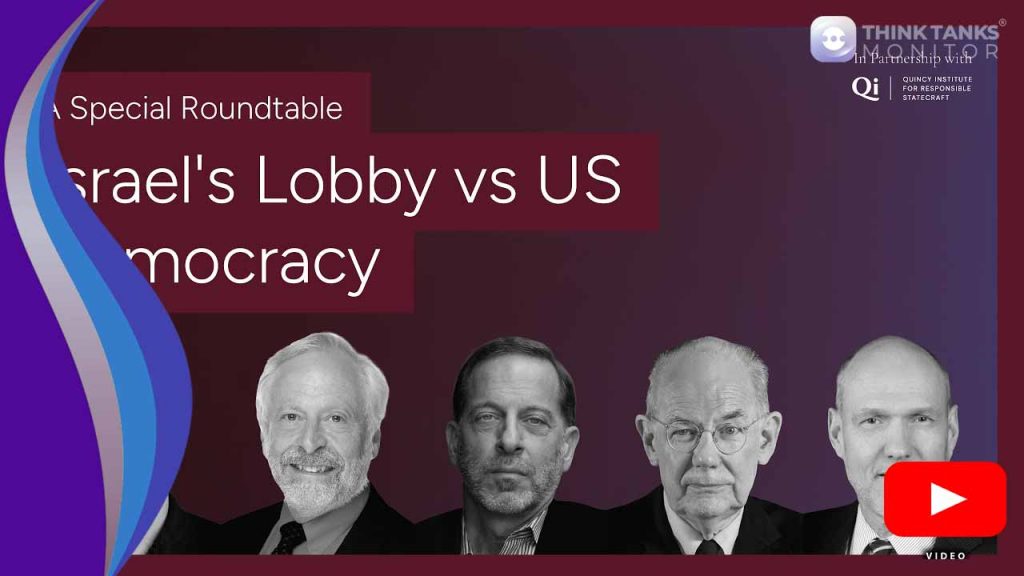
Analysis: Drawing on comparative analyses by John Mearsheimer, Stephen Walt, Ian Lustick, and Eli Clifton, the roundtable deconstructs how legislative mandates like Section 224 of the NDAA structurally bind the Pentagon to the Israeli military-industrial complex. The core strategic takeaway reveals an acute divergence between escalating American societal disapproval of Israeli military operations and Washington’s institutional inertia, driven by dark-money campaign finance and defense entanglements. This disconnect matters critically for grand strategy because prioritizing unconditional patronage in the Levant drains US defense resources, exacerbates regional instability, and derails Washington’s declared pivot to counter rising Eurasian multipolarity.
Sergey Glazyev: The World Economy Is Moving East and the West Can’t Stop It

Analysis: From a geoeconomic perspective, Glazyev highlights how the weaponization of the US dollar catalyzed alternative non-Western clearing mechanisms, cross-border digital settlement networks, and bilateral commodity swaps across Eurasia. The underlying strategic message underscores that Western attempts to enforce unilateral hegemony via secondary financial sanctions have permanently decoupled Eastern productive powerhouses from Western institutional dependencies. This development matters decisively because as the Atlantic alliance faces stagflation and speculative financial fragility, the Sino-Russian core is solidifying an autonomous multipolar architecture capable of withstanding coercive external economic warfare.