Tag: National Security Strategy

A close-up of Donald Trump's face partially framed by the stripes of the American flag.

Trump Administration’s Military Strategy Contradicts Peace Rhetoric

In early 2026, the global security landscape is dominated by the fallout of the Trump administration’s 2025 National Security Strategy (NSS) and the subsequent military operation in Venezuela. These actions have ignited a fierce debate over whether the administration’s “America First” doctrine is a path to restraint or a new era of aggressive unilateralism.


Read More »
The US Capitol Building illuminated at night with a blurred American flag in the foreground.

Restraint Foreign Policy in 2025: Five Successes and Five Failures

In 2025, the “America First” foreign policy yielded a contradictory scorecard of five successes and five failures. While the administration successfully pivoted toward a more realistic National Security Strategy and engaged in pragmatic diplomacy with Russia, Belarus, and the Houthis, it simultaneously stumbled into escalatory patterns in Iran, Venezuela, and Syria.

Read More »
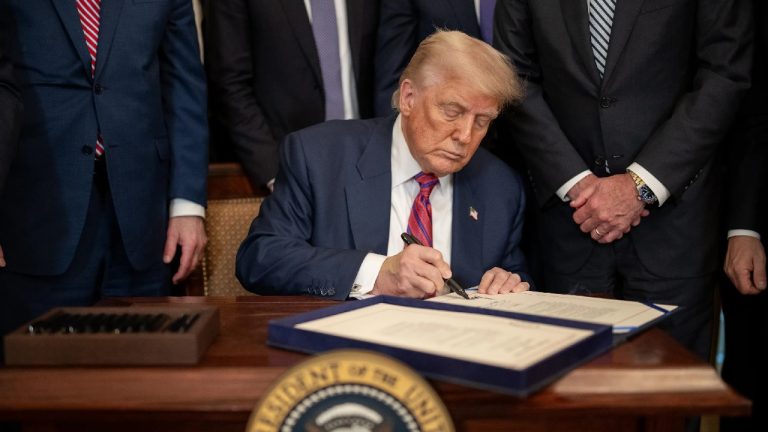
Donald Trump sitting at a dark wooden desk, focused on signing a formal document with a black pen, surrounded by people in suits.

Pacific-Centered Strategy: Trump’s National Security Approach Redefines Global Competition

Trump’s 2025 National Security Strategy prioritizes economic competition over ideological warfare, reframing China as a commercial rival rather than a systemic threat. By reviving the Monroe Doctrine and demanding allies triple defense spending, the administration seeks “low-cost hegemony” while shifting America’s strategic center of gravity toward the Pacific Rim.

Read More »
A close-up of Donald Trump speaking at a summit table with a "United States" nameplate and a small American flag in front of him

Middle East Strategic Reorientation: From Direct Engagement to Containment

The 2025 National Security Strategy marks a significant shift in U.S. policy towards the Middle East, transitioning from extensive political and military involvement to a limited engagement prioritizing energy security and hindering regional adversaries. This change prompts important inquiries regarding the alignment of the new assumptions with the actual dynamics of the region.

Read More »
A close-up, shallow-depth-of-field shot of several small American desk flags standing in a row

America’s Strategic Recalibration: Addressing Post-Cold War Policy Insolvency

The 2025 National Security Strategy marks a significant shift from longstanding American foreign policy by recognizing resource limitations and emphasizing geographical proximity rather than global intervention. This change, while controversial, aims to address the “insolvency” issue—highlighting the disconnect between national goals and the means to accomplish them.

Read More »
Donald Trump and Vladimir Putin shaking hands on an airport tarmac in front of Air Force One

The Atlantic Fracture: Trump’s 2025 Strategy Aligns with Moscow, Alienates Europe

The Trump administration’s 2025 National Security Strategy (NSS) has upset the longstanding transatlantic consensus, alarming nations like Germany and Poland while appealing to Russia. The 33-page document frames European integration as a threat to civilization and emphasizes “patriotic” nationalism, undermining NATO’s ideological foundations even as member countries reach record defense spending levels.

Read More »
Close-up of Donald Trump's face partially obscured by the American flag's red stripes, focusing on his serious expression

America’s 2025 National Security Strategy: Hostile Doctrine Toward European Allies

The December 5, 2025 release of the Trump administration’s National Security Strategy signifies a significant shift in transatlantic relations, explicitly showcasing American antagonism toward its historical democratic allies. The document goes beyond conventional policy disputes, exposing a deep-seated hostility toward European sovereignty, democratic governance, and territorial integrity.

Read More »