Tag: Israel

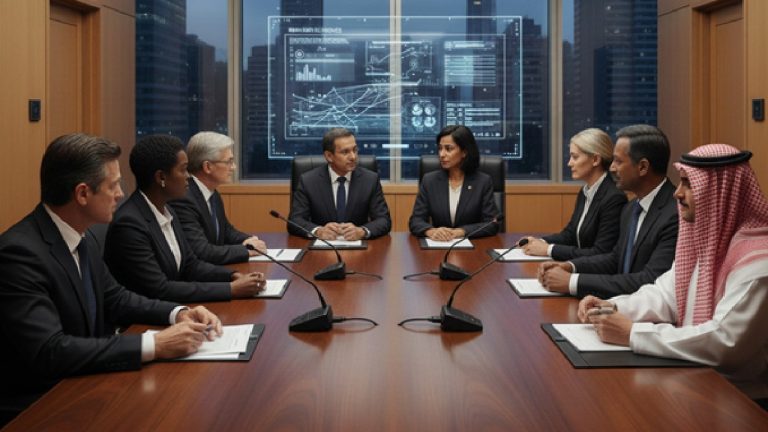
A diverse group of professionals in business suits sitting around a long wooden conference table in a modern boardroom.

When Boardrooms Replace Diplomacy: Private Governance and the Collapse of International Law

In January 2026, the traditional multilateral system founded in 1945 has faced its most direct challenge yet: the formalization of “Boardroom Diplomacy.” Under the newly established Board of Peace (BoP), conflict resolution is shifting from the halls of the United Nations to a private-equity-style governance model that prioritizes commercial viability, “pay-to-play” membership, and technocratic management.

Read More »
Two men in formal attire standing in a modern hall, looking at a large architectural model of a city.

The Changing Dynamics of Middle Eastern Alliances: A Battle Between Abrahamic and Islamic Coalitions

In early 2026, the Middle East has moved beyond the simple “Sunni vs. Shia” binary. Instead, the region is now fractured into two competing ideological and strategic blocs: the Abrahamic Coalition—focused on secular-leaning economic integration and high-tech defense—and the Islamic Coalition, which prioritizes sovereign statehood, Islamic solidarity, and a more cautious distance from Israel.

Read More »
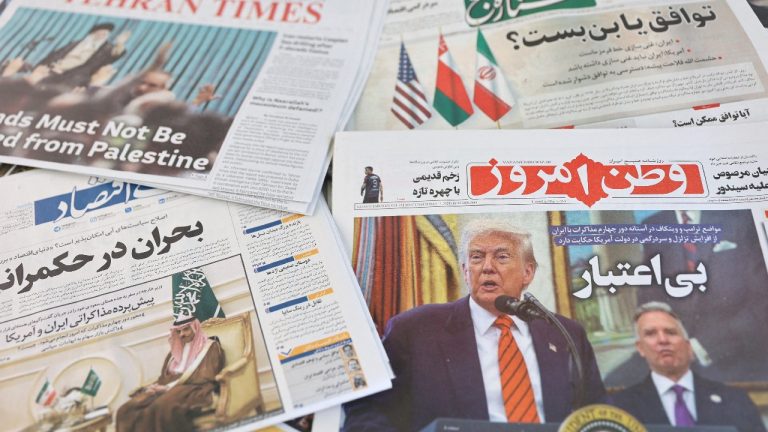
A collection of various Iranian newspapers spread out on a wooden table, featuring headlines in Persian and a prominent photograph of Donald Trump on one of the front pages.

Iran’s Battle for Survival is the Arab World’s Fight Too

In early 2026, the Middle East has entered what analysts describe as a state of “Exhausted Realignment.” Following the kinetic “12-Day War” between Israel and Iran in June 2025 and the fall of the Assad regime in Syria in December 2024, the region is now caught between a “Maximum Pressure 2.0” campaign from Washington and a desperate diplomatic “hedging” strategy by the Gulf states.

Read More »
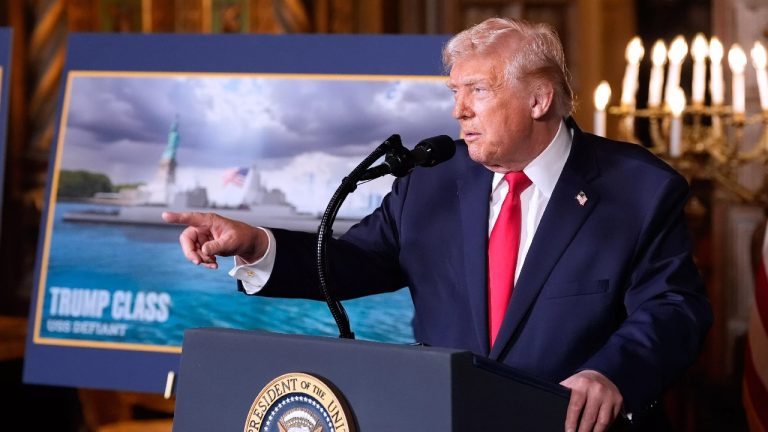
Donald Trump speaking at a podium with a large poster of a naval ship and the Statue of Liberty in the background.

What 2026 Holds for International Security and Economics

As we enter the first week of January 2026, the global landscape is defined by the fallout from the U.S. military operation in Venezuela and a critical “election-year” posture from Washington. The year ahead suggests a shift from the post-war multilateral order toward a more transactional, high-stakes era of “sovereignty-first” politics.

Read More »
A large crowd of people walking down a city street, viewed from behind.

Iran’s Economic Crisis and Nationwide Protests

The protests that began on December 28, 2025, represent a critical inflection point for Iran, fueled by an economic “perfect storm” that has effectively hollowed out the country’s middle class. As of January 4, 2026, the movement has spread to over 100 locations across 22 provinces, marking it as one of the most geographically expansive challenges to the Islamic Republic since 1979.

Read More »
A sophisticated tan-colored laser or optical weapon system mounted on a platform.

Weaponizing AI Supply Chains: Washington’s Pax Silica Initiative Launches New Economic Warfare Front

On December 12, 2025, Washington launched Pax Silica, a strategic US-led initiative designed to secure the “silicon supply chain” and counter China’s dominance in the AI economy. Described by Under Secretary Jacob Helberg as the “G7 of the AI age,” the pact treats computing power and critical minerals as the strategic equivalents of 20th-century oil and steel.

Read More »
The US Capitol Building illuminated at night with a blurred American flag in the foreground.

Restraint Foreign Policy in 2025: Five Successes and Five Failures

In 2025, the “America First” foreign policy yielded a contradictory scorecard of five successes and five failures. While the administration successfully pivoted toward a more realistic National Security Strategy and engaged in pragmatic diplomacy with Russia, Belarus, and the Houthis, it simultaneously stumbled into escalatory patterns in Iran, Venezuela, and Syria.

Read More »