
Why AI Could Be a Productivity Dynamo
economic fads or foundational breakthroughs. Drawing on economic theory, historical precedent, and early productivity studies, the authors ask: Is GenAI a light bulb, a dynamo, or a microscope?

economic fads or foundational breakthroughs. Drawing on economic theory, historical precedent, and early productivity studies, the authors ask: Is GenAI a light bulb, a dynamo, or a microscope?

Palliative care focuses on improving quality of life for individuals with serious illnesses. Tele-palliative care offers access to care for those who might otherwise go without and has surprising advantages over traditional, in-person care.

Israel’s limited war on Iran needs to be judged against the alternatives. By that measure, the operation was a success. Limited wars can buy time, shift the geopolitical dynamic and, in doing so, pave the way to something more enduring.
The Supreme Court’s ruling in *Free Speech Coalition v. Paxton* weakens First Amendment protections by allowing age verification laws for adult content, ignoring precedent that favored less restrictive alternatives like parental filters. The decision reflects the Court’s lost faith in internet self-regulation and shifts responsibility from parents to the state.
Fed’s independence prevents political interference, ensuring stable inflation and low unemployment. Undermining it risks economic chaos—higher prices and interest rates for working families.
Trump’s economic policies—marked by high tariffs, budget cuts, and immigration restrictions—are creating a drag on growth, slowing key sectors without yet triggering a recession, but setting the stage for deeper problems in 2026.
In addition to cutting health care and food assistance programs, the act’s energy and environmental provisions would raise energy costs, increase pollution affecting Americans’ health, and increase safety risks in a worsening climate.
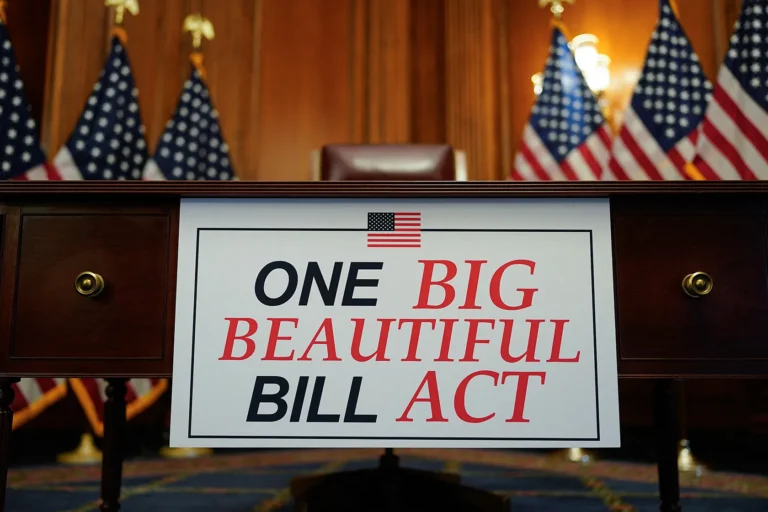
The Center for American Progress and The Arc break down the One Big Beautiful Bill Act, exposing how its deep cuts to Medicaid and Medicare will lead to benefit losses, increased paperwork requirements, and rural hospital closures that will hurt Americans—especially people with disabilities.
Congressional Republicans’ radical budget and tax bill includes several less-known provisions that will increase costs, fuel the Trump administration’s overreach, and waste taxpayer dollars.

The Trump administration’s turbulent approach to government reform has hit FEMA particularly hard. With inexperienced political appointees at the helm, abrupt policy reversals, and an exodus of career professionals, the agency faces unprecedented challenges as hurricane season begins. This analysis examines how the loss of institutional knowledge and constant leadership changes could undermine America’s ability to respond effectively to natural disasters, potentially repeating the failures seen during Hurricane Katrina.
The recently passed 1% tax on cash-based remittances, while improved from earlier proposals, remains a flawed policy. Though it avoids privacy concerns by eliminating reporting requirements, critics argue it serves no clear economic purpose and may inadvertently strain migrant-sending economies. With exemptions for digital payments, the measure’s narrow scope raises questions about its effectiveness as a revenue tool.

The Trump administration’s push to modernize nuclear energy regulations marks a potential turning point for America’s clean energy future—but at what cost? This analysis examines the administration’s controversial plan to overhaul radiation safety standards while dramatically cutting scientific research funding. We assess whether this approach will accelerate advanced reactor deployment or inadvertently sacrifice long-term innovation leadership to global competitors like China.