Tag: Geopolitical Strategy

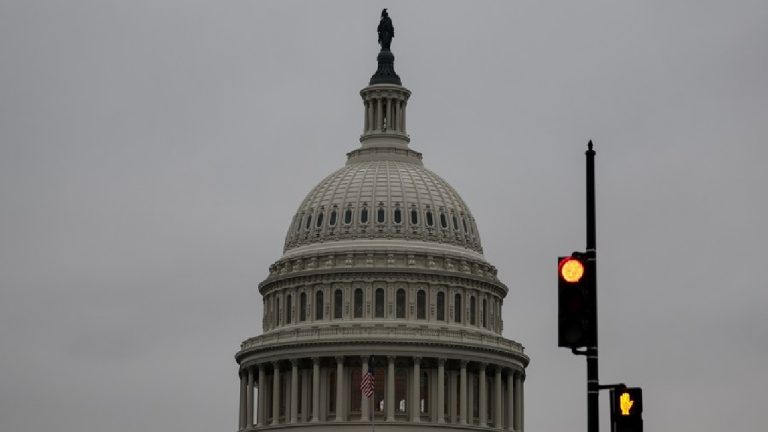
The dome of the United States Capitol building under a gray sky with a red traffic light in the foreground.

The Logic Behind Washington’s Coercive Economic Statecraft

In early 2026, Washington’s “Sheriff of Capitalism” doctrine has formalised a shift from a rules-based global order to one defined by resource nationalism and coercive statecraft. This strategy was punctuated by the dramatic January 3, 2026, capture of Nicolás Maduro and the subsequent tariff war against European allies over the sovereignty of Greenland.
Read More »
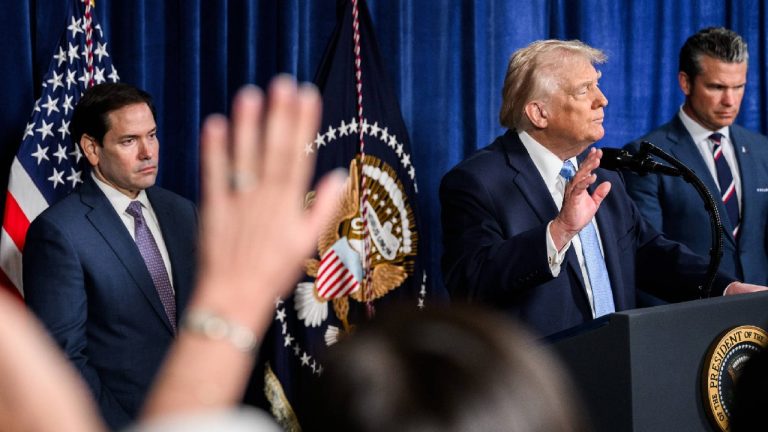
Donald Trump speaking at a podium with two men standing behind him and a hand raised in the foreground.

Hemispheric Realignment and the Reconstitution of Regional Power Dynamics in the Western Hemisphere

In early 2026, the Western Hemisphere is witnessing a seismic shift in geopolitical alignment. Driven by the December 2025 National Security Strategy (NSS) and the implementation of the “Trump Corollary” to the Monroe Doctrine, Washington has re-prioritized the Americas as its primary strategic theater. This realignment focuses on three pillars: the exclusion of non-hemispheric powers (China and Russia), the securitization of migration and trade, and the direct use of “regime change” as a tool of stability.

Read More »
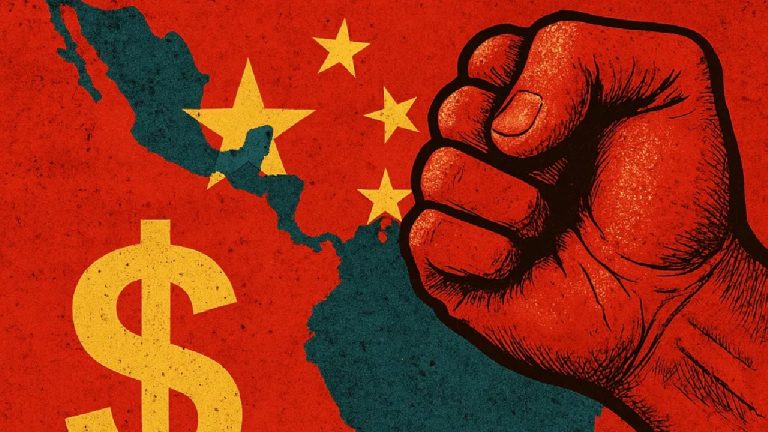
Illustration featuring a large red clenched fist on the right and a yellow dollar sign over a silhouette map of Central and South America on the left, set against a red background with yellow stars.

Economic Pragmatism Trumps Ideology in Latin America’s China Dilemma

This article examines how Latin America’s deep-seated integration into Chinese trade networks—exceeding $515 billion in 2024—overrides the region’s recent rightward political shifts. Using case studies from Argentina’s soy exports to Brazil’s response to U.S. tariffs, it argues that economic pragmatism and the “commercial logic of resource extraction” remain more influential than ideological alignment with Washington.

Read More »
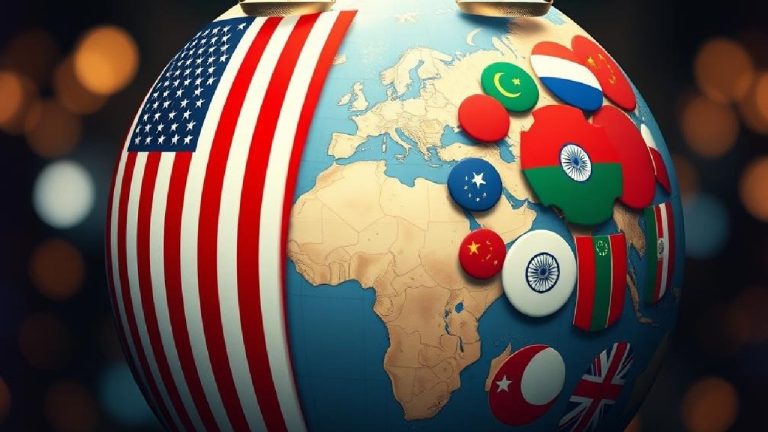
A glass globe of the Earth sits atop a pile of various international banknotes, surrounded by glowing digital currency symbols and a rising arrow.

Strategic Realignment and the Gradual Erosion of Economic Influence

This analysis details how global actors are countering unpredictable U.S. trade policies through “accelerated pursuit of alternative partnerships” and financial diversification. It highlights the shift toward conventional multilateral agreements (like the EU-India and Canada-China deals) and the steady decline of the dollar’s share in global reserves—falling from 72% in 2000 to 56.9% by 2025—as nations hedge against geopolitical risk.

Read More »
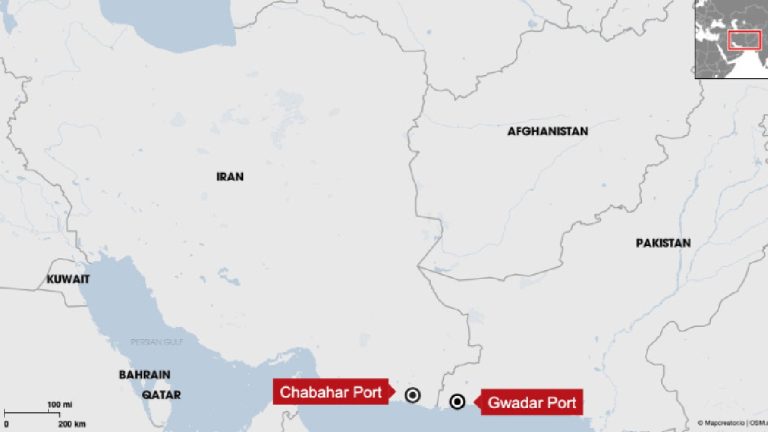
A strategic geographic map of the Middle East and Central Asia highlighting the maritime and land routes connecting Iran's Chabahar Port and Pakistan's Gwadar Port to landlocked nations.

Why Central Asia Prioritizes Iranian Ports Over Pakistan

In January 2026, the trade map of Eurasia reflects a stark reality: despite being hundreds of kilometers closer to the Central Asian Republics (CARs), Pakistan’s ports are frequently bypassed for Iranian alternatives. While geography favors Pakistan, operational reliability and security stability have solidified Iran’s position as the preferred gateway.

Read More »
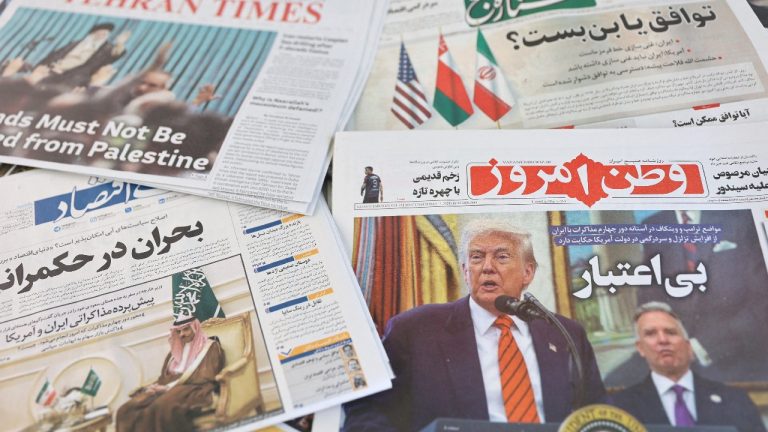
A collection of various Iranian newspapers spread out on a wooden table, featuring headlines in Persian and a prominent photograph of Donald Trump on one of the front pages.

Iran’s Battle for Survival is the Arab World’s Fight Too

In early 2026, the Middle East has entered what analysts describe as a state of “Exhausted Realignment.” Following the kinetic “12-Day War” between Israel and Iran in June 2025 and the fall of the Assad regime in Syria in December 2024, the region is now caught between a “Maximum Pressure 2.0” campaign from Washington and a desperate diplomatic “hedging” strategy by the Gulf states.

Read More »
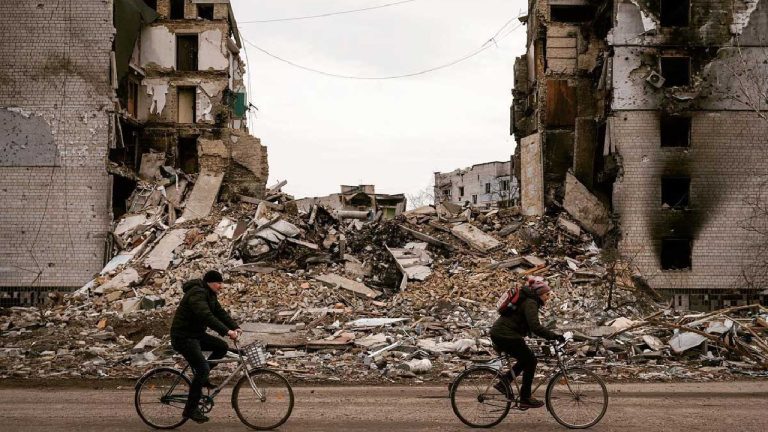
Two people riding bicycles past a heavily destroyed apartment building in a war zone.

European Strategic Decline: Three Concurrent Crises Reshape Global Power Dynamics

Three key geopolitical events in 2025 have shifted Europe’s role from an aspiring strategic player to a subordinate partner reliant on external powers. The military defeat in Ukraine, technological dependence on China, and economic capitulation to the United States expose deep structural vulnerabilities that years of integration did not resolve, resulting in Europe’s reduced influence amid increasing global competition.

Read More »