Tag: Emirates Policy Center

Three people, including two children, painting the "Free Syria" flag on a large white wall.

Syria’s Transitional Government: International Recognition Amid Domestic Fragility

Ahmed al-Sharaa’s administration in Syria marked its first anniversary by achieving diplomatic milestones and facing internal strife post-Bashar al-Assad’s fall. Key successes include gaining Western backing, with the U.S. and U.K. removing Sharaa from terrorist lists, and normalizing relations through significant meetings, notably with President Trump. These diplomatic efforts led to sanctions relief under the Caesar Act and Syria’s return to SWIFT, fostering prospects for economic recovery amid challenges in asserting control over the diverse sectarian landscape.

Read More »
Donald Trump sitting at his desk in the Oval Office, speaking to a delegation of officials seated across from him

Damascus Gains International Legitimacy Through White House Visit Yet Internal Challenges Persist

Ahmed al-Sharaa’s meeting with President Trump on November 10 marked a significant diplomatic achievement for Syria, resulting in the removal of UN Security Council sanctions and a suspension of the Caesar Act for six months. However, consolidating this international recognition domestically is challenging due to Kurdish forces’ resistance to integration, demands for autonomy from Druze leaders, and Israeli military expansion in southern Syria.

Read More »
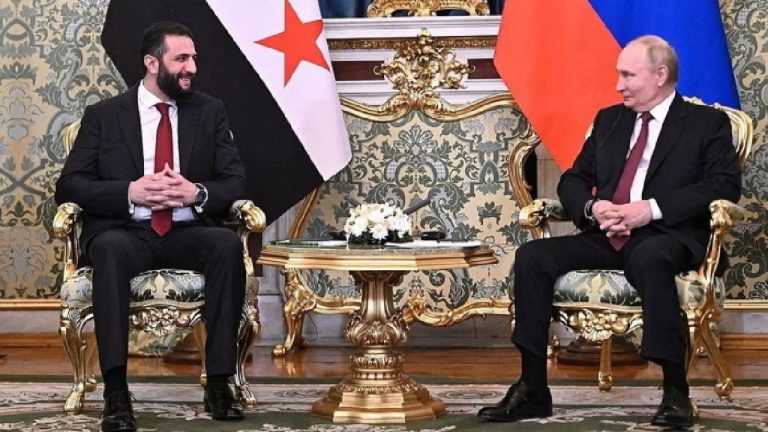
Vladimir Putin seated across a table from a Syrian official, in a formal meeting setting with flags in the background

Moscow’s Survival Strategy: Navigating the Post-Assad Order in Syria

The October 2025 summit in Moscow between Vladimir Putin and Ahmed al-Sharaa highlights a shift in Russia’s diplomatic strategy following the collapse of the Ba’athist regime in Syria. Contrary to predictions of diminished Russian influence, the Kremlin has adapted its approach, favoring transactional pragmatism over ideological loyalty. By engaging with former adversaries, Russia seeks to preserve its strategic interests in the Mediterranean, underscoring that its foreign policy is primarily motivated by practical concerns.

Read More »