Tag: BRICS

Stylized graphic of Donald Trump's face superimposed on a waving American flag.

Is Iran the Suez Moment That Ends American Hegemony?

Iran’s retaliation has exposed the limits of U.S. power: Gulf allies were hit despite hosting American bases, the Strait of Hormuz is shut, and global markets are recalibrating around a less reliable Washington. The war’s political and economic fallout accelerates a shift toward multipolarity — a moment many now compare to America’s Suez.
Read More »
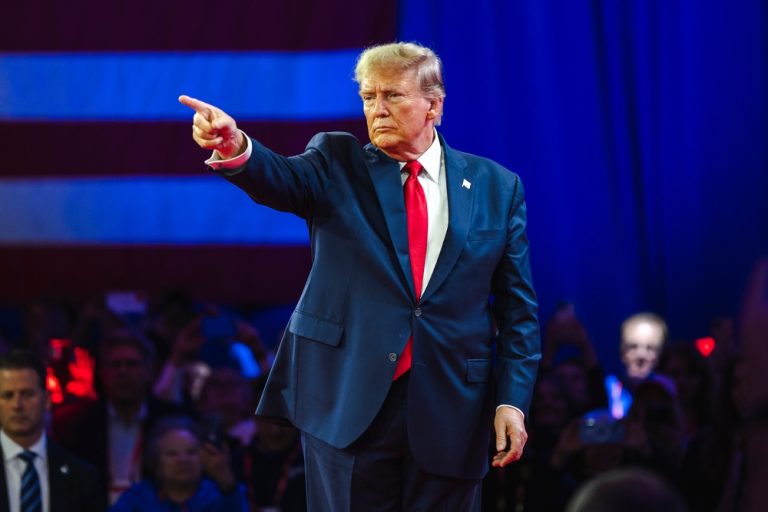
Donald Trump pointing forward confidently while speaking at a rally with an American flag background.

The Rules-Based Order Is Dead. Trump Just Buried It.

Trump’s 78‑day cascade of abductions, assassinations, tariffs, and an unauthorized war has shattered what remained of the post‑1945 rules‑based order. With the UN Charter sidelined and sovereignty treated as optional, the Global South bears the brunt — from tariffs to aid cuts to oil shocks — as a multipolar, power‑driven world accelerates into view.

Read More »
A digital collage featuring a central portrait of Ali Khamenei surrounded by scattered United States five, ten, and twenty-dollar bills.

Trump’s Iran War May Leave the Dollar’s Reign Damaged

Trump’s Iran war has triggered oil shocks, inflation pressure, and market turmoil, briefly lifting the dollar while undermining trust in the system behind it. Supply‑chain hits, Fed turmoil, and sanctions whiplash deepen global doubts. China, Russia, and energy importers are accelerating moves away from dollar dependence — a shift the crisis may harden.

Read More »
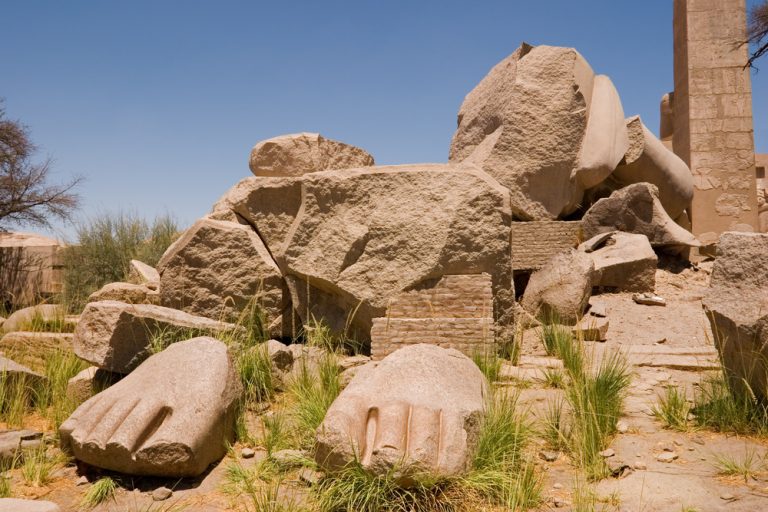
Ruins of a giant stone statue and ancient obelisks in Egypt under a clear blue sky.

Trump’s Grand Strategy Is Speeding Up the Decline It Promised to Reverse

Trump’s strategy of hemispheric retreat, tariff coercion, and fossil‑fuel dominance is accelerating the very American decline it vowed to reverse. The U.S. has suffered a sharp drop in global soft power, alienated allies through chaotic tariffs, and ceded the clean‑energy future to China. The result is a faster, more chaotic erosion of U.S. influence.

Read More »
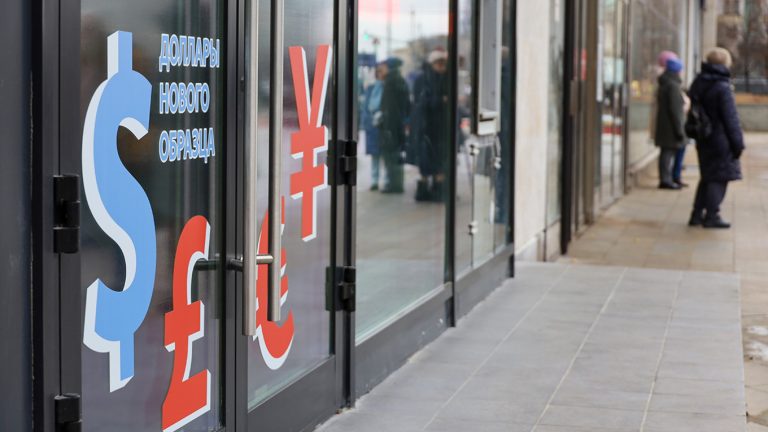
Exterior of a Russian currency exchange office with large dollar, pound, and yen symbols on the glass door.

Russia Wants the Dollar Back — and BRICS Should Be Worried

Russia is quietly considering a return to the dollar system, reversing years of anti‑dollar rhetoric. Economic strain, slowing growth, and dependence on China are driving the shift. If Moscow abandons de‑dollarization, the BRICS project looks less like an alternative order and more like leverage — exposing the limits of the bloc’s monetary ambitions.

Read More »
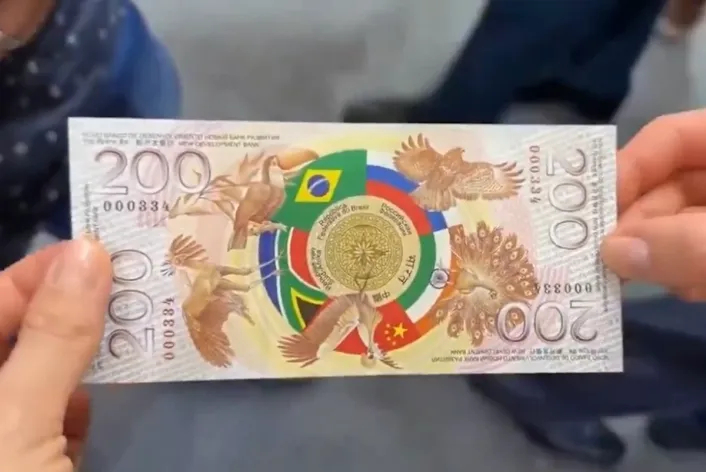
A pair of hands holding a sample banknote featuring the number "200" and a circular design in the center with the flags of Brazil, Russia, India, China, and South Africa, surrounded by illustrations of native animals like a toucan and a peacock.

BRICS and the Quest for a Neutral Global Currency

The global economy is now fully multipolar in production and consumption, yet its financial backbone still runs through a single national currency. That mismatch — a 21st‑century world running on 1944 plumbing — is what BRICS is trying to correct. Not by dethroning the dollar with the renminbi, but by building a neutral clearing system that avoids the trap of replacing one hegemon with another.

Read More »
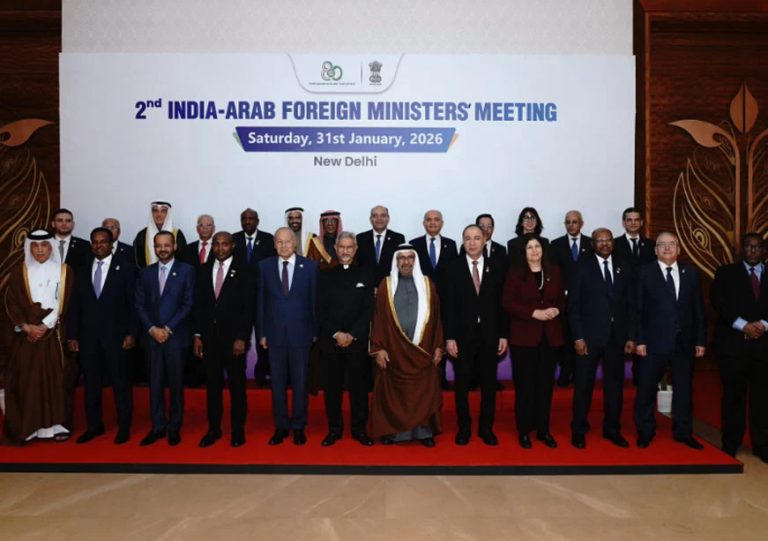
A group of over twenty diplomats and officials in suits and traditional Arab attire standing for a formal group photo on a red carpet in front of a large white banner that reads "2nd INDIA-ARAB FOREIGN MINISTERS' MEETING, Saturday, 31st January, 2026, New Delhi."

India’s Multipolar Gamble With the Arab World

The revival of the India–Arab Foreign Ministers’ Meeting after a decade isn’t just a diplomatic reunion. It’s a sign that both India and the Arab world are trying to position themselves in a world where the Western-led order is cracking from within — and where Washington’s reliability can no longer be assumed.

Read More »
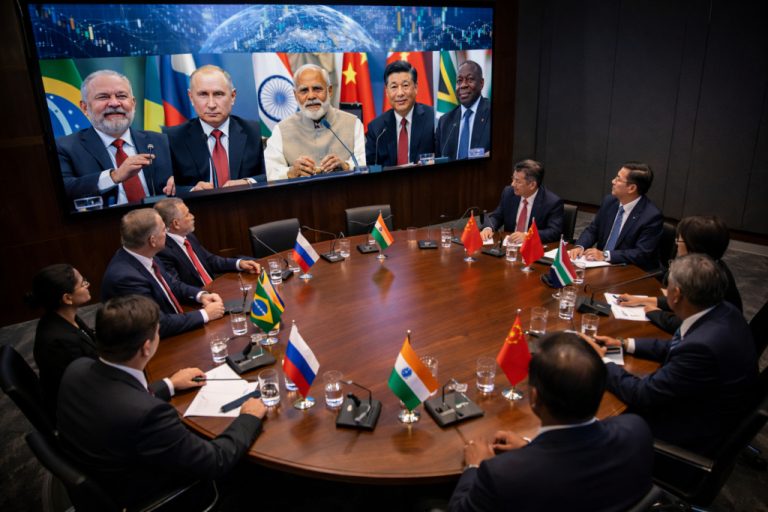
A medium shot of five world leaders standing in a row on a stage, including Vladimir Putin, Narendra Modi, Xi Jinping, and Cyril Ramaphosa, with a large blue and gold "BRICS" logo in the background.

BRICS and the Dollar: Can an Emerging Bloc Reshape Global Finance?

BRICS has evolved from a clever acronym into a geopolitical project large enough to unsettle Washington. Trump’s 2025 tariff threats — and the panic triggered by his Spain “BRICS” gaffe — reveal how seriously the U.S. now treats the bloc. With 20 members and partners, BRICS+ represents a demographic and economic mass that rivals the G7, even if its internal cohesion remains uneven.

Read More »
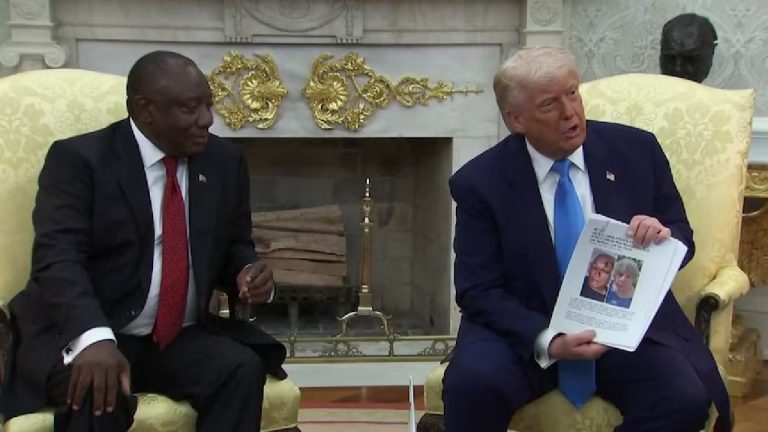
Donald Trump and Cyril Ramaphosa seated indoors, with Trump holding a document showing a couple's photo

The Crumbling Pillar: How Gaza and G20 Isolation Signal the End of Unipolarity

The decline of unipolar authority is now evident, particularly highlighted by the US’s absence from the G20 Summit in South Africa. For years, global diplomacy relied on American leadership to resolve crises. However, the situation in Gaza and the West’s isolation at major multilateral events in late 2025 indicate that this era of singular influence is over.

Read More »
Artistic brushstroke depiction of the Brazilian flag with the national motto "Ordem e Progresso" (Order and Progress)

Brazil’s Quest for Global Recognition: Navigating Between Western Heritage and Global South Leadership

Brazil’s foreign policy is influenced by a unique historical context; unlike many Global South countries with colonial histories, Brazil’s frustrations arise from its exclusion from the leadership of the postwar order it helped create. This ongoing disappointment informs Brazilian diplomacy, fueling campaigns for institutional reform and recognition, reflecting both ambition and insecurity.

Read More »