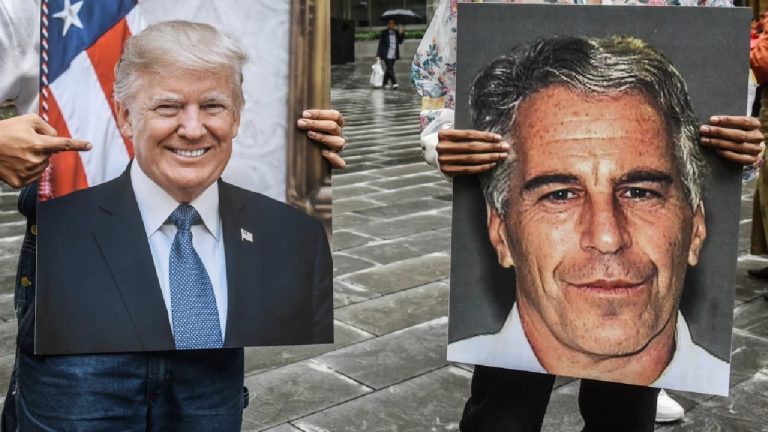
Justice Department’s December 2025 phased release of Jeffrey Epstein investigation files sparked intense congressional scrutiny over redactions, document removal, and handling of materials referencing President Donald Trump. Tuesday’s release included over 11,000 files totaling nearly 30,000 pages containing photos, court records, FBI and DOJ documents, emails, news clippings, videos and other materials, with hundreds of Trump references amid heavily redacted documents drawing bipartisan criticism.
An internal January 2020 email from Southern District of New York prosecutor stated Trump “traveled on Epstein’s private jet many more times than previously has been reported (or that we were aware), including during the period we would expect to charge in a [Ghislaine] Maxwell case.” The email documented Trump listed as passenger on at least eight flights between 1993 and 1996, with Maxwell present on at least four flights. On one 1993 flight, Trump and Epstein were sole listed passengers; another flight listed Trump, Epstein, and redacted 20-year-old as only passengers.
Congressional Criticism and Legal Compliance
Senate Majority Leader Chuck Schumer announced Monday he would introduce resolution directing Senate to “initiate legal action against DOJ” for releasing only partial records. “The law Congress passed is crystal clear: release the Epstein files in full so Americans can see the truth,” Schumer wrote on X. “Instead, the Trump Department of Justice dumped redactions and withheld the evidence — that breaks the law.”
Kentucky Republican Rep. Thomas Massie, who cosponsored bipartisan Epstein Transparency Act alongside Democrat Rep. Ro Khanna, criticized redactions stating the release “grossly fails to comply with both the spirit and the letter of the law.” Massie warned “a future DOJ could convict the current [Attorney General] and others” for not properly releasing all files the law mandated be made public.
DOJ missed December 19 congressional deadline, stating it would release materials through year’s end. The department’s handling prompted accusations from both parties of protecting politically connected individuals while selectively releasing materials.
Document Removal and Restoration Controversy
NPR identified more than dozen files released Friday no longer available Saturday afternoon, including one showing Trump’s photo on desk among several other photographs. DOJ stated Sunday it removed Trump image due to Southern District of New York request, citing “abundance of caution” to protect Epstein victim identities.
“Out of an abundance of caution, the Department of Justice temporarily removed the image for further review. After the review, it was determined there is no evidence that any Epstein victims are depicted in the photograph, and it has been reposted without any alteration or redaction,” the department stated on social media. The image was restored Sunday afternoon following backlash.
CNN noted DOJ’s initial Tuesday statement “reads as if it’s from Trump’s personal lawyer—i.e. its reference to how this information, if credible, ‘certainly would have been weaponized against President Trump’—rather than a neutral handler of this information.”
Fake Letter Controversy and FBI Verification
A handwritten letter signed “J. Epstein” addressed to convicted sex offender Larry Nassar appeared to reference Trump, stating “Our president shares our love of young, nubile girls” and “When a young beauty walked by he loved to ‘grab snatch,’ whereas we ended up snatching grub in the mess halls of the system.” The letter was postmarked August 13, 2019.
Hours after release, DOJ announced FBI “confirmed” the letter was “fake” based on multiple factors: handwriting not matching Epstein’s, Virginia postmark instead of New York where Epstein was jailed, incorrect jail return address lacking required inmate number, and postmark dated three days after Epstein’s August 10, 2019 death.
“This fake letter serves as a reminder that just because a document is released by the Department of Justice does not make the allegations or claims within the document factual. Nevertheless, the DOJ will continue to release all material required by law,” the department stated.
CNN senior law enforcement analyst Andrew McCabe warned the fake letter exemplifies “pitfalls” of releasing hundreds of thousands of unverified documents simultaneously. “I totally understand certainly the victims’ and the general public’s desire to have transparency and accountability. But I just really worry that unleashing hundreds of thousands of documents and essentially a database without any guidance, context, explanations, analysis, is not ultimately very helpful in that process.”
Additional Trump References and Investigation Materials
Tuesday’s files included 2021 subpoena from Maxwell case to Trump’s Mar-a-Lago Club seeking “any and all employment records relating to” redacted individual. While individual’s identity remains unclear, deceased Epstein accuser Virginia Giuffre formerly worked at Mar-a-Lago.
Investigators found Trump-Maxwell photo while examining Steve Bannon’s iPhone in June 2021, according to email with redacted sender and recipient. “I’ve been looking through Steve Bannon’s iPhone 7 on Cellebrite. As I was going through the images from that phone, I found an image of Trump and Ghislaine Maxwell on Bannon’s phone,” the email stated.
One October 2020 FBI case file contained rape allegation involving Trump, though document did not identify allegation source due to redactions. File referenced limousine driver account from 1995 reporting “very concerning” phone conversation where Trump repeatedly said “Jeffrey” and referenced “abusing some girl.” An unnamed individual alleged “he raped me” referring to Trump, stating “Donald J. Trump had raped her along with Jeffrey Epstein.”
DOJ statement accompanying Tuesday’s release emphasized materials include “untrue and sensationalist claims” submitted to FBI shortly before 2020 election. The department characterized claims as “unfounded and false” yet released them “out of our commitment to the law and transparency” with “legally required protections for Epstein’s victims.”
Trump Administration Response and Political Implications
Trump has not directly commented on Tuesday’s document dump but told reporters Monday he views Epstein files as distraction unfairly implicating innocent people. “What this whole thing is with Epstein is a way of trying to deflect from the tremendous success that the Republican Party has,” Trump stated.
When asked about surprise over Clinton photo numbers, Trump said: “I like Bill Clinton… We’ve always gotten along. I hate to see photos come out of him, but this is what Democrats, mostly Democrats and a couple of bad Republicans are asking for. You probably have pictures being exposed of other people that innocently met Jeffrey Epstein.”
Trump previously described files as “Democrat Hoax” in July and took to Truth Social criticizing Democrats and some Republicans calling for full release. Massie, whom Trump described as “lowlife” for involvement pushing release, responded: “Trump is blaming me for a bill he eventually signed, while defending his banker friends, Bill Clinton, and ‘innocent’ visitors to rape island. Meanwhile [Attorney General] Bondi is working fervently to redact, omit, and delete Epstein files she is legally required to release under our bill.”
Trump has repeatedly and emphatically denied any knowledge of Epstein’s crimes or personal wrongdoing in connection with the deceased sex offender. Authorities have not accused Trump of criminal wrongdoing related to Epstein.
Original reporting by Callum Sutherland from TIME Magazine. Republished with additional research and verification by ThinkTanksMonitor.