The resumption of Oman-mediated nuclear negotiations between Washington and Tehran on February 6 marked a cautious diplomatic reopening after months of military confrontation, domestic upheaval, and mutual recriminations. Yet the absence of any concrete framework or breakthrough underscores just how wide the gulf between the two sides remains—and how quickly the window for diplomacy could close.
Muscat’s Diplomatic Revival Under the Shadow of Force
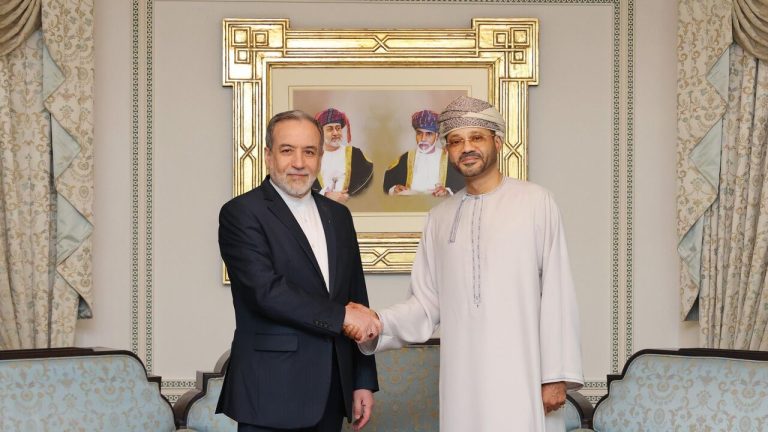
Oman has long served as the quiet diplomatic bridge between adversaries in the Persian Gulf. It was Muscat that hosted the secret back-channel talks in 2013 that ultimately paved the way for the 2015 Joint Comprehensive Plan of Action. More than a decade later, the sultanate is once again playing intermediary, this time under dramatically different circumstances. The February 6 session brought Iranian Foreign Minister Abbas Araghchi and American envoy Steve Witkoff back to the same Omani palace complex used in the five rounds of negotiations held between April and June 2025, before Israeli strikes on Iranian nuclear facilities shattered the diplomatic track last summer.
What made this latest session particularly notable was the composition of the American delegation. Alongside Witkoff and Jared Kushner, Washington dispatched Admiral Brad Cooper, the head of U.S. Central Command, in his dress uniform—a decision that sent an unmistakable signal. Iranian state media quickly characterized Cooper’s presence as psychological coercion, while AP News reported that Cooper’s attendance underscored the dual-track strategy of combining military pressure with diplomatic engagement. The session itself was conducted indirectly, with Omani Foreign Minister Badr al-Busaidi relaying proposals between the two delegations in separate rooms.
The Enrichment Impasse at the Heart of Negotiations
The fundamental collision point between Tehran and Washington has not changed since the collapse of the 2015 deal: uranium enrichment. Before the June 2025 Israeli-American military strikes, Iran had been enriching uranium up to 60% purity, a short technical step from weapons-grade levels—making it the only non-nuclear-weapons state to have reached such thresholds. Tehran says it has since halted enrichment activity, but the International Atomic Energy Agency has been unable to verify this claim because Iranian authorities continue to deny inspectors access to damaged sites.
Washington insists that any agreement must include the permanent cessation of enrichment on Iranian soil, a position Secretary of State Marco Rubio reiterated before the talks. Tehran, however, has drawn an absolute line on this point. Just two days after the Muscat session, Araghchi declared that domestic enrichment is “non-negotiable”, framing the issue not in technical terms but as a matter of national sovereignty and dignity. A regional diplomat briefed on the proceedings told Reuters that while Iran categorically rejected Washington’s demand for zero enrichment, the Iranian side did signal some willingness to discuss the level and purity of enrichment, or even alternative arrangements such as a regional consortium. The American side, for its part, would need to deliver what Tehran calls “efficient and immediate sanctions relief,” including the resumption of banking channels and the withdrawal of military assets from the region.
This gap between maximalist positions—total dismantlement versus sovereign enrichment rights—defines the structural fragility of the entire process. As the Bulletin of the Atomic Scientists cautioned ahead of the talks, narrowing the agenda solely to the nuclear file risks producing an agreement that ignores the deeper security architecture needed for lasting stability.
Washington’s Pressure Campaign Beyond the Negotiating Table
The Trump administration has made clear that diplomacy with Tehran operates alongside, not instead of, an intensifying pressure regime. On the same day as the Muscat talks, President Trump signed an executive order authorizing a 25% tariff on imports from any country that directly or indirectly purchases goods from Iran. The measure targets third-party commercial ties in energy, metals, and petrochemicals—sectors that remain critical to Tehran’s dwindling revenue base. Separately, the Treasury and State Department announced sanctions on fifteen entities and fourteen so-called shadow fleet tankers involved in illicit Iranian petroleum trade.
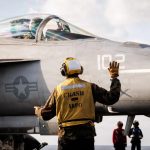
The military dimension is equally pronounced. Since late January, the United States has undertaken its largest military buildup in the Middle East since the June 2025 strikes, deploying the USS Abraham Lincoln carrier strike group to the Arabian Sea alongside additional fighter aircraft, missile defense batteries, and ground forces across the region. Approximately 50,000 American troops are stationed at bases throughout the Gulf—all within range of Iranian ballistic missiles. Trump himself has described the deployment as a “massive armada,” warning that if Tehran does not reach a deal, “the consequences are very steep.” His invocation of the Venezuela precedent—where months of Caribbean military buildup preceded the capture of President Maduro—was not lost on Iranian analysts.
For Washington, this combination of economic strangulation and military positioning is designed to narrow Tehran’s options and accelerate concessions. For Iran, it represents exactly the kind of coercive environment that officials say makes genuine diplomacy impossible.
Hard-Line Dissent and Regime Stability Anxieties in Tehran
Inside Iran, the Muscat session provoked a fractured response that reflects deeper tensions within the political establishment. Araghchi struck a measured tone, describing the talks as “a good start” and emphasizing that both sides agreed to continue engagement. President Masoud Pezeshkian similarly characterized the meeting as a step forward. But these cautious affirmations have been met with vocal skepticism from conservative lawmakers and Revolutionary Guard–aligned commentators.
Conservative parliamentarian Ebrahim Rezaei issued a blunt warning on social media: if Washington refuses to negotiate within Tehran’s framework, “they will have to talk to our missiles and drones.” Another lawmaker, Rouhollah Nejabat, described the Islamic Republic’s posture as a dual track of deterrence and dialogue, insisting that missile and nuclear capabilities must remain core strategic instruments regardless of what happens at the negotiating table. Meanwhile, Friday prayer leaders across Iran dismissed the diplomatic prospects entirely—a signal widely interpreted as reflecting Supreme Leader Khamenei’s own ambivalence about the process.
These internal divisions are amplified by the traumatic aftermath of the January 2026 protests, which represented the gravest domestic challenge to the Islamic Republic in decades. The government’s response was staggering in its brutality: the Washington Post documented that security forces killed over 6,800 people during the crackdown, while other reports suggest the true toll may be far higher. Tens of thousands remain in detention, and a near-total internet blackout was imposed during the worst of the violence. The crackdown succeeded in suppressing the immediate unrest, but it has profoundly shaken regime confidence. For Iranian leadership, the nuclear negotiations are now inseparable from questions of regime survival—external military pressure combined with internal discontent creates a vulnerability that hardliners view as existential.
Israel’s Strategic Calculus and Regional Spillover Risks
Any assessment of the Iran-U.S. diplomatic track must account for the role of Israel, which has consistently worked to prevent or derail any agreement that leaves Iranian nuclear infrastructure intact. Israeli Prime Minister Benjamin Netanyahu has spoken publicly of building “conditions toward a critical mass” that could bring about the downfall of the Iranian government—rhetoric that reflects Tel Aviv’s preference for sustained maximum pressure over diplomatic accommodation. The June 2025 twelve-day Israeli bombing campaign targeted not only nuclear sites but senior military commanders and nuclear scientists, fundamentally altering the strategic landscape.
The question of whether Israel would act unilaterally again looms over every negotiation. Tehran’s inability to retaliate decisively during the June war—despite possessing what CSIS estimates as the Middle East’s largest and most diverse missile arsenal—exposed the limits of its deterrence posture and emboldened those in Jerusalem who advocate for further strikes. Gulf Arab states, meanwhile, face their own precarious calculations. Iran has explicitly warned neighboring countries hosting American bases that they could find themselves in the line of fire during any escalation. For states like Bahrain, Qatar, and the UAE, the prospect of being drawn into a U.S.-Iran conflict represents a nightmare scenario that makes Oman’s mediating role all the more critical.
Tehran’s Military Options and the Deterrence Equation
Despite the devastating setbacks of the June 2025 war—which destroyed key nuclear facilities, killed senior military leaders, and degraded portions of Iran’s missile infrastructure—the Islamic Republic retains significant asymmetric capabilities. Analysts at the Hudson Institute estimated in January 2026 that Iran still possesses approximately 1,500 to 2,000 ballistic missiles, including short- and medium-range systems capable of reaching every American installation in the region. Recent satellite imagery has shown Iranian efforts to rapidly repair missile sites damaged during last year’s strikes, suggesting that reconstitution of offensive capability is a top priority.
Beyond conventional missiles, Iran’s military doctrine relies heavily on asymmetric warfare: fast boats capable of swarming operations in the Strait of Hormuz, mass drone launches designed to overwhelm air defense systems, and a network of allied militias across Iraq, Lebanon, and Yemen. Though the Gaza conflict and Israeli operations have weakened groups like Hezbollah, Tehran’s proxy network retains the capacity to threaten American interests regionally. Just days before the February talks, Iran attempted to intercept a U.S.-flagged vessel in the Strait of Hormuz, while American forces shot down an Iranian drone near the Lincoln carrier group—underscoring that military friction continues even as diplomats exchange proposals.
Iranian strategic thinking appears to rest on a key assumption: that President Trump, despite his bellicose rhetoric, is ultimately reluctant to initiate another open-ended Middle Eastern conflict after the costly precedents of Iraq and Afghanistan. Whether this calculation proves correct may determine whether the diplomatic window created in Muscat leads anywhere meaningful.
Prospects for a Fragile Diplomatic Process
The February 6 session in Oman was, by all credible accounts, a preliminary exchange of positions rather than any genuine negotiation over terms. Both sides outlined their demands and red lines without entering detailed bargaining. Trump told reporters afterward that Iran “looks like they want to make a deal very badly,” while simultaneously maintaining that the United States was “in no rush.” Araghchi, for his part, emphasized that mistrust accumulated over years of failed agreements remains “a serious challenge” that must be addressed before substantive discussions can begin.
The path forward depends on political decisions in both capitals—and on whether external actors allow the process to continue. Tehran must weigh the costs of continued economic isolation and military vulnerability against the domestic political risks of making concessions that hardliners view as capitulation. Washington must decide whether its maximalist demand for zero enrichment is a genuine negotiating position or an opening bid that can be modulated. And both sides must contend with the possibility that Israel, which has demonstrated its willingness to act unilaterally, could once again upend the diplomatic calendar with military force. For now, the diplomatic window remains ajar—but the forces working to slam it shut are formidable.
Original analysis inspired by A correspondent in Tehran from Al-Monitor. Additional research and verification conducted through multiple sources.