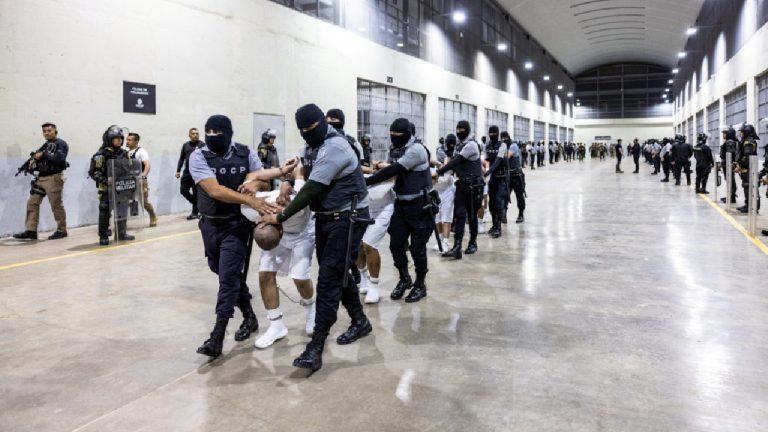
CBS News Editor-in-Chief Bari Weiss’s December 22, 2025 decision pulling “60 Minutes” CECOT prison investigation three hours before broadcast sparked allegations of political interference after correspondent Sharyn Alfonsi characterized the move as “political” rather than editorial. The segment documented alleged torture and abuse at El Salvador’s Centro de Confinamiento del Terrorismo (CECOT), where Trump administration sent over 280 Venezuelan men in March 2025, with three-fourths having no apparent criminal record according to previous 60 Minutes investigation.
Alfonsi wrote to colleagues: “Our story was screened five times and cleared by both CBS attorneys and Standards and Practices. It is factually correct. In my view, pulling it now, after every rigorous internal check has been met, is not an editorial decision, it is a political one.” She added: “If the administration’s refusal to participate becomes a valid reason to spike a story, we have effectively handed them a ‘kill switch’ for any reporting they find inconvenient.”
Segment Content and Legal Background
The segment featured interviews with recently released deportees describing “torture and physical and sexual abuse” at CECOT. One deportee stated: “He said, ‘Welcome to hell. I’ll make sure you never leave,'” noting he was awaiting asylum claim decision when deported—among 252 Venezuelans sent in March-April period.
Trump invoked 1798 Alien Enemies Act—for fourth time in history—claiming Tren de Aragua gang was Venezuelan government-backed invasion. Civil liberties groups attacked the move as lacking due process, arguing United States is not at war and cannot invoke that law. Federal appeals court blocked the administration in September from using that law, stating it would grant preliminary injunction “to prevent removal because we find no invasion or predatory incursion” occurred.
National Immigration Law Center documented those sent to CECOT included “long-time residents with U.S. citizen spouses and children, people who recently arrived, and people in the middle of immigration court proceedings on the path to getting asylum or other relief.” The administration paid Salvadoran government $6 million to house migrants in CECOT.
Weiss’s Editorial Rationale and Staff Response
Weiss defended the decision Monday, stating: “While the story presented powerful testimony of torture at CECOT, it did not advance the ball—The Times and other outlets have previously done similar work. To run a story on this subject two months later, we need to do more. This is 60 Minutes. We need to be able to get the principals on the record and on camera.”
According to New York Times reporting, Weiss requested numerous changes including adding interview with White House deputy chief of staff Stephen Miller or another senior Trump administration figure. Weiss provided Miller’s contact information to 60 Minutes team; Alfonsi noted she already requested comment from Department of Homeland Security, White House, and State Department.
NPR documented Weiss in earlier review objected to men being called “Venezuelan migrants” rather than “illegal immigrants”—term favored by Trump administration. However, many sent to CECOT were not in country illegally and had applied for asylum, awaiting decisions on applications.
Alfonsi wrote: “We have been promoting this story on social media for days. Our viewers are expecting it. When it fails to air without a credible explanation, the public will correctly identify this as corporate censorship. We are trading 50 years of ‘Gold Standard’ reputation for a single week of political quiet.”
Corporate Context and Regulatory Pressures
David Ellison’s Skydance Media acquired Paramount with regulatory approval granted October. Ellison announced reportedly $150 million deal acquiring Weiss’s Free Press and appointing her CBS News Editor-in-Chief—moves perceived as improving network standing with Trump administration. Ellison’s father Larry Ellison was key Trump donor ahead of 2024 election.
CBS parent Paramount settled Trump’s lawsuit for $16 million regarding alleged deceptive editing of Kamala Harris interview, facilitating sale. Trump complained December about 60 Minutes treating him “far worse” since acquisition, posting after Marjorie Taylor Greene interview: “THEY ARE NO BETTER THAN THE OLD OWNERS.”
Canadian Broadcast and Congressional Response
While segment was pulled domestically, “Inside CECOT” aired Monday on Canada’s Global Television Network streaming app, circulating like samizdat on social media. Neither CBS nor Global Television Network responded to requests explaining how report aired in Canada while pulled in United States.
FCC Commissioner Anna M. Gomez stated news reports were “deeply alarming and strike at the heart of press freedom,” adding “In the days ahead, I hope CBS provides its viewers with a clear accounting of how this decision was made and demonstrates how it will safeguard the independence of its newsroom.”
Senator Brian Schatz stated: “What is happening to CBS is a terrible embarrassment and if executives think they can build shareholder value by avoiding journalism that might offend the Mad King they are about to learn a tough lesson.” He added decision “does merit an explanation right away. It’s a pretty big deal to pull a story at the request of the White House.”
Representative Ro Khanna wrote: “A free press isn’t free if stories get shelved just because the powerful won’t talk. CBS pulling the CECOT story on Venezuelan deportees sent to El Salvador’s brutal prison erodes trust. We are losing trust that government and media serve us, not the elite.”
CECOT Facility Conditions and Human Rights Documentation
CECOT is maximum-security mega-prison with 40,000-person capacity, each cell housing 65-70 people. Facility opened 2023 in Tecoluca as centerpiece of President Nayib Bukele’s gang violence crackdown.
Human Rights Watch and Cristosal 2022 joint report documented violations including “arbitrary arrests, enforced disappearances, torture and other ill-treatment of detainees, and significant due process violations. In addition, circumstances of many deaths in custody during the state of emergency suggest state responsibility for those deaths.”
Cristosal reported March 2024 110,000 people imprisoned in El Salvador including those awaiting trial—more than double 36,000 incarcerated April 2021. Between 2022 and 2024, at least 261 people died in El Salvador’s prisons during gang crackdown.
Human Rights Watch executive director Philippe Bolopion stated: “The evidence is clear regardless of what airs on 60 Minutes: the Trump administration disappeared these Venezuelan men to a mega prison in El Salvador where they were systematically tortured.”
Editorial Authority and Ideological Framing
Weiss’s November 2025 Jewish Leadership Conference remarks stated: “I think it’s about redrawing the lines of what falls in the 40-yard lines of acceptable debate and acceptable American politics and culture. And I don’t mean that in a censorious, gatekeeping way.” This parallels her 2018 Times column characterizing “leftists” engaged in “concerted attempt to significantly redraw the bounds of acceptable thought and speech”—framing identical activity as sinister when conducted by ideological opponents yet legitimate when pursuing her own editorial project, illustrating contested nature of who controls media gatekeeping authority.
Original analysis by Adam Serwer from The Atlantic. Republished with additional research and verification by ThinkTanksMonitor.