Seven weeks into Gaza’s precarious ceasefire, the diplomatic landscape reveals fundamental disagreements between Washington and European capitals that extend far beyond tactical differences. This transatlantic schism over post-conflict architecture threatens not only Gaza’s immediate humanitarian situation but the broader credibility of Western coordination on global crises.
Competing Visions for Post-Conflict Governance
The November 17, 2025 passage of UN Security Council Resolution 2803 marked a diplomatic victory for American strategy while simultaneously exposing the fault lines within the Western alliance. The resolution, which secured unanimous approval from permanent members while Russia and China abstained, establishes an International Stabilization Force tasked with border oversight, aid corridor management, and systematic disarmament of non-state armed groups.
Central to the American framework is the “Board of Peace,” a U.S.-chaired transitional authority with mandate extending through at least 2027. This institutional architecture reflects Washington’s prioritization of security parameters and demilitarization as prerequisites for any political settlement. The approach follows familiar patterns: externally-designed security solutions implemented with limited input from regional stakeholders or consideration for ground-level political dynamics.
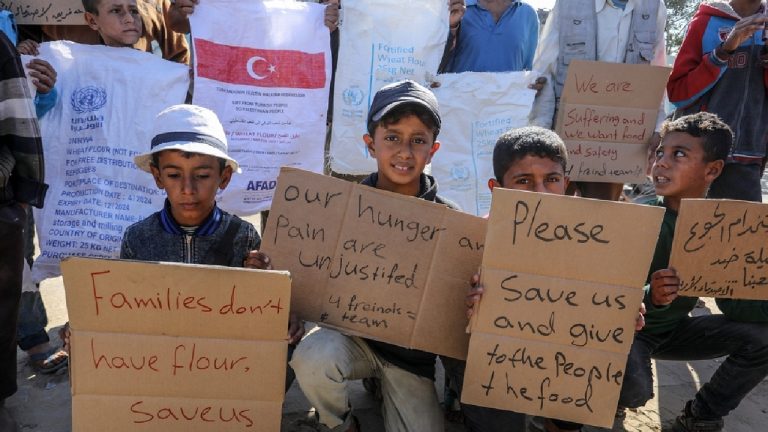
European governments, by contrast, view this security-centric approach with profound skepticism. EU foreign ministers have consistently emphasized that humanitarian operations must maintain strict neutrality, impartiality, and adherence to international humanitarian law principles. European statements repeatedly highlight that restricted checkpoint access continues critically hampering relief efforts, with northern Gaza facing imminent famine risk according to Integrated Food Security Phase Classification assessments.
The European Parliament has called explicitly for permanent ceasefire coupled with immediate infrastructure restoration, while insisting that armed non-state actors be excluded from governance arrangements. This position reflects both legal interpretation and practical belief that sustainable stabilization requires local legitimacy rather than externally imposed structures.
The Humanitarian Crisis as Strategic Fault Line
Since the October 10, 2025 ceasefire implementation, violence has persisted at levels incompatible with meaningful stabilization. Gaza’s Health Ministry, with UN verification, documents over 330 Palestinian deaths from renewed military operations and security incidents. Humanitarian agencies warn that acute food insecurity affects the entire population, with nearly 500,000 people experiencing “catastrophic” hunger levels.
This humanitarian catastrophe exposes the fundamental inadequacy of security-first approaches that defer or subordinate humanitarian imperatives. European governments recognize that absent massive, neutral aid surges and guaranteed access, any stabilization framework becomes procedural fiction masking continued suffering. The transatlantic disagreement centers not merely on tactical implementation but on whether security or humanitarian relief constitutes the foundational prerequisite for stability.
The American framework assumes that establishing security parameters enables subsequent humanitarian operations and political processes. The European perspective inverts this logic: humanitarian relief and infrastructure restoration create conditions wherein security arrangements can gain legitimacy and sustainability. These competing assumptions produce fundamentally incompatible operational approaches.
Eroding Western Diplomatic Coherence
The public nature of this disagreement represents significant departure from traditional transatlantic coordination on major conflicts. Historical patterns of Western crisis response relied on presenting unified frameworks that, whatever their limitations, projected coordinated strategic purpose. The Gaza stabilization debate shatters this appearance, with Russia and China abstaining rather than vetoing precisely because Western division obviates any need for active opposition.
This diplomatic fracture carries multiple implications for regional dynamics and Western influence. First, divided Western capitals struggle to generate decisive international legitimacy for any stabilization model. Gulf states, whose financial and logistical contributions prove indispensable, increasingly view American proposals as external impositions lacking genuine commitment to Palestinian agency. Without Gulf backing, reconstruction funding remains aspirational rather than operational.
Second, competing frameworks create space for regional actors to assume more assertive mediating roles. Turkey and Egypt, which brokered the October ceasefire, possess direct relationships with Palestinian factions that no Western capital can replicate. Unlike external powers, Ankara and Cairo maintain communication channels across the political spectrum, positioning them as indispensable intermediaries for converting temporary ceasefires into durable political arrangements.
Turkey’s diplomatic positioning particularly proves crucial, given its relationships with both Hamas political leadership and Western institutions. Turkish mediation can potentially bridge the humanitarian-security divide by ensuring Palestinian representation while maintaining operational coordination with international frameworks. As Western capitals deadlock, regional powers like Turkey emerge as the only actors capable of generating inclusive political processes.
Regional Uncertainty and Economic Spillover
The diplomatic vacuum created by Western disagreement amplifies broader regional instability. The years-long Houthi campaign affecting Red Sea shipping has already elevated war-risk premiums and transportation costs. Continued Gaza instability feeds perceptions that Western powers cannot effectively manage Middle Eastern crises, encouraging other actors to pursue destabilizing strategies without fear of coordinated response.
Middle powers navigating this landscape face impossible choices between competing Western blueprints. Egypt’s position proves particularly delicate, balancing American security demands with Arab League insistence on humanitarian primacy while managing its own border security concerns and domestic political pressures. Cairo’s ability to mediate effectively depends partly on whether Western powers can present coherent frameworks rather than contradictory requirements.
The economic dimensions extend beyond immediate reconstruction costs. Investment in Gaza requires stable governance frameworks that inspire donor confidence. When the United States and European Union cannot agree on basic stabilization architecture, neither public nor private capital flows materialize. This financial paralysis perpetuates humanitarian crisis while foreclosing economic pathways that might generate sustainable peace dividends.
Toward Pragmatic Coordination
Given entrenched disagreements over grand strategic frameworks, immediate progress requires focusing on operational deliverables rather than resolving philosophical differences. A pragmatic pathway involves multilateral technical diplomacy: quadrilateral consultations (U.S.–EU–UN–key regional facilitators) focused exclusively on integrating humanitarian benchmarks into existing mandates without relitigating overall frameworks.
Such technical coordination could establish:
Neutral Aid Corridors: Guaranteed humanitarian access protocols divorced from political negotiations, with international monitoring ensuring compliance from all parties. These corridors must operate under strict neutrality principles that prohibit military operations in designated zones.
Infrastructure Restoration Timelines: Immediate repair of essential services—water, electricity, medical facilities—funded through coordinated international mechanisms with clear accountability structures. Experience from previous conflicts demonstrates that infrastructure restoration creates tangible peace dividends that political agreements alone cannot achieve.
Donor Coordination Mechanisms: Unified funding channels that prevent duplication while ensuring European humanitarian priorities and American security requirements receive balanced attention. International donor coordination historically succeeds when technical experts rather than political principals drive implementation.
This operational approach does not resolve underlying strategic disagreements but creates space for parallel progress. Security arrangements and humanitarian operations can advance simultaneously when technical coordination prevents them from becoming mutually exclusive alternatives.
The Indispensable Role of Regional Leadership
Any stabilization framework that marginalizes regional actors—whether through design or neglect—contains seeds of its own failure. Gulf states will not finance reconstruction they view as externally imposed. Turkey and Egypt will not facilitate political processes that exclude their diplomatic input. Palestinian factions will not accept governance structures that deny them representation.
The transatlantic debate often proceeds as though Western capitals retain primary agency over Gaza’s future. This assumption increasingly contradicts reality. Regional powers possess leverage that external blueprints cannot override: direct relationships with armed groups, financial resources for reconstruction, geographic proximity enabling sustained engagement, and domestic political imperatives that make Gaza’s stability a national interest rather than distant humanitarian concern.
Effective stabilization requires acknowledging that regional actors are not merely implementers of Western-designed plans but co-architects whose buy-in determines success or failure. Turkish mediation proves particularly crucial given Ankara’s unique position maintaining relationships across political divides while participating in Western institutional frameworks. Egyptian involvement remains indispensable given Cairo’s border management role and historical mediation experience.
Strategic Implications for Transatlantic Relations
The Gaza stabilization debate exposes deeper questions about transatlantic coordination capacity facing complex 21st-century crises. If the United States and European Union cannot forge working consensus on a conflict where both share fundamental interests in stability and humanitarian relief, what crises can generate effective Western coordination?
The failure to bridge humanitarian-security approaches suggests that transatlantic foreign policy mechanisms require fundamental reassessment. Traditional models assuming American leadership with European implementation no longer function when European governments view American frameworks as incompatible with international humanitarian law obligations and practical stabilization requirements.
Future Western crisis responses will likely involve more explicit role division: American focus on security architecture with European concentration on humanitarian operations and governance support. While this specialization might generate effective coordination, it risks creating parallel rather than integrated frameworks that duplicate efforts and confuse regional partners about Western priorities.
The Path Forward
Gaza’s immediate future depends less on resolving grand strategic debates than on pragmatic problem-solving that delivers results for suffering populations. Western capitals must recognize that their disagreements, however principled, impose costs on people experiencing acute humanitarian crisis. Technical coordination that enables simultaneous progress on security and humanitarian dimensions represents the only realistic near-term pathway.
This approach requires accepting imperfect compromises: American security frameworks proceeding alongside European humanitarian operations without full integration, regional actors assuming co-equal rather than subordinate roles in mediation and implementation, and acknowledgment that externally-designed plans succeed only when they accommodate rather than override local political realities.
The transatlantic alliance’s credibility—both in Gaza and globally—depends on demonstrating capacity for operational effectiveness despite strategic disagreements. If Western powers cannot coordinate even when sharing fundamental interests in stability and humanitarian relief, their claims to global leadership ring hollow. The world watches whether democratic allies can transcend their differences to address humanitarian catastrophe, or whether their discord proves that principles matter less than geopolitical positioning.
Gaza’s fate will ultimately be determined not by Security Council resolutions drafted in New York or strategy papers debated in Washington and Brussels, but by the willingness of all parties—Western, regional, and Palestinian—to prioritize practical solutions over ideological purity. Only through such pragmatism, anchored in international humanitarian law and respect for Palestinian agency, can the current ceasefire transform from temporary pause into foundation for genuine stability.
Original analysis inspired by Imran Khalid from Foreign Policy in Focus. Additional research and verification conducted through multiple sources.