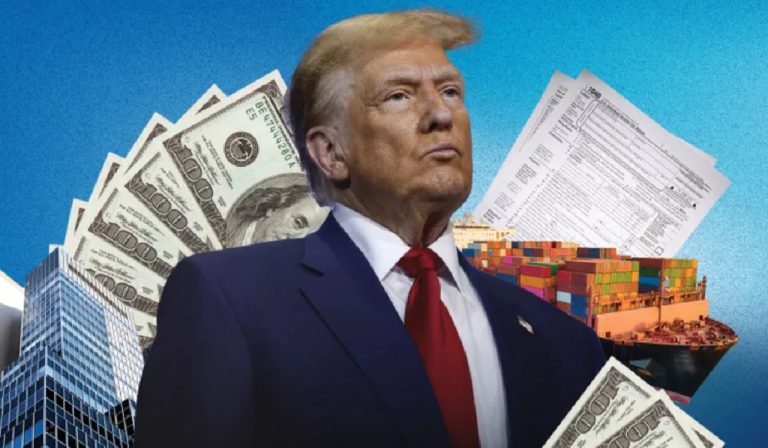
American hegemony faces systematic erosion through self-inflicted wounds as erratic trade policies, mass deportations and institutional attacks undermine foundational comparative advantages. While stock markets register superficial strength concentrated in narrow technology sectors, underlying economic vulnerabilities multiply—forcing traditional partners to pursue alternative arrangements rather than accepting continued exposure to unreliable American governance.
India Faces Higher Tariffs Than China Despite Strategic Partnership
Washington imposed 50% tariffs on Indian exports in August 2025—higher than the 47% levied on China despite decades of bipartisan efforts positioning New Delhi as counterbalance to Beijing. India initially received 25% “reciprocal” tariff on July 30th, followed by additional 25% penalty linked to Russian oil purchases—bringing combined rate to 50% on jewelry, textiles, footwear, furniture and industrial chemicals.
The policy contradicts stated Indo-Pacific strategy. CSIS analysts note Washington had consistently valued “democratic India over autocratic China” from Clinton administration through Trump’s first term, yet current approach shifted from strategic altruism toward “transactionalism.” Former Ambassador Kenneth Juster described widespread surprise and indignation in New Delhi, particularly after Trump labeled Indian tariffs “obnoxious” and falsely claimed brokering India-Pakistan ceasefire—claims Delhi publicly rejected.
India’s bilateral trade with Washington stood at $212 billion with $46 billion surplus favoring India, yet Europe and China continue importing Russian energy without comparable penalties. Economic analysts estimate 50% tariffs could reduce India’s GDP growth by 0.9%—equivalent to $36 billion impact—while export hubs like Surat and Tirupur face job losses.
Most critically, punitive measures drove precisely the strategic realignment Washington claims opposing. Modi pursued closer ties with Xi Jinping and Putin while negotiating expanded EU trade frameworks. Chatham House analysts characterize this as India reaffirming strategic autonomy rather than accepting subordination—exactly opposite Washington’s stated objectives.
Tariff Chaos Generates Household Tax Increases Without Strategic Gains
Democrats’ Joint Economic Committee calculated average American households pay nearly $1,200 additional costs from Trump’s tariffs—effectively regressive tax increases hitting lower-income consumers hardest. Tax Foundation estimates Trump tariffs amount to $1,100 per household in 2025 and $1,400 in 2026, while Federal Reserve Chair Jerome Powell stated “it’s really tariffs that are causing most of the inflation overshoot” beyond the central bank’s 2% target.
The policy produces neither manufacturing renaissance nor trade deficit reduction. Average applied US tariff rate rose from 2.5% in January to 17.9% by September 2025—highest level in over century—yet domestic production remains constrained by labor shortages exacerbated through mass deportations. Federal courts ruled tariffs imposed under International Emergency Economic Powers Act illegal, though they remained enforced pending appeals.
Erratic implementation compounds damage. Trump’s threatened lumber and agricultural tariffs, 25% EU duties, and selective exemptions for Switzerland create unpredictable cost structures preventing serious long-term business planning. Partners conclude unreliability poses greater risk than dependency—accelerating efforts toward American alternatives rather than accommodation.
Immigration Enforcement Destroys Critical Labor Supply
Mass deportations conducted by masked ICE agents eliminated most important additional labor source when domestic workforce declines. Industries from agriculture and construction to hospitality and care work depend fundamentally on immigrant labor, yet enforcement climate creates fear preventing even American citizens of color from normal activity. This simultaneously contracts labor supply while reducing consumer demand—directly undermining economic growth.
Job creation approached standstill despite administration claims of strength. The contradiction between attacking labor supply while demanding manufacturing expansion reveals policy incoherence. Nations seeking reliable production partners observe American self-sabotage and adjust accordingly—moving supply chains and investment toward more stable jurisdictions.
AI Bubble Sustains Market While Concealing Broader Weakness
Stock market strength proves narrower than headline figures suggest. The “Magnificent 7″—Alphabet, Amazon, Apple, Meta, Microsoft, Nvidia and Tesla—comprise 35-37% of S&P 500 market capitalization—record concentration. Over 2025, AI-related enterprises accounted for roughly 80% of American stock market gains, yet valuations depend on long-term monopoly profit expectations potentially disconnected from fundamental economics.
Massive capital expenditures on AI offset weakness elsewhere, creating temporary growth illusion. Microsoft spent $35 billion on AI infrastructure in three months ending September, while OpenAI revenue runs approximately $13 billion annually. Yet MIT reported that despite $30-40 billion enterprise investment into generative AI, 95% of organizations achieve zero return.
When bubble bursts—timing uncertain but eventuality probable—concentrated exposure magnifies impact. Goldman Sachs CEO David Solomon warned of “likely” 10-20% equity drawdown within two years, while Bank of England and IMF sounded alarms about overvaluation risks. Alternative scenario where AI succeeds as advocates anticipate creates different problem: widespread worker displacement and deepening inequality without social safety nets adequate for technological disruption’s scale.
Institutional Foundations Face Systematic Degradation
America’s comparative advantage historically rested on technology leadership and higher education excellence. Trump attacks research and threatens universities with funding cuts unless they accept political demands—directly undermining sources of long-term competitiveness. Nobel laureates emphasize wealth of nations lies in institutions, particularly rule of law, yet extortionary deal-making replacing legal predictability erodes precisely these foundations.
Government favors now granted through personal negotiations—export licenses for Nvidia or Intel subsidies exchanged for stakes in future profits—rather than transparent regulatory processes. This transforms American governance from institutional to personalistic system resembling precisely the corruption Washington historically criticized abroad.
De-Risking Becomes Rational Response to American Unreliability
Traditional partners pursue systematic disengagement recognizing exposure risks exceed dependency benefits. Multiple countries develop new trade arrangements bypassing American participation, while technological cooperation shifts toward more reliable jurisdictions. America now accounts for under 10% of global exports—insufficient leverage for unilateral coercion regardless of military capacity.
Economic growth derives from comparative advantage and scale economies, yet Trump administration demonstrates that unreliable trade partners generate disadvantages outweighing advantages. While short-term adjustments prove difficult, longer-term reorientation toward more predictable partnerships becomes inevitable. Europe’s rearmament investments provide economic stimulus offsetting American market losses—illustrating adjustment pathways available globally.
The transition proceeds systematically rather than catastrophically. Some firms suffer profit reductions while others benefit; some workers require new employment while others find expanded opportunities. Yet cumulative effect proves unmistakable: American hegemony erodes through self-inflicted policy failures rather than adversary capabilities.
Conclusion: Hegemony Loss Through Policy Choice Rather Than Structural Decline
November 2026 midterm elections potentially provide inflection point. Outcomes determining whether current trajectory continues or correction begins will define whether American power transitions gradually or collapses abruptly. Either scenario leaves Washington facing years of economic incompetence consequences—yet longer chaos persists, more permanent damage becomes to relationships, institutions and comparative advantages requiring decades rebuilding.
Nations witnessing destruction of American economic foundations adjust accordingly. The question becomes not whether but how quickly alternative arrangements replace American-centered systems—and whether Washington recognizes trajectory before irreversible damage occurs.
Original analysis inspired by Joseph E. Stiglitz from Project Syndicate. Additional research and verification conducted through multiple sources.