A regime confronting simultaneous legitimacy collapse and credible external military threats faces fundamentally constrained options, each pathway offering only variant forms of destabilization.
The Erosion of Domestic Legitimacy
Iranian governmental authority historically derived from projecting strength abroad while suppressing internal dissent, transforming external threats into justifications for restrictive domestic control. This model depended on citizens accepting compromised living standards as the necessary cost of national security and regional influence. That foundational bargain has deteriorated beyond meaningful repair.
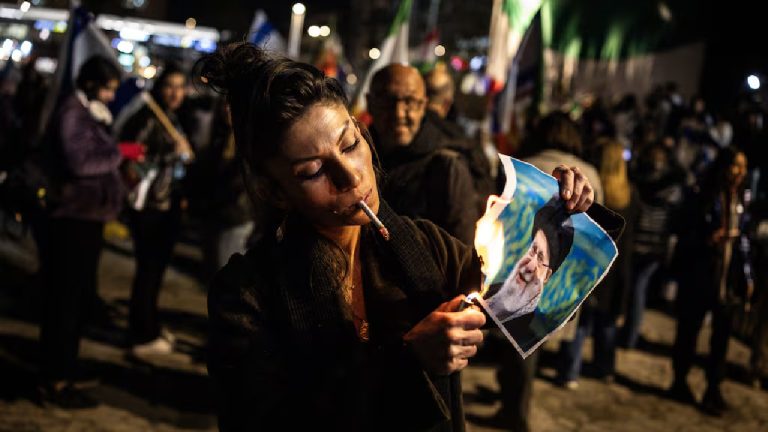
Recent mass protests beginning in late December 2025 represent the largest sustained mobilization since the 1979 revolution, with demonstrated willingness to openly challenge state authority despite escalating violence. The “Woman, Life, Freedom” movements and subsequent demonstrations exposed a fundamental shift: populations no longer fear governmental repression sufficiently to prevent public resistance. The regime’s most violent suppression campaign in its institutional history—allegedly killing over 6,000 demonstrators in January 2026 with another 17,000 deaths under investigation—failed to produce population submission or even temporary stability.
Economic deterioration provides structural foundation for this legitimacy collapse, with currency collapse reducing the rial to historic lows of approximately 1.42 million per dollar. Such currency devaluation has cascading effects: basic consumer goods become unaffordable, professional salaries lose purchasing power, capital flight accelerates, and governmental capacity to provision population or security forces deteriorates. The regime increasingly struggles to maintain the social contract it ostensibly offered—trading restricted freedoms for economic stability and security—as it can provide neither. Mass emigration of educated professionals accelerates this spiral, removing human capital necessary for institutional functioning.
External Military Pressure and Strategic Isolation
Concurrently, Iran confronts unprecedented external military threat from forces operating openly rather than through covert channels. Trump administration deployment of the USS Abraham Lincoln carrier strike group alongside expanded air defense systems, guided-missile destroyers, and reinforced air presence suggests strategic pivot from containment toward compulsion—forcing resolution rather than managing indefinite competition.
The historical pattern whereby regional actors exploited superpower competition to maintain autonomy no longer applies. Cold War bipolarity—enabling non-aligned positioning—has transformed into unipolar moment constraints. Traditional diplomatic off-ramps have collapsed: European states lack independent leverage; Russia remains distracted by Ukrainian conflict; China demonstrates reluctance to challenge American regional military dominance; and regional actors, while attempting last-minute mediation, simultaneously prepare for conflict spillover.
Israel’s operational shift from covert campaigns toward open military strikes represents the most significant strategic development, combining demonstrated capability for comprehensive air campaigns with targeted assassinations and cyber operations across Iranian territory. This transformation from shadow conflict to recognized warfare removes the fiction of escalation control, signaling both sides’ willingness to accept open confrontation.
Vulnerability Through Proxy Network Overextension
Iranian regional strategy depended on distributed networks of allied forces throughout Iraq, Syria, Lebanon, and Yemen functioning as deterrent mechanisms—raising the cost of direct confrontation by threatening escalation across multiple theaters. This approach has instead created distributed vulnerability: each proxy organization represents exposure points exploitable through targeted pressure.
The collapse of Assad’s regime in Syria—historically Iran’s closest regional ally and crucial node in proxy force logistics networks—removed foundational support structure for Iranian influence projection. The Syrian transition created both immediate vulnerability (lost territorial base for logistics, training, and missile deployments) and strategic isolation (demonstrated inability to defend allied regimes facing determined opposition). Iran’s proxy network across Iraq, Lebanon, and Yemen now appears increasingly fragmented and operationally constrained, with each organization facing pressure from both external military campaigns and internal political instability.
Rather than generating deterrent effect, the network’s existence has provided convenient justification for external pressure and weaponized regional opposition. Saudi Arabia, UAE, and Israel point to Iranian proxy activities as evidence of threatening expansionism, generating regional consensus supporting pressure campaigns that previously would have fragmented under great power competition.
Constrained Negotiation Scenarios and Their Consequences
Iran presently confronts three primary pathways forward, each offering only variant pathways toward regime transformation or destabilization rather than status quo preservation.
The first involves capitulation to externally-imposed settlement requirements. Recent negotiations involving Trump administration demands for comprehensive nuclear disarmament, complete uranium export, missile capability constraints, and regional proxy force dissolution would constitute regime transformation disguised as negotiated settlement. Accepting such terms would eliminate the military capabilities and regional positioning that justify governmental restrictions and security apparatus expansion. Domestic opposition from hardline elements would intensify, as the regime surrendered strategic assets underlying its claim to effective leadership.
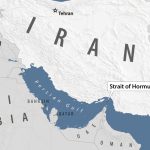
The second pathway involves direct military confrontation. U.S. and Israeli strikes targeting nuclear facilities, missile forces, air defense systems, and regime leadership would constitute comprehensive campaign aimed at institutional dismantling rather than measured coercion. Such conflict would inevitably trigger Iranian regional escalation—attacks on shipping, U.S. bases, and Israeli population centers through both direct forces and proxy networks. The outcome would not be regime transformation toward democratic governance but rather violent elite fragmentation, security force fracturing, and prolonged instability.
The third scenario—uncontrolled institutional collapse—presents the most strategically destabilizing outcome. Combined internal unrest and external military pressure could produce state failure rather than managed political transition. The resulting power vacuum would likely invite regional intervention (Turkish, Saudi, Qatari actions pursuing competing interests), transnational migration crises, economic breakdown, and humanitarian catastrophe. Historical precedents in Libya and Syria demonstrate that institutional collapse frequently produces outcomes worse than the regimes they replace.
The Absence of De-Escalatory Mechanisms
Contemporary crisis differs fundamentally from earlier confrontations through absence of functioning de-escalatory structures. Previous periods featured diplomatic channels, third-party mediation capacity, and mutual interest in avoiding direct confrontation sufficient to enable negotiated restraint even amid intense rhetorical hostility. Those mechanisms have eroded or ceased functioning altogether.
European diplomatic efforts have lost credibility and leverage following American withdrawal from multilateral agreements and demonstrated willingness to impose secondary sanctions on third parties complying with such agreements. Chinese diplomatic engagement remains cautious and unwilling to risk direct confrontation with American military power. Russian distraction with Ukraine limits Moscow’s capacity for meaningful mediation. Regional mediators—Qatar, UAE, Oman—lack sufficient leverage to impose restraint on major powers committed to escalation trajectories.
The result is strategic situation wherein all actors remain locked into escalatory logic absent credible off-ramps. Iran cannot submit to terms it perceives as regime-ending; the United States cannot accept Iranian retention of capabilities Washington has designated as threats; Israel cannot tolerate ongoing Iranian military development it assesses as existential threat. This triangular dynamic produces situation where war risks severe damage absent clear pathway toward conflict termination.
The Broader Implications
For Iran specifically and the Middle East broadly, the strategic reality involves transition from indefinitely manageable competition toward watershed moment with immediate and severe consequences. The historical pattern—surviving through strength projection, repression, and crisis perpetuation—no longer functions given simultaneous internal delegitimation and external military capability concentration.
The question no longer involves preventing crisis but rather managing damage extent and determining whether outcomes produce regional state failure or contested but functioning governance structures. Neither alternative offers satisfactory resolution for Iranian population, regional stability, or international security architecture.
Original analysis inspired by Sanam Vakil from The Guardian. Additional research and verification conducted through multiple sources.