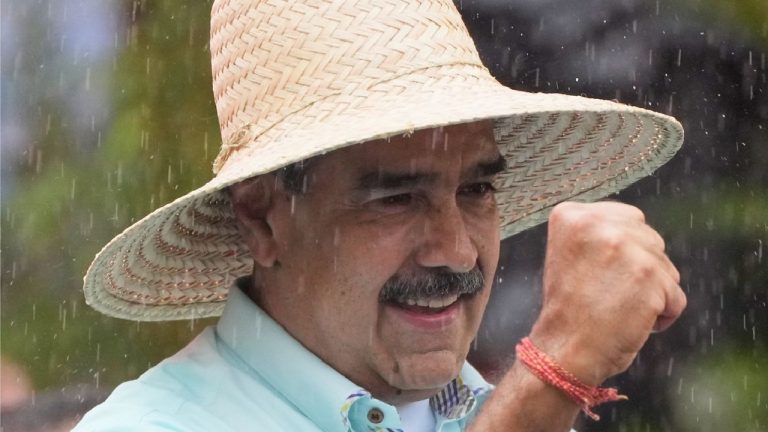
The U.S. military operation on January 3 that resulted in the capture of Venezuelan President Nicolás Maduro represents a dramatic intervention in Latin American affairs. While critics correctly identify this action as violating Venezuelan sovereignty, comprehensive analysis requires examining how Maduro’s aggressive foreign policy systematically alienated crucial regional allies, creating conditions that facilitated his removal. The Venezuelan leader’s bellicose approach toward neighbors, sponsorship of foreign insurgents, and territorial ambitions against weaker states undermined the very “anti-imperialist” ideology his regime claimed to champion.
The Essequibo Crisis and Brazil’s Strategic Shift
Maduro’s most consequential diplomatic failure involved his threats against Guyana regarding the Essequibo region. In 2023, Venezuela’s government de jure annexed the disputed Essequibo territory, which comprises approximately two-thirds of Guyana and contains significant oil reserves discovered by ExxonMobil in 2015. The regime subsequently amassed military forces near the Guyanese border and conducted territorial incursions, escalating a longstanding dispute into a potential military confrontation.
This aggressive posture proved strategically catastrophic because any Venezuelan military operation against Guyana would necessitate passage through Brazilian territory. Brazilian President Luiz Inácio Lula da Silva, once a stalwart ally of the Bolivarian movement, responded by deploying troops along Brazil’s border with Venezuela and actively promoting a negotiated transition in Caracas alongside Colombian President Gustavo Petro.
Lula explicitly warned Maduro against unilateral measures regarding Essequibo, while Brazil’s military reinforced the northern border with anti-tank missiles and armored vehicles. The Brazilian government made clear it would not permit Venezuelan forces to cross its territory under any circumstances. This transformation of Brazil from ally to obstacle marked a fundamental shift in regional power dynamics.
Electoral Fraud Alienates Left-Wing Allies
The 2024 Venezuelan presidential election further isolated Maduro from regional supporters. The National Electoral Council announced Maduro’s victory with 51.2% of votes, yet failed to publish precinct-level tallies that would allow verification. Opposition forces collected and released voting machine receipts indicating overwhelming victory for opposition candidate Edmundo González, with independent statistical analysis suggesting González received approximately 66% support.
Four major left-wing Latin American leaders—Lula of Brazil, Petro of Colombia, Andrés Manuel López Obrador of Mexico, and Gabriel Boric of Chile—demanded release of complete vote tallies. Their skepticism regarding Maduro’s claimed victory represented unprecedented criticism from ideological allies. The Washington Office on Latin America documented how these leaders called for transparent verification and independent audits of the electoral process.
Maduro responded to this pressure by attacking his critics as agents of Washington, despite their simultaneous condemnation of U.S. intervention in Venezuelan affairs. His regime went so far as to question the legitimacy of Lula’s own 2022 presidential victory. These accusations outraged Brazil’s president, who subsequently vetoed Venezuela’s entry into BRICS and intensified efforts toward political transition in Caracas.
Colombian Relations and ELN Sponsorship
President Petro of Colombia accused Venezuela of sponsoring brutal insurgency by ELN guerrillas in retaliation for refusing to recognize Maduro’s electoral victory. InSight Crime investigation revealed that ELN had transformed into a binational organization with extensive operations in both Colombia and Venezuela, functioning as a pro-regime paramilitary force within Venezuelan territory while maintaining insurgent status in Colombia.
The symbiotic relationship between Maduro’s regime and ELN provided the guerrilla group with sanctuary, weapons, and territory in Venezuela. When Venezuelan military forces suffered defeats against FARC dissidents in 2020, Maduro turned to ELN to complete operations, solidifying their status as guardians of the Bolivarian revolution. This alliance complicated Colombian security while undermining Petro’s peace negotiations with the insurgent group.
Following Maduro’s capture, Colombia deployed security forces along the border in anticipation of ELN retaliation, with analysts identifying the guerrilla group as the primary national security risk. The situation illustrated how Maduro’s sponsorship of foreign armed groups generated security threats for neighboring democracies.
Caribbean Alienation Through Territorial Threats
Hugo Chávez, Maduro’s predecessor, invested decades cultivating Venezuelan soft power throughout the Caribbean Basin through petroleum initiatives like Petrocaribe, making him highly popular across the region. Maduro squandered this political capital through aggressive territorial claims against multiple Caribbean nations.
Beyond threatening Guyana, Maduro’s regime also threatened Trinidad and Tobago, transforming friendly neighbors into hostile states. These Caribbean nations, which historically benefited from Venezuelan petroleum assistance, became staging grounds supporting international pressure against Maduro’s government. The diplomatic reversal demonstrated catastrophic failure in maintaining regional influence inherited from the Chávez era.
International Isolation and Unreliable Alliances
Maduro’s erratic governance appears to have weakened support even from distant allies including Russia, Iran, and China. Hours before his capture, Chinese envoys met with Maduro, likely conveying that Caracas—an unreliable debtor to Beijing—could not count on extensive Chinese support. Beyond public statements of solidarity, substantive assistance failed to materialize when American forces executed the operation.
Russia’s support, while vocal diplomatically, proved insufficient to deter U.S. military action. Despite Russian military bases within Venezuelan territory and Wagner Group involvement in training elite Venezuelan troops, Moscow’s condemnation of the American strikes produced no effective countermeasures. The limitations of these alliances became evident when Maduro faced actual removal.
Post-Capture Political Dynamics
Following Maduro’s detention, Vice President Delcy Rodríguez assumed leadership as acting president. President Trump notably declared that opposition leader María Corina Machado—winner of the 2025 Nobel Peace Prize—lacks sufficient “respect and support” to govern Venezuela. This assessment likely reflects Venezuelan military opposition to her presidency despite her overwhelming popular support and international recognition.
The White House appears to favor Rodríguez, characterized as “anti-capitalist” but pragmatic regarding oil sector reforms and foreign investment. Trump’s administration emphasizes access to Venezuelan petroleum resources over promotion of democratic governance, paralleling Maduro’s own interest in plundering Guyanese oil. The pursuit of economic interests rather than democratic principles defines both approaches.
Should Rodríguez call elections under threat of additional American military action, Edmundo González—Machado’s substitute candidate in 2024—may emerge as frontrunner. Under genuinely free electoral conditions, Bolivarianism appears unlikely to maintain power given widespread public rejection of the regime’s economic failures and authoritarian governance.
The “Anti-Imperialist” Contradiction
Maduro and sympathizers operated under an ideological framework treating anti-imperialism as geopolitical binary: opponents of Washington cannot commit imperialism, or perhaps deserve to do so as reparations for historical Western wrongs. This paradigm rationalized Venezuela’s threats to conquer two-thirds of neighboring Guyana and seize its oil resources as paradoxically “anti-imperialist” despite Guyana’s social-democratic government and minimal military capacity.
International Crisis Group analysis documented how Maduro’s government held a December 2023 referendum claiming overwhelming support for annexing Essequibo, despite sparse voter turnout. The regime subsequently established legal frameworks for creating a new Venezuelan state in disputed territory and began issuing resource exploitation licenses—all while refusing to recognize International Court of Justice jurisdiction over the matter.
Principled leftists including Bernie Sanders and López Obrador maintained that foreign intervention by any nation violates sovereignty. However, those defending Maduro as “anti-imperialist martyr” ignore catastrophic damage he and allies like Nicaragua’s Daniel Ortega inflicted on regional left-wing electoral prospects. Voters across Latin America increasingly perceive limited distinction between Maduro’s aggressive territorial ambitions and Trump’s naked pursuit of Venezuelan resources.
Public Opinion and Regional Consequences
Polls across multiple countries suggest resounding majorities supported Maduro’s capture—a consequence of devastation and migration crisis wrought by Bolivarian governance. Over seven million Venezuelans fled economic collapse, creating refugee burdens for neighboring states. Colombia hosts the largest Venezuelan diaspora, while countries throughout Latin America struggled to absorb massive population displacement.
The migrant crisis generated by Maduro’s economic policies produced humanitarian pressures that undermined regional solidarity. States bearing these burdens grew increasingly frustrated with Venezuelan leadership refusing political reforms while threatening territorial expansion against neighbors. This combination of aggressive foreign policy and domestic failure exhausted even ideologically sympathetic governments’ patience.
Conclusion
While American intervention violates Venezuelan sovereignty and raises legitimate concerns about international law, comprehensive analysis reveals how Maduro systematically destroyed regional support through bellicose policies contradicting anti-imperialist rhetoric. His threats against Guyana alienated Brazil; electoral fraud distanced left-wing allies; ELN sponsorship endangered Colombia; Caribbean threats eliminated soft power; and unreliable alliances with distant powers proved insufficient deterrents.
The Orwellian logic of Maduro’s “anti-imperialist imperialism” generated widespread rejection across the political spectrum. His downfall resulted not merely from American power projection, but from isolation created by his own aggressive regionalism that transformed allies into opponents. The catastrophic trajectory demonstrates how rhetorical anti-imperialism divorced from principled sovereignty respect ultimately undermines the very international solidarity required for effective resistance to great power intervention.
Original analysis by Juan David Rojas from Compact. Republished with additional research and verification by ThinkTanksMonitor.