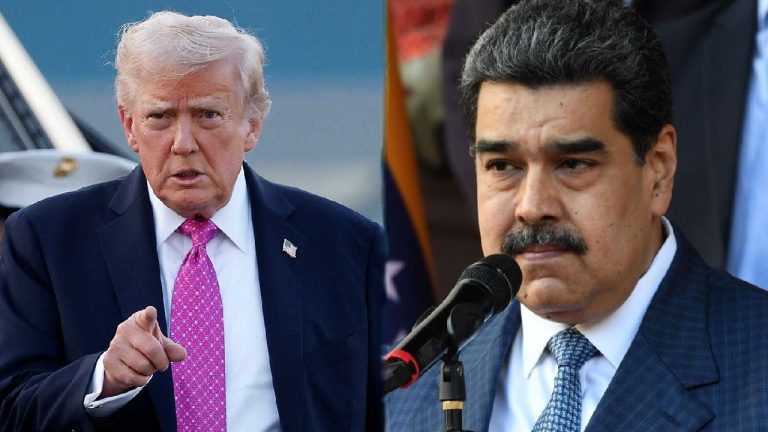
The recent U.S. military operation that captured Venezuelan President Nicolás Maduro has generated intense debate about President Trump’s foreign policy doctrine. Critics immediately labeled it a “war,” yet the operation’s brevity—lasting just over two hours with a small special forces team—challenges such characterizations. This incident provides insight into Trump’s distinctive approach to international interventions, which prioritizes limited objectives over ideological crusades.
A Limited Operation, Not Traditional Warfare
The Venezuelan action involved a targeted special forces insertion rather than mass military deployment. American troops entered the country, neutralized security personnel, apprehended Maduro and his wife, and rapidly withdrew. This model differs fundamentally from extended military campaigns. Historical precedents include Jimmy Carter’s 1979 hostage rescue attempt in Iran and the 2011 operation that killed Osama bin Laden in Pakistan—neither of which constituted traditional warfare despite involving military force on foreign soil.
Former Defense Department official Seth Jones noted that Trump and his national security team will own whatever follows in Venezuela. The operation left Venezuela’s socialist system largely intact, with former vice president Delcy Rodríguez assuming leadership and initially signaling willingness to cooperate with Washington, despite making expected public condemnations of the American action.
The Pragmatist’s Dilemma
Trump’s approach stems from transactional thinking rather than ideological conviction. His background in competitive New York real estate development shaped a worldview that prioritizes concrete deals over abstract principles. This contrasts sharply with liberal interventionists who justify military operations through moral frameworks. When liberal administrations conducted extensive drone strike campaigns that resulted in significant civilian casualties, these deaths were framed as regrettable but necessary costs of upholding international norms.
The distinction matters because Trump’s explicitly self-interested motivations—including gaining influence over Venezuela’s petroleum resources—draw criticism that similar actions receive when cloaked in humanitarian language. Trump has openly discussed wanting American companies involved in rebuilding Venezuela’s oil infrastructure, echoing his past statements about seizing Iraq’s oil resources. This nakedness about economic interests offends those who prefer their geopolitical maneuvering dressed in moral justification.
Contrasting Trump’s Realism with Liberal Idealism
Academic analysis suggests Trump represents an unconventional application of realist international relations theory. Traditional realists emphasize state self-interest and power dynamics, but Trump’s version adds transactional pragmatism that eschews ideological consistency. This stands in tension with the liberal international order championed by his predecessors.
The costs of America’s post-9/11 wars provide sobering context: over 940,000 people killed directly in conflicts across multiple countries, with indirect deaths pushing the total to 4.5-4.7 million. Financial expenditures exceeded $8 trillion. These “forever wars” were justified through ideological frameworks about promoting democracy and defeating terrorism, yet produced catastrophic humanitarian consequences and strategic failures.
President Obama’s administration, despite positioning itself as more restrained than his predecessor, authorized over 540 drone strikes killing an estimated 3,797 people including 324 civilians. The Bureau of Investigative Journalism documented that between 2002 and 2020, U.S. strikes in Afghanistan, Pakistan, Somalia, and Yemen killed between 800 and 1,750 civilians. These operations occurred under administrations that emphasized surgical precision and moral justification.
Risks and Potential Consequences
The Venezuelan situation remains precarious despite the operation’s swift execution. Several scenarios could destabilize the country further: hardliners within Venezuela’s government might attempt a coup against Rodríguez, popular uprisings could trigger violent crackdowns, or external powers might intervene. Trump appears inclined toward restraint regarding rapid democratization, though some advisors may push for more aggressive political transformation.
Analysis from Chatham House experts suggests the United States has assumed responsibility for Venezuela’s political transition with mixed historical precedents. American-led regime changes and political transitions have produced varied outcomes, with cautionary examples including Iran, Vietnam, Iraq, and Afghanistan far outnumbering successful managed transitions. Insufficient planning, conflicting objectives, limited diplomatic capacity, and unrealistic timelines have plagued past efforts.
The operation also prompted sharp partisan divisions in American politics. Democrats who previously demanded Maduro’s removal now criticize Trump’s methods, while Republicans generally support the action. This reversal highlights how partisan identity often trumps consistent foreign policy principles.
The Trump Doctrine in Practice
Trump campaigned in 2016 and 2024 criticizing military interventionism and promising to end “forever wars.” Yet his presidency has included military strikes in Yemen, Syria, Iraq, Somalia, Nigeria, Iran, and now Venezuela. This apparent contradiction reveals that Trump opposes ideologically-driven military campaigns rather than military force itself. His interventions pursue defined, limited objectives—often economic—rather than transformative political goals.
Early liberal thinkers viewed economic self-interest as preferable to religious or ideological conflict because material disputes allow negotiation and compromise while principle-based conflicts resist resolution. The profit motive imposes constraints absent from ideologically-justified wars. When conflicts must generate economic returns, leaders face practical limitations that don’t apply to wars fought for righteousness regardless of cost.
Research on Trump’s foreign policy describes it as “conservative realism”—acknowledging power’s centrality in international politics while recognizing that American values cannot be imposed by force. This approach emphasizes sovereignty, reciprocity in alliances, and willingness to negotiate with adversaries from positions of strength. The goal involves creating sufficient deterrence while remaining open to deals that achieve American objectives without requiring unlimited commitment.
Questions About Effectiveness and Morality
Whether Trump’s aims in toppling Maduro justify the risks remains debatable. His objectives appear more constrained than those of critics who advocate for comprehensive democratization and human rights transformation. This raises an uncomfortable question: might bad but limited aims produce fewer casualties than good but unlimited ones?
The historical record from America’s 20-year presence in Afghanistan, which killed at least 43,000 Afghan civilians along with thousands of American service members and contractors, suggests that ideologically-justified interventions can generate enormous destruction. Iraq’s invasion and occupation resulted in 184,000-207,000 civilian deaths according to Brown University’s analysis. These wars cost trillions while failing to achieve their stated objectives of establishing stable democracies.
Trump’s critics object to his transactional cynicism, viewing it as gangsterism that abandons America’s moral leadership. Yet liberal critics overlook how their own ideological traditions recognized that all states possess some gangster-like qualities—hence classical liberalism’s skepticism toward state power. Over time, liberals came to believe their state constituted an exception, capable of using force morally while others’ use of force remained illegitimate.
The Venezuela operation’s outcome will determine whether Trump’s limited pragmatism produces better results than expansive idealism. Early indicators suggest the administration seeks to avoid prolonged occupation and nation-building, learning from past failures. However, experts warn that the precedent established—using military force backed by legal indictments to remove foreign leaders—could undermine international stability and invite retaliation.
Conclusion
Trump’s Venezuela action exemplifies his distinctive foreign policy approach: pragmatic, transactional, and explicitly self-interested. While this realism offends those who prefer moral justifications for American power projection, it may prove less destructive than ideologically-driven interventions that produce unlimited commitment and catastrophic civilian casualties. The operation’s limited scope and clear objectives contrast with the open-ended nation-building projects that characterized previous administrations.
Whether this approach succeeds depends on execution and restraint. Trump has demonstrated willingness to use military force for defined objectives, but the question remains whether he can avoid the mission creep and escalation that transformed past limited interventions into quagmires. His critics must reconcile their objections to Trump’s cynical pragmatism with their own ideologies’ track record of producing destructive outcomes while claiming moral high ground.
The liberal international order’s failings created space for Trump’s rise. Until proponents of idealistic interventionism honestly assess the human costs their principles have generated, they lack standing to offer meaningful criticisms of Trump’s more constrained, if morally questionable, foreign policy doctrine.
Original analysis by Daniel McCarthy from Spiked. Republished with additional research and verification by ThinkTanksMonitor.