The Trump administration’s approach to the Russia-Ukraine conflict represents a significant shift from previous United States policy. Rather than emphasizing Ukraine’s territorial integrity and Russian withdrawal as preconditions, the current strategy prioritizes negotiated settlement that may involve territorial concessions and security guarantees. This policy evolution has generated tensions with European allies who maintain more uncompromising positions on supporting Ukraine.
Diplomatic Push for Settlement
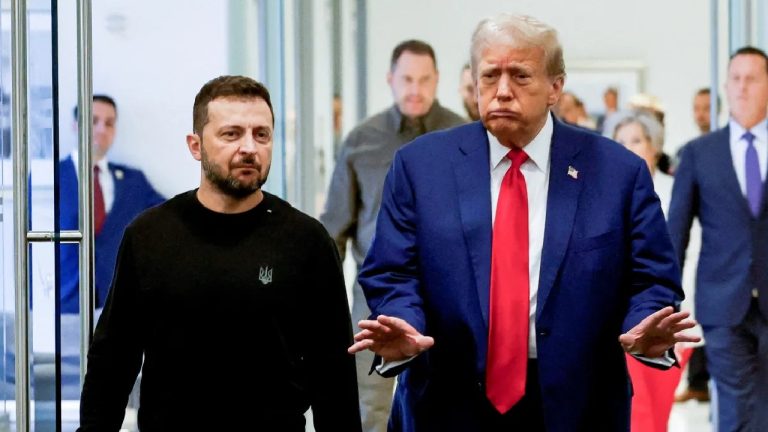
President Trump hosted Ukrainian President Volodymyr Zelenskyy at Mar-a-Lago on December 28, 2025, describing the sides as “closer than ever before” to reaching a peace agreement. The meeting followed a lengthy telephone conversation between Trump and Russian President Vladimir Putin, with Trump characterizing both calls as productive steps toward ending the conflict.
Zelenskyy presented a 20-point peace framework that negotiators described as approximately 90 percent agreed upon. The proposal includes provisions for security guarantees from the United States and European nations, maintenance of Ukrainian military forces at current levels of 800,000 troops, and establishment of demilitarized zones in contested regions. Trump indicated that one or two “very thorny issues” remained unresolved, particularly regarding territorial control in the eastern Donbas region.
The Trump administration has proposed 15-year security guarantees for Ukraine, with Zelenskyy stating that Congressional approval would be sought for such commitments. These guarantees represent an alternative to NATO membership, which Ukraine has agreed to forego as part of potential settlement terms. The specific mechanisms for enforcing such guarantees—including whether they would involve military deployments or other forms of support—remain subject to negotiation.
Territorial Questions and Russian Positions
Russia has demanded Ukrainian withdrawal from the entirety of Donbas—comprising Donetsk and Luhansk regions—as condition for peace. Kremlin foreign policy aide Yuri Ushakov stated that Russian police and national guard forces would remain in parts of Donetsk even if designated as demilitarized zones under a prospective agreement. Putin emphasized the need to create military buffer zones along Russian borders during meetings with senior military officers.
Trump acknowledged territorial disputes constitute the most challenging negotiating issue, telling reporters that “some of that land has been taken” and suggesting Ukraine would be “better off making a deal now” rather than risking additional territorial losses through continued fighting. The administration has proposed establishing a “free economic zone” in portions of Donbas where Ukrainian forces would withdraw as part of negotiated peace.
Zelenskyy has insisted territorial decisions require approval through Ukrainian referendum, stating that different aspects of any peace plan would be submitted to Ukrainian voters. He emphasized that without adequate security guarantees, territorial concessions would simply enable future Russian aggression. Zelenskyy indicated that a minimum 60-day ceasefire would be necessary to prepare for and conduct such a referendum under conditions allowing legitimate campaigning and voting.
Ceasefire vs. Comprehensive Agreement
Trump and Putin both rejected temporary ceasefire proposals favored by Ukraine and European allies. Ushakov stated that Trump and Putin agreed temporary ceasefires “will only prolong the conflict and risk a resumption of hostilities.” This position reflects Russian preference for comprehensive settlement before halting military operations rather than incremental steps toward peace.
The rejection of interim ceasefires complicates Ukraine’s position, as Zelenskyy has argued that referendum procedures require suspension of hostilities. Trump indicated understanding of Russian reluctance to pause fighting without final agreement, stating Putin “doesn’t want to be in that position” of potentially resuming combat if negotiations fail after a ceasefire.
Russia continued intensive attacks on Ukrainian infrastructure throughout the negotiating period. Zelenskyy reported that Russia launched approximately 500 drones and 40 missiles targeting Kyiv in the days surrounding his Florida meeting with Trump. Russian officials claimed Ukraine attempted attacks on Putin’s residence with long-range drones, allegations Zelenskyy denied as manipulation attempts.
European-American Strategic Divergence
The Trump administration’s negotiating approach has generated friction with European allies who have maintained more rigid support for Ukrainian territorial integrity. While specific tensions were not detailed in recent coverage, the shift from Biden administration policy—which emphasized Russian defeat and full restoration of Ukrainian sovereignty—represents a fundamental reorientation that European leaders must navigate.
Trump’s willingness to entertain territorial compromises and focus on transactional security guarantees rather than principled defense of borders marks a departure from trans-Atlantic consensus that prevailed during the Biden presidency. European nations have invested substantial military and economic resources supporting Ukraine based on different strategic assumptions about the conflict’s resolution.
French President Emmanuel Macron announced that allies would meet in Paris in early January to “finalize each country’s concrete contributions” to security guarantees for Ukraine. This coordination effort suggests European powers are adapting to the new American approach while attempting to maintain influence over settlement terms.
Negotiation Dynamics and Timeline
Trump stated that final outcomes would be determined “in a few weeks” while acknowledging negotiations could also fail entirely. He indicated that Zelenskyy and European leaders would meet in Washington in January for continued discussions on the peace framework. The administration’s timeline reflects urgency to achieve breakthrough while Trump maintains maximum diplomatic leverage.
Kremlin spokesperson Dmitry Peskov stated that Putin and Trump would speak again “in the very near future”, indicating ongoing direct communication between the two presidents. Russian officials expressed agreement with Trump’s assessment that peace prospects had improved, though cautioned that reaching compromise could require extended time given complexity of remaining issues.
Ukrainian analyst Oleksandr Kraiev of think tank Ukrainian Prism noted that Ukrainians remain “quite cynical” about the United States-brokered talks, reflecting public skepticism about whether negotiations will produce acceptable terms or simply formalize territorial losses under international pressure.
The negotiating process occurs against backdrop of continued military operations, with Russian forces maintaining offensive operations and Ukraine conducting its own strikes. Whether diplomatic momentum can overcome these military realities and produce sustainable settlement remains uncertain. The coming weeks will demonstrate whether Trump’s transactional diplomacy can bridge fundamental differences between Ukrainian sovereignty concerns, Russian territorial demands, and Western security commitments.
Analysis based on reporting from NPR, NBC News, ABC News, Axios, Al Jazeera, CNBC, and The Hill. Compiled and verified by ThinkTanksMonitor.