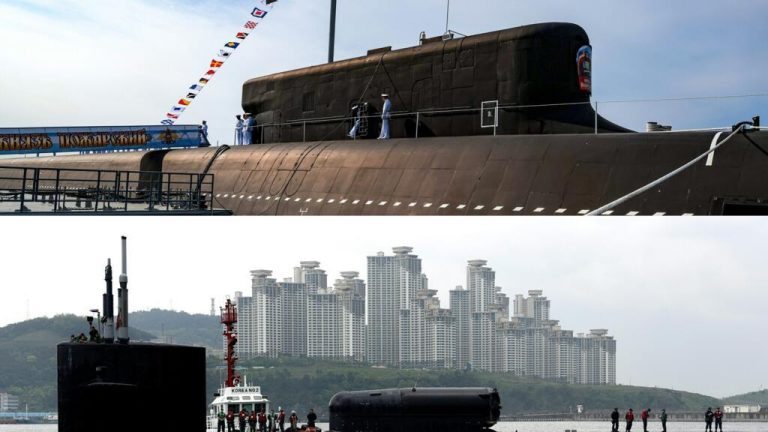
On February 5, 2026, the last legal framework limiting the world’s two largest nuclear arsenals quietly expired. The New START treaty—once a cornerstone of U.S.-Russian strategic stability—is now history, and no successor agreement is on the horizon. For the first time in over half a century, there are no treaty-bound caps on deployed strategic nuclear warheads, no mandatory inspections, and no formal data exchanges between Washington and Moscow. The consequences for global security are potentially profound.
From Cold War Architecture to Post-Treaty Uncertainty
The arms control architecture that constrained superpower nuclear competition since the early 1970s has been dismantled incrementally over the past decade. The Anti-Ballistic Missile Treaty ended in 2002. The Intermediate-Range Nuclear Forces Treaty collapsed in 2019. New START, signed in 2010 by Presidents Obama and Medvedev, was the sole remaining pillar—limiting each side to 1,550 deployed strategic warheads and 700 deployed delivery vehicles, with an extensive regime of on-site inspections and data sharing to verify compliance.
That pillar is now gone. As the Federation of American Scientists detailed in its post-expiration analysis, the treaty’s demise was not sudden but rather the culmination of years of diplomatic erosion. Russia suspended its participation in 2023, halting inspections, data exchanges, and notifications in response to American military support for Ukraine. The United States imposed reciprocal countermeasures, and by the treaty’s final months, verification had effectively ceased. UN Secretary-General António Guterres warned that the expiration represents a “grave moment” for international peace, calling on both nuclear superpowers to exercise restraint and pursue new agreements.
The failure to negotiate a successor reflects the depth of geopolitical mistrust. In September 2025, Vladimir Putin proposed continuing to observe New START’s deployment limits for one additional year—but without the verification provisions that give such commitments meaning. Washington viewed the proposal as hollow. Trump told the New York Times that “if it expires, it expires,” promising to negotiate “a better agreement” while conditioning any future deal on the inclusion of China—a demand Beijing has categorically rejected.
Arsenals Poised for Expansion in Washington and Moscow
Without treaty constraints, both the United States and Russia possess significant capacity to rapidly expand their deployed nuclear forces. The Federation of American Scientists estimates that if both sides chose to upload their delivery systems to maximum capacity, each arsenal could nearly double in size. American ICBMs currently carry a single warhead each, but roughly half of the fleet uses reentry vehicles capable of carrying three. Submarine-launched missiles could be loaded with additional warheads, and nuclear bombs and cruise missiles could be placed back onto long-range bombers within days—a reversal of the stand-down that began in 1992.
Washington is simultaneously pursuing a sweeping nuclear modernization effort. The LGM-35A Sentinel program is designed to replace the aging Minuteman III ICBMs that have formed the land-based leg of the nuclear triad for over fifty years. The Navy’s Columbia-class ballistic missile submarines are being built to succeed the Ohio-class fleet, while upgraded B-21 Raider stealth bombers will carry a new generation of nuclear-armed cruise missiles. These programs carry collective price tags running into the trillions of dollars and face persistent cost overruns and schedule delays, yet they remain political priorities across party lines.
Russia’s modernization trajectory is equally ambitious. Moscow has expanded its intermediate-range capabilities, most visibly through the deployment of the Oreshnik ballistic missile, a nuclear-capable system used against targets in Ukraine in recent months. The weapon’s reported hypersonic speed and multiple independently targetable warheads represent a qualitative escalation that has alarmed European capitals and raised fundamental questions about the credibility of continental deterrence. As CSIS analysts have noted, the expiration of New START does not automatically trigger an arms race—but it removes the constraints that made worst-case force planning unnecessary, pushing both sides toward competitive expansion driven by mutual suspicion.
Beijing’s Growing Nuclear Footprint Complicates the Equation
The collapse of bilateral arms control between Washington and Moscow is occurring against the backdrop of China’s most significant nuclear buildup in its history. Successive Pentagon assessments have projected that Beijing will field over 1,000 operational nuclear warheads by 2030, a dramatic expansion from the estimated 200-warhead arsenal China maintained for decades. New silo fields in western China, advances in submarine-launched ballistic missiles, and investment in hypersonic glide vehicles all point toward a force posture that is rapidly approaching strategic parity with France or the United Kingdom, if not beyond.
This expansion is a central reason why the Trump administration has conditioned any new arms control framework on Chinese participation. From Washington’s perspective, a bilateral treaty that constrains only American and Russian arsenals while Beijing builds unchecked creates an unacceptable strategic asymmetry. China, however, has consistently refused to join numerical limits, arguing that its arsenal remains far smaller than those of the established superpowers. On February 5, a Chinese Foreign Ministry spokesperson reiterated that Beijing “will not take part in nuclear disarmament negotiations for the time being,” insisting that the United States must first reduce its own forces to Chinese levels before triangular talks could be considered.
This three-way impasse—where Washington demands Chinese inclusion, Moscow demands broader European participation, and Beijing refuses to engage—creates a structural deadlock that may prove impossible to break through traditional diplomatic channels. The era of bilateral compartmentalized arms control, in which nuclear negotiations were insulated from broader geopolitical disputes, appears to have ended alongside New START itself.
Europe Faces Its Own Nuclear Reckoning
The treaty’s expiration has catalyzed a debate across Europe that was virtually unthinkable a decade ago: should the continent develop its own independent nuclear deterrent? German Chancellor Friedrich Merz confirmed in late January that European allies have begun early discussions about establishing a shared nuclear umbrella, a step that reflects growing anxiety about the reliability of the American security guarantee under the Trump administration.
The strategic logic is straightforward. Russia’s deployment of the Oreshnik and other intermediate-range systems directly threatens European territory, while Putin has explicitly called for any future arms control negotiations to include France and the United Kingdom—implicitly acknowledging that their submarine-launched and air-delivered nuclear forces factor into Moscow’s strategic calculus. As SIPRI observed in its post-treaty analysis, the passing of New START is likely to mark not a temporary interregnum but a prolonged, perhaps indefinite, suspension of bilateral nuclear constraints, leaving European states to confront a security environment in which they can no longer rely solely on Washington’s extended deterrence.
France, which maintains an independent nuclear force of approximately 290 warheads delivered by submarine-launched missiles and air-launched cruise missiles, has become the focal point of these discussions. Whether Paris would agree to extend its deterrent umbrella to cover other European states—and under what conditions—remains deeply uncertain. What is clear is that the conversation has shifted from hypothetical to operational, driven by the convergence of Russian aggression in Ukraine, Trump’s transactional approach to alliance commitments, and the now-complete collapse of the Cold War arms control framework.
The Doomsday Clock and the Technology Wildcard
The symbolic measure of humanity’s proximity to catastrophe reflects the deteriorating landscape. In January 2026, the Bulletin of the Atomic Scientists advanced the Doomsday Clock to 85 seconds to midnight—the closest it has ever been set since its creation in 1947. The scientists cited nuclear proliferation risks, the collapse of arms control agreements, the war in Ukraine, and rising geopolitical tensions as driving factors.
Perhaps the most unsettling dimension of the current moment, however, is the intersection of nuclear weapons with emerging technologies that Cold War-era agreements were never designed to address. Artificial intelligence is increasingly being integrated into early warning systems, targeting algorithms, and command-and-control infrastructure. As research from the Carnegie Corporation has documented, AI applications in nuclear operations present a double-edged sword: they may improve the accuracy and resilience of deterrence systems, but they also introduce new pathways to miscalculation, escalation, and accidental launch. Cyber vulnerabilities in nuclear command networks, the potential for AI-driven false alarms, and the compression of decision-making timelines all represent risks that exist entirely outside the framework of any existing or proposed treaty.
Quantum computing adds another layer of concern. Advances in quantum decryption could eventually compromise the secure communications on which nuclear command-and-control depends, while quantum sensing technologies may undermine the survivability of submarine-based deterrents by making the oceans more transparent. These technologies are advancing rapidly, yet there is no international forum or agreement that addresses their implications for nuclear stability.
A World Without Guardrails
The expiration of New START does not mean nuclear war is imminent. Both the United States and Russia have strong institutional incentives to avoid catastrophic escalation, and their respective modernization programs were designed with or without treaty constraints in mind. Both sides have indicated a willingness to observe force limits voluntarily in the near term, even without a legally binding agreement. Axios reported on February 5 that overnight negotiations produced the possibility of continued adherence to central deployment limits—though without verification and without presidential endorsement from either side.
Yet the loss of formal constraints, transparency mechanisms, and verification protocols creates an environment where mistrust compounds over time. Without inspections, intelligence agencies on both sides will increasingly rely on worst-case assumptions about the other’s force posture, creating a self-reinforcing cycle of competitive buildup. The Belfer Center at Harvard has warned that the Trump administration faces a series of consequential decisions about whether and how to expand deployed forces, decisions that will set the trajectory of nuclear competition for decades to come.
The path back to a constrained nuclear order requires political will that currently appears absent. Russia has made clear that arms control cannot be separated from the broader U.S.-Russia relationship, particularly the conflict in Ukraine. China refuses to participate. And Washington, consumed by domestic political priorities and a preference for negotiating from strength, has shown little urgency in constructing a successor framework. What remains is an international order in which the world’s most destructive weapons exist without the guardrails that previous generations considered essential. Whether this era produces a new architecture of restraint or an unchecked spiral of proliferation may be the defining security question of the coming decade.
Original analysis inspired by Emile Ameen from Asharq Al-Awsat. Additional research and verification conducted through multiple sources.