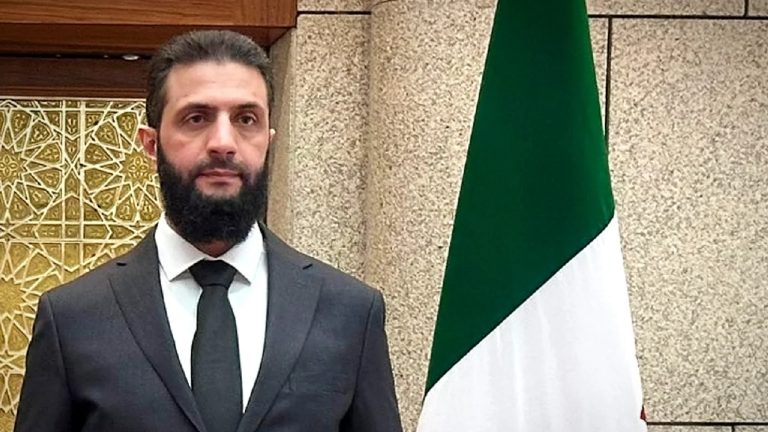
The elevation of a former terrorist designee to Syria’s highest office has created a critical policy contradiction that undermines American strategic objectives in the Middle East.
From Terrorist Watchlist to White House Recognition
The dramatic reversal in Washington’s approach toward Syria’s new leadership represents one of the most striking policy shifts in recent diplomatic history. An individual who previously faced a $10 million bounty and terrorist designation from the United States has now been welcomed as a partner in regional security arrangements. The transformation occurred following the military collapse of Syria’s previous government in late 2024, after which the US Treasury Department formally removed the new Syrian leader from its list of specially designated global terrorists just days before a historic White House summit meeting.
This transition warrants careful scrutiny, particularly given the apparent connections between the new Syrian administration and transnational Islamist networks. The individual’s prior involvement with militant organizations with documented al-Qaeda affiliations creates profound questions about whether the Trump administration has genuinely reformed this figure or simply adjusted its strategic calculus regarding Middle Eastern partnerships.
Minority Protections and Sectarian Violence Concerns
Post-Assad Syria presents an emerging humanitarian crisis that has received insufficient international attention. Since the regime change, documented incidents of sectarian violence have targeted multiple populations, including Syria’s substantial Alawite community, Druze populations concentrated in southwestern regions, and Kurdish populations throughout the northeast. Research organizations have documented concerning patterns of violence against Syria’s religious and ethnic minorities following the transition in power.
Independent reporting indicates that massacres targeting Syria’s Alawite population occurred systematically from March through April 2025, with consistent patterns suggesting coordinated rather than spontaneous violence. The new government has made limited public statements acknowledging these incidents and has provided no clear accountability mechanisms or protections for affected populations. Christian communities in Syria, while currently less targeted than other minorities, face growing uncertainty regarding their future status and security.
The Kurdish Alliance and Regional Military Dynamics
The United States maintained military presence in northeastern Syria partly to support Kurdish organizations that had proven instrumental in defeating the Islamic State organization across a broad geographic region. The Syrian Democratic Forces played a decisive role in the liberation of Raqqa in 2017, eliminating the geographic center of the Islamic State’s self-declared caliphate and demonstrating consistent commitment to American counter-terrorism objectives.
However, recent military developments have fundamentally altered this strategic partnership. The new Syrian government has undertaken military operations targeting Kurdish-controlled territories, creating direct conflict with the very forces that previously aligned with American military operations. These developments have prompted concerning reports of Islamic State detainees escaping from Kurdish-administered prison facilities as fighting has displaced Kurdish security personnel managing detention operations. Intelligence sources suggest that over 1,500 detainees may have escaped during recent military operations, though exact numbers remain unconfirmed.
Geopolitical Interests and Turkish Influence
The Trump administration’s pivot toward supporting Syria’s new leadership appears driven partly by calculations regarding relationships with neighboring states. Turkey, Qatar, and Saudi Arabia have each demonstrated clear preferences for Islamist governance in Damascus, for distinct strategic reasons. Turkey seeks to limit Kurdish autonomous political developments that it perceives as threatening; Qatar and Turkey maintain historical patterns of supporting radical Islamist movements aligned with the Muslim Brotherhood; and Saudi Arabia prioritizes preventing Iran from reestablishing influence in Syria after decades of close alignment during the Assad era.
These aligned interests have provided political cover for Washington’s rapid diplomatic normalization with Syria’s new administration. However, the convergence of these external interests with stated American counter-terrorism objectives has created fundamental contradictions that policymakers have failed to adequately address. American officials have lifted all sanctions on Syria and publicly supported the new government’s reintegration into regional institutions, despite ongoing evidence of human rights violations and the security vacuum developing in key regions.
American Military Deployment and Withdrawal Considerations
President Trump’s historical opposition to sustained American military commitments in Syria has resurged with renewed urgency following his return to office. The administration has undertaken planning for complete withdrawal of remaining US military forces from Syrian territory, a position that aligns with broader campaign commitments to end what the administration characterizes as endless foreign military entanglements.
The practical consequences of such a withdrawal would likely prove severe. The approximately 1,500 American military personnel currently deployed in Syria serve dual functions: supporting counter-terrorism operations against Islamic State remnants and providing security guarantees that have enabled Kurdish-run detention facilities to maintain custody of approximately 50,000 Islamic State prisoners and their dependents. A complete American withdrawal would create a power vacuum that neighboring powers—Turkey, Russia, and potentially others—would likely move rapidly to fill, fundamentally altering the regional balance.
The Detention Crisis and Counter-Terrorism Implications
Among the most concerning developments emerging from recent Syrian military operations has been the security degradation at facilities holding captured Islamic State operatives. Kurdish forces, operating under international humanitarian and security frameworks, had maintained these detention operations with American logistical and security support. The shift in control following government military advances has created chaotic conditions that have enabled detainee escapes previously thought impossible.
Reports of Islamic State operatives raising flags over the strategic city of Raqqa following its capture by government forces suggest the organization is positioning itself to reestablish territorial presence—a development that represents the direct negation of stated Trump administration counter-terrorism priorities. Whether these reports reflect consolidated territorial control or symbolic opportunism remains unclear, but the trajectory is deeply troubling for anyone concerned with preventing the group’s resurgence.
Strategic Contradictions and Policy Coherence
The fundamental problem confronting policymakers involves an irreconcilable contradiction: supporting Syria’s new leadership achieves multiple diplomatic objectives (improving relations with Turkey, Qatar, and Saudi Arabia; ending the American military commitment to Syria; shifting regional alignments away from Iran) while simultaneously undermining core counter-terrorism goals that the administration has publicly committed to maintaining.
The escape or potential release of thousands of Islamic State detainees contradicts explicitly stated American security priorities. The displacement of Kurdish forces that proved crucial to defeating the organization in 2017 eliminates the primary ground force that had demonstrated consistent effectiveness and alignment with American interests. The sectarian violence targeting minorities—including Syria’s Christian communities—creates humanitarian crises and reduces stability across an already fragile region.
Trump administration officials appear to have assumed that supporting Syria’s new government would somehow align that government’s interests with American counter-terrorism objectives. This assumption lacks empirical foundation given the new leadership’s documented prior associations and the apparent willingness of its security forces to tolerate widespread violence against civilian populations. The midterm elections provide a political context in which any significant escalation of Islamic State activity or American military casualties resulting from this policy shift would create serious political complications.
Original analysis inspired by Con Coughlin from The Gatestone Institute. Additional research and verification conducted through multiple sources.