The largest American naval concentration near the Persian Gulf in years has intensified speculation about Washington’s willingness to use force against Tehran. With carrier strike groups converging, fighter squadrons surging to regional bases, and diplomacy in Oman yielding uncertain results, defense analysts are weighing the operational scope, strategic objectives, and aftermath risks of potential US military action against the Islamic Republic.
An Unprecedented Force Posture in the Gulf Region
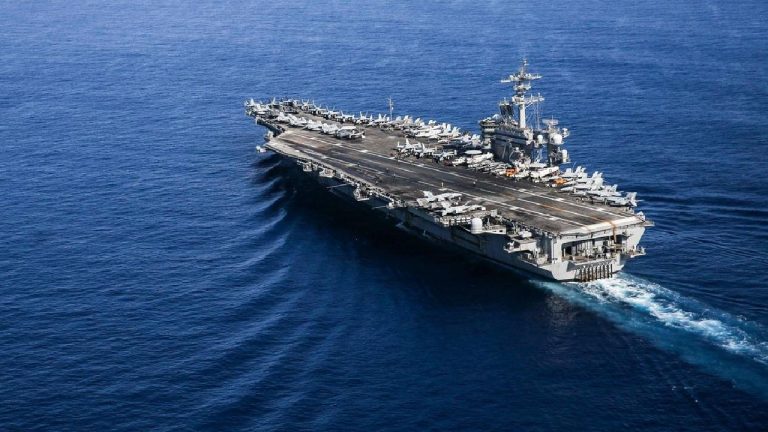
Washington’s military footprint around Iran has expanded dramatically since late January 2026. The USS Abraham Lincoln carrier strike group entered the Middle East theater on January 26, joining the USS George H.W. Bush and an extensive flotilla of Tomahawk-capable surface combatants already positioned across the Arabian Sea and the Gulf of Oman. Satellite imagery analyzed by multiple outlets has revealed dozens of strike aircraft deployed to forward bases in Jordan and the Gulf states, complemented by refueling tankers and intelligence platforms that together constitute what President Trump himself described as an “armada.” Observers at the Middle East Forum have characterized this concentration as the most significant American force buildup since the June 2025 strikes that targeted Iran’s nuclear infrastructure.
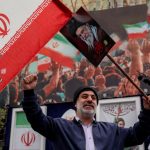
The context driving this deployment is twofold. Nationwide protests inside Iran—sparked by economic collapse and political repression—have been met with a ferocious security crackdown that killed at least 6,100 civilians according to activist tallies compiled by NPR and the Associated Press. Trump pledged to support the demonstrators and subsequently laid down conditions for any diplomatic resolution: complete cessation of uranium enrichment, restrictions on ballistic missile ranges below 500 kilometers, and recognition of Israel. Tehran has flatly rejected these demands, leaving the military buildup as both a coercive signal and a potential prelude to action.
Targeting Iran’s Military Infrastructure
One plausible operational concept centers on degrading the Islamic Revolutionary Guard Corps and its auxiliary Basij militia, the institutions most directly responsible for suppressing domestic unrest. Strikes under this scenario would focus on IRGC command nodes, garrison facilities, and communications infrastructure across Iran’s provinces, potentially combined with leadership decapitation operations against senior commanders.
The strategic logic is straightforward: neutralizing the coercive apparatus that sustains the regime could empower protest movements to consolidate gains and force political concessions. Yet formidable obstacles limit the effectiveness of such an approach. A comprehensive assessment by the Institute for the Study of War describes Basij networks as embedded in virtually every community across Iran’s territory, with command structures dispersed across eleven regional headquarters linked to provincial IRGC corps. The sheer geographic footprint of these forces means that no air campaign, however precise, could simultaneously neutralize the full network.
Moreover, the Islamic Republic’s security establishment has demonstrated institutional resilience across four decades of external pressure. Fallen commanders have historically been replaced rapidly by successors steeped in the same ideological and operational culture, preserving organizational continuity even under severe stress. Destroying physical infrastructure would degrade capability temporarily, but the decentralized nature of IRGC and Basij operations—rooted in local recruitment, embedded supply chains, and community-level loyalty networks—provides a regenerative capacity that aerial bombardment alone cannot eliminate.
Decapitation Scenarios and Political Leadership Targeting
A more escalatory option would prioritize strikes against Iran’s sovereign political leadership, beginning with Supreme Leader Ali Khamenei. Proponents reason that Khamenei functions as the indispensable nexus between Iran’s military, ideological, and governmental institutions, and that removing him would fracture the regime’s coherence beyond repair.
The operational barriers to this approach are substantial. Despite claims made during the Twelve-Day War in June 2025 that American intelligence had located Khamenei, the Supreme Leader maintains an elaborate concealment infrastructure that relocates him frequently and exploits Iran’s vast geography, including the possibility of movement beyond national borders. Actionable intelligence on his precise location at any given moment would be extraordinarily difficult to obtain and verify within the compressed timelines that military operations demand.
Even if a decapitation strike succeeded, the resulting power vacuum could prove more destabilizing than the regime it replaced. Without simultaneously dismantling the parallel political, clerical, and military hierarchies that constitute the Islamic Republic’s governing architecture, leadership removal risks triggering an uncontrolled succession struggle. Armed factions within the IRGC, competing clerical networks, and provincial power brokers could fragment into competing fiefdoms, producing prolonged instability with cascading effects across Iraq, Lebanon, and the broader Gulf.
Combined Operations and Their Inherent Contradictions
A comprehensive campaign targeting both military infrastructure and political leadership simultaneously would address some weaknesses of the isolated approaches but introduce its own dilemmas. Striking the IRGC’s operational capacity while decapitating political authority aims to prevent the military apparatus from reconstituting itself under new leadership. However, this maximalist approach amplifies the risk of uncontrolled state collapse—the very outcome that regional partners and Washington’s own national security establishment most fear.
The fundamental tension is temporal: military operations can destroy targets in hours, but political transitions require months or years of managed negotiation. Collapsing both the security forces and the political leadership that commands them could release weapons stockpiles and armed remnants across multiple regions, echoing the post-intervention chaos that followed regime change in Iraq and Libya. The International Crisis Group’s retrospective on those interventions documented how regime removal without viable succession plans generated protracted civil conflicts that consumed far more resources and lives than the initial military campaigns.
Coercive Diplomacy and Limited Strike Options
If Washington stops short of seeking regime change, the current force posture could serve alternative objectives. The most calibrated use of military leverage would be compellence—deploying the threat of escalation to force Tehran back to the negotiating table under terms favorable to the United States. Recent indirect talks in Oman between envoy Steve Witkoff and Iranian Foreign Minister Abbas Araghchi represent this track, though the sessions ended without breakthrough, underscoring the distance between the two sides’ positions.
A second limited option would target specific contentious capabilities rather than the regime itself. Precision strikes against residual nuclear enrichment facilities, ballistic missile production sites, and integrated air defense networks would aim to neutralize the material threats Washington considers most urgent—without attempting to topple the government. The June 2025 precedent, when US forces struck nuclear facilities at Fordow, Natanz, and Isfahan under Operation Midnight Hammer, demonstrated that targeted operations against specific programs are operationally feasible. However, Tehran has signaled it is already rebuilding damaged facilities, raising questions about the durability of any capability-focused strike absent a broader political settlement.
From an Israeli perspective, limited strikes that leave the Islamic Republic’s power structures intact could represent a missed strategic opportunity. Officials in Jerusalem have consistently argued that the convergence of domestic unrest, military degradation from the Twelve-Day War, and international isolation creates a narrow window for transformational change—one that incrementalist approaches would squander.
The Post-Strike Governance Dilemma
Perhaps the most consequential variable in any military scenario is what follows the last sortie. Historical experience and the current Iranian political landscape both argue that military action without a viable political framework for transition risks producing outcomes worse than the status quo. The Iranian opposition abroad remains deeply fractured between monarchist, republican, and leftist factions with minimal cohesion and limited credibility inside Iran, making externally managed regime replacement impractical.
Any sustainable post-strike trajectory therefore requires cooperation from elements within the existing Iranian establishment—a paradox that defines the limits of coercive strategy. Washington would need remaining institutional actors within the regime, whether military commanders or pragmatist clerics, to participate in a managed transition rather than a chaotic collapse. This amounts to a confrontation whose success depends not on the adversary’s elimination but on its calculated submission, a far more complex proposition than target destruction.
The Trump administration has signaled awareness of these constraints even while maintaining maximum pressure. The simultaneous pursuit of military positioning and diplomatic channels through Oman suggests a strategy that preserves optionality—keeping the full spectrum of scenarios viable while testing whether Tehran’s calculus has shifted enough to produce meaningful concessions without kinetic escalation.
Original analysis inspired by Mohammad Alzghool from Emirates Policy Center. Additional research and verification conducted through multiple sources.