Africa enters 2026 carrying more weight than momentum. The continent is no longer operating on margins of global disorder; it is inside it, shaped by it and, at times, exploited by it. The question of whether Africa will be affected by fracturing of global system is as distant as it is moot. If anything, priority now is whether African states can convert disorder into room to maneuver or else risk drift into managed decline.
Harrowing Continental Security Dynamic
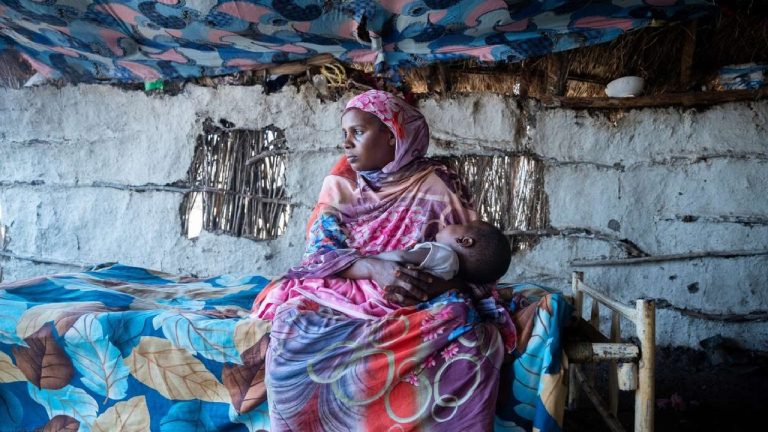
First on agenda is harrowing continental security dynamic, which is perhaps most unforgiving place to begin. Armed conflict now affects more African countries than at any point in past two decades. Sudan alone has lost an estimated 400,000 lives since 2023, with nearly 13 million people displaced and country fractured into rival zones of control that resemble war economies more than states.
The implications go well beyond Sudan’s borders. Chad, South Sudan, Ethiopia, Egypt and Libya are already absorbing shock through refugee flows, weapons diffusion and proxy entanglements. Sudan is no longer single crisis — it has become engine of instability for entire subregion.
Adjacent to Horn of Africa’s woes is perennially unstable Sahel, which is now considered most lethal zone of militant violence worldwide. The Sahel now accounts for 51 percent of worldwide terrorism deaths – notable increase from 1 percent it represented seventeen years ago. Since military takeovers in Mali, Burkina Faso and Niger, fatalities have surged rather than declined.
In Burkina Faso, deaths linked to extremist violence have nearly tripled in three years, while state now exercises effective control over fraction of its territory. It is estimated that Burkinabe forces now only control 40 percent of national territory. Promise that juntas would restore order has given way to siege warfare, mass displacement and deepening isolation.
Conflicts No Longer Insulated
Moreover, Africa’s conflicts are no longer insulated from one another. Fighters, weapons, tactics and financing now move across regions with frightening speed. Somalia’s armed groups are drawing material and training from Yemen. Extremist cells in Nigeria are one of multiple nodes converging with criminal networks once focused on kidnapping and resource theft in sprawling transnational network connecting North Africa with sub-Saharan Africa.
Even at heart of Africa, eastern Congo crisis, following fall of Goma and Bukavu to M23 forces, carries echoes of late 1990s, when regional armies turned Congolese territory into battlefield by proxy. More than 2.5 million people have been displaced there this year alone.
Lethal Technologies Proliferate
Worse yet, unchecked proliferation of lethal technologies is amplifying these dangers. Drones, once monopolized by states, are now in hands of militias, insurgents and criminal groups in at least nine African countries. Nearly all recorded drone strikes are concentrated in six conflict zones, often hitting dense urban areas. Cheap, adaptable and hard to counter, these systems allow armed actors to punch far above their weight. Result is shift in warfare toward cities, where civilian harm multiplies and political fallout accelerates.
Governance Trends Offer Little Comfort
Elsewhere, governance trends offer little comfort. Since 2020, nine African countries have experienced military seizures of power. More than third of today’s African leaders came to office through coups or armed action. Elections increasingly function as rituals rather than checks on authority. Of 10 national polls held this year, only three were widely viewed as credible. Where repression deepens, corruption follows. Authoritarian governments on continent rank far worse on corruption indices than their democratic peers, with direct consequences for investment, jobs and service delivery.
Relentless Demographic Pressures
Governance slide matters because Africa’s demographic pressures are relentless. One million Africans enter labor force every month, yet fewer than one in four find work in formal economy. Continent is urbanizing faster than any other region, adding about 45 million city dwellers each year. Nearly 600 African cities recorded fatalities linked to organized violence this year. Urban anger is rising faster than urban opportunity, fueling youth-led protests that demand accountability but often collide with entrenched power. In several cases, these protests have met with bullets or coups, not reform.
Africa Building Amid Conflict
Yet Africa is not without counterweights. Even amid conflict, continent continues to build. African Continental Free Trade Area now counts 48 ratifying states and could raise intra-African trade by more than 50 percent when fully implemented. More than 16,000 km of new roads and 2 million km of fiber-optic cable have been laid under continental infrastructure programs. Regional power pools are slowly beginning to trade electricity across borders. Even high-speed rail networks, though incomplete, are no longer aspirational.
Africa is also venturing into humanity’s last frontier, space. More than 20 African countries now operate space programs. Sixty-five satellites are already in orbit, with more than 100 more planned by 2030. These assets matter not for prestige but for agriculture, climate monitoring, border control and communications. In world where data defines power, this is foundation, however fragile.
Three Critical Choices Ahead
Looking ahead to 2026 and beyond, Africa’s prospects hinge on three choices. First, whether states continue to trade sovereignty for regime survival by inviting external patrons to manage their security. Second, whether urban youth are treated as political stakeholders or security threats. Third, whether integration efforts are allowed to mature beyond paper commitments.
Africa will not rise uniformly, nor will it collapse wholesale. More likely, it will fragment into zones of progress and zones of attrition. In world of competing power centers and thinning global rules, states that endure will be those that reduce internal exclusion, diversify partnerships without dependency and invest in legitimacy rather than force alone.
Margin for Error Narrowing
Margin for error is narrowing. Africa’s future will be decided less by global trends than by how African leaders respond to them.
Original analysis by Hafed Al-Ghwell from Arab News. Republished with additional research and verification by ThinkTanksMonitor.