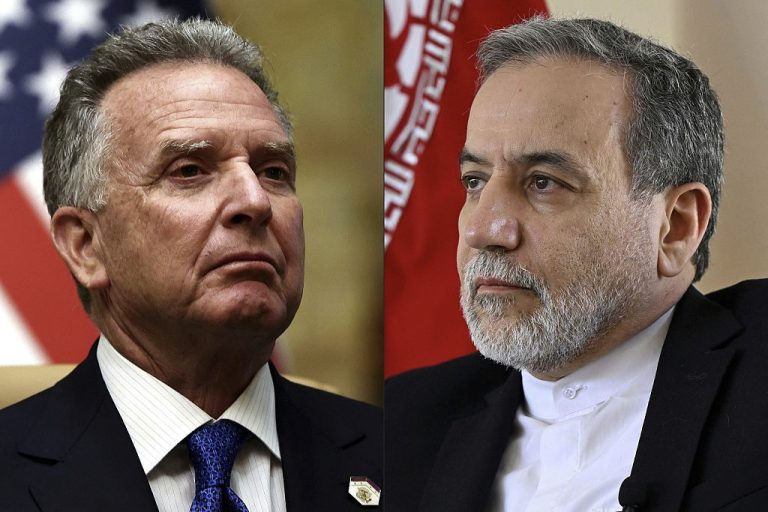
The resumption of diplomatic contact between Washington and Tehran in Muscat marks a pivotal yet deeply uncertain chapter in decades of nuclear brinkmanship. With both capitals projecting optimism while navigating massive domestic pressures and irreconcilable demands, the Oman-mediated discussions may reveal whether this round of engagement can transcend the familiar pattern of temporary truces followed by escalatory spirals.
Domestic Turmoil Reshapes the Negotiating Landscape
The diplomatic pause preceding the latest round was far from uneventful. Iran experienced its most severe wave of nationwide protests since the 1979 Islamic Revolution, with the regime responding through a heavily militarized crackdown that drew international condemnation. At the peak of this unrest, Washington assembled significant naval assets in waters near Iran, raising speculation about direct military intervention to bolster demonstrators. The scale of internal instability appears to have convinced at least portions of Tehran’s leadership that sustaining simultaneous confrontations—domestic repression and external standoffs—is untenable.
Critically, the initiative to restart negotiations originated from Tehran rather than Washington, following consultations with Moscow and regional capitals including Ankara. This sequencing is significant: Iran’s Supreme Leader reportedly conditioned his approval on the talks being framed as President Masoud Pezeshkian’s initiative, retaining their indirect format, and restricting the agenda exclusively to nuclear matters. Washington’s acceptance of these constraints signals a strategic calculation that incremental engagement outweighs the risks of diplomatic collapse.
Competing Agendas and the Scope Dilemma
The fundamental tension underlying the Muscat process concerns the breadth of what each side considers negotiable. Washington has pushed to expand discussions beyond enrichment activities to encompass Iran’s ballistic missile capabilities, its regional armed network spanning multiple countries, and what officials describe as “other regional issues”—diplomatic shorthand for normalization with Israel. Tehran has categorically rejected this broadening, insisting that nuclear enrichment remains the sole legitimate topic.
This disagreement echoes a structural problem that has plagued every diplomatic effort since the early 2000s. As the Bulletin of the Atomic Scientists recently argued, treating nuclear activities in isolation from Tehran’s broader strategic posture risks producing agreements that address symptoms rather than root causes. Iran’s stockpile of highly enriched uranium—which the Arms Control Association has documented as technically sufficient for weapons development—represents only one dimension of a multifaceted security challenge that encompasses proxy warfare, missile proliferation, and regional destabilization.
Tehran’s maximum opening offer reportedly includes ratifying the Additional Protocol of the Nuclear Non-Proliferation Treaty and adjusting implementation modalities—concessions that fall well short of Washington’s stated objectives but could provide a foundation for extended engagement.
Europe Sidelined, Russia Elevated
One of the most consequential shifts in the current diplomatic architecture is the effective exclusion of European powers from the negotiating framework. For nearly two decades, Britain, France, and Germany occupied central roles in nuclear diplomacy with Tehran, from the original E3 negotiations through the Joint Comprehensive Plan of Action concluded in 2015. Their absence from the current process represents a dramatic realignment of diplomatic equities.
This restructuring benefits Moscow, which has positioned itself as a potential facilitator capable of helping resolve thorny technical obstacles—particularly the disposition of Iran’s enriched uranium stockpile, which Russia could accept for transfer and storage. The European Council on Foreign Relations has noted that Europe’s marginalization creates both risks and opportunities, potentially freeing Brussels to pursue complementary diplomatic tracks while raising concerns about reduced leverage over any eventual agreement’s terms.
The involvement of regional powers alongside Russia and, to a lesser extent, China in encouraging Iranian restraint represents an unusually broad coalition of external pressure. This constellation of interests may help counterbalance hardline factions within Iran’s security establishment who continue to advocate for the confrontational doctrine associated with the late General Qassem Soleimani.
The Strategic Logic of Patience
Both negotiating parties appear to be pursuing parallel strategies of calibrated delay. For Washington, the maximum pressure sanctions campaign serves as both leverage and a holding mechanism. Combined with Iran’s internal fragmentation—including looming questions about the Supreme Leader’s succession, economic deterioration, and unresolved popular grievances—time may work in favor of those seeking Tehran’s fundamental strategic reorientation rather than merely a narrow nuclear accommodation.
Tehran’s own incentives for delay are equally apparent. Iranian strategists likely calculate that American midterm elections could constrain the administration’s diplomatic flexibility, and that sustained engagement without concessions buys valuable breathing space during a period of acute domestic vulnerability. The ongoing negotiations documented by the International Crisis Group reflect this dynamic, with both sides maintaining the appearance of diplomatic progress while positioning for contingencies.
The deeper analytical question—one that transcends the technical details of enrichment percentages and verification protocols—is whether any nuclear-focused agreement can meaningfully address the underlying challenge. Tehran’s transformation from a revolutionary state exporting ideology into a conventional nation-state pursuing standard geopolitical objectives would represent a generational shift that no single diplomatic instrument can achieve. Nuclear talks may function less as a vehicle for definitive resolution than as a stabilization mechanism, constraining the most dangerous possibilities while internal and external pressures gradually reshape Iran’s strategic trajectory.
An Uncertain Architecture Under Construction
The Muscat process joins a growing list of ambitious but incomplete diplomatic projects spanning from Gaza to Greenland. Its outcome hinges on variables that neither side fully controls: the durability of Iran’s domestic stability, the trajectory of factional politics within the regime, the sustainability of American diplomatic attention across multiple simultaneous initiatives, and the willingness of regional and global stakeholders to maintain coordinated pressure. Whether these talks produce a durable framework or merely another chapter in the recurring cycle of engagement and collapse will depend on whether both Washington and Tehran can move beyond the familiar choreography of nuclear diplomacy toward a more honest reckoning with the full scope of their adversarial relationship.
Original analysis inspired by Amir Taheri from Gatestone Institute. Additional research and verification conducted through multiple sources.