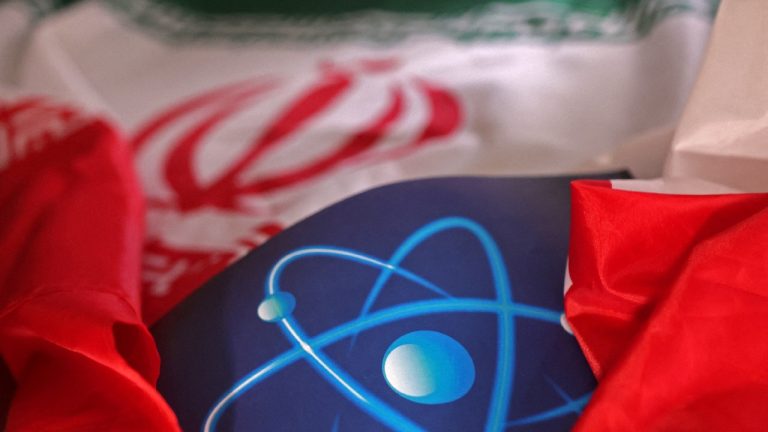
The persistent use of sanctions against Iran raises fundamental questions about whether these measures serve diplomatic objectives or other geopolitical interests entirely.
The Gap Between Intent and Outcome
Governments routinely deploy economic sanctions as a foreign policy tool, framing them as alternatives to military intervention. The theory underlying this approach assumes that financial pressure creates political leverage—that economic hardship forces leadership to alter behavior or abandon strategic objectives. However, this foundational assumption faces serious empirical challenges. According to research examining sanctions outcomes across multiple cases, the actual political consequences of sanctions rarely align with stated policy goals. The distinction between economic impact and political effectiveness proves critical: sanctions may devastate an economy while simultaneously failing to produce the behavioral changes policymakers demand.
The Iranian sanctions regime illustrates this fundamental disconnect. Multiple rounds of economic pressure targeting Tehran’s banking system, oil trade, and military capabilities have inflicted substantial costs on Iranian citizens and businesses. Yet the core objectives—denuclearization and abandonment of ballistic missile development—remain unachieved. The regime’s determination to advance its nuclear and conventional capabilities appears undiminished by decades of punitive measures, raising uncomfortable questions about the instrument’s actual purpose.
Measuring Success Versus Assessing Impact
Examining how political scientists define sanctions effectiveness reveals the conceptual confusion plaguing contemporary policy. When analysts and officials discuss whether sanctions “work,” they typically conflate two distinct phenomena: economic damage and political compliance. A sanctions regime can succeed brilliantly at the former while failing completely at the latter. Iran’s case demonstrates exactly this pattern—the economic devastation is undeniable, yet the diplomatic concessions Washington sought have not materialized.
The intensive pressure campaign that persisted over multiple administrations achieved one measurable result: collapsing Iran’s currency, restricting access to international markets, and creating acute shortages of essential imports. Treasury officials have explicitly framed this objective in blunt terms, publicly celebrating currency devaluation and economic contraction as intentional policy outcomes. This rhetorical shift—from claiming sanctions aim at behavioral change to acknowledging they aim at economic collapse—suggests a fundamental reorientation of American policy objectives.
Oil Exports and Sanctions Evasion Networks
Rather than curtailing Iran’s oil exports or preventing military advancement, decades of sanctions have incentivized the development of sophisticated evasion mechanisms. Tehran has constructed what analysts describe as a complex shadow fleet operating outside traditional maritime channels, using front companies, frequent flag changes, and informal financial networks to maintain petroleum sales. These networks have matured significantly, with evidence suggesting Iran continues exporting 1.3 to 1.6 million barrels daily despite restrictions nominally designed to prevent such sales.
This adaptation demonstrates an unintended consequence: sanctions regimes that prove too stringent for direct compliance can generate black markets and illicit shipping networks that ultimately prove more difficult to monitor and control than conventional trade relationships. The “ghost fleets” now operating represent billions in uncontrolled commerce, directly undermining the stated goal of financially constraining the Iranian government.
Military Capability and Nuclear Development
Recent military developments further undermine claims that economic pressure effectively constrains Iranian strategic ambitions. Following defensive strikes against Iranian nuclear facilities, policymakers claimed the facilities had been destroyed. However, independent assessments presented a markedly different picture—the damage setback Iranian enrichment capabilities by only several months while the regime’s broader nuclear program remained intact. Rather than producing evidence demonstrating the claimed destruction, officials dismissed assessments suggesting more limited damage and declined to release detailed accounting of results.
Meanwhile, observers noted that Iran’s missile forces appeared strengthened rather than weakened, with evidence suggesting Tehran had invested heavily in ballistic systems and integrated them more deeply into overall security architecture. The supposed beneficiaries of sanctions—those seeking to curtail Iranian military power—acknowledge that sanctions have demonstrably failed to achieve this objective. The rhetoric has therefore shifted toward describing sanctions as punishment rather than coercion, a subtle but important semantic transformation.
Humanitarian Costs and Civilian Suffering
Beyond the strategic failures, mounting evidence demonstrates that comprehensive sanctions impose severe humanitarian costs on civilian populations, restricting access to medicines, medical equipment, and essential imports. Studies examining sanctions’ humanitarian dimensions consistently document how restrictions on trade create shortages of life-saving medications and basic goods, with impacts falling disproportionately on vulnerable populations including children and the elderly.
The Iranian healthcare sector has experienced particular strain, with research documenting how sanctions-related currency collapse affects the cost of imported pharmaceuticals and medical devices. Civilian suffering under sanctions regimes often proves extensive even as the target regime’s military and political leadership maintains capacity to sustain operations. This disparity raises profound questions about whether economic warfare constitutes an appropriate policy instrument when it reliably immiserates populations while failing to achieve stated political objectives.
Unrest and Foreign Intervention
Recent developments suggest that rather than viewing sanctions primarily as coercive instruments, some policymakers and their external allies have begun weaponizing economic collapse itself. When large-scale internal unrest erupted following currency devaluation and inflation, foreign officials explicitly encouraged and attempted to coordinate with protesters. Intelligence agencies and their proxies provided material support to dissident movements, and media outlets reported that foreign actors supplied demonstrators with weapons intended to maximize casualties among regime security personnel.
This transformation from sanctions-as-coercion to sanctions-as-destabilization raises troubling questions about actual policy objectives. If the goal were behavioral change by government leadership, encouraging violent domestic upheaval and civil conflict seems counterproductive. But if the actual objective involves regime collapse and internal chaos, sanctions function as a preliminary step in a broader campaign of destabilization. The public rhetoric emphasizing nuclear negotiations masks a more ambitious underlying agenda.
The Question of Actual Intent
Academic examination of sanctions policy reveals a persistent pattern: these measures accomplish economic devastation reliably while failing to produce intended political outcomes with consistent frequency. The gap between stated objectives and actual consequences suggests either profound policy incompetence or deliberate misrepresentation of actual goals. Neither explanation is reassuring for those concerned about whether American foreign policy serves genuine national interests or primarily serves to advance the agendas of allied governments regardless of humanitarian costs.
The persistence of Iran sanctions despite evident policy failure demands explanation. If these measures neither prevent nuclear development nor curtail regional military activity—the official justifications—then their continuation suggests alternative motivations. Whether sanctions serve primarily as tools of ally appeasement, tests of international compliance with American demands, or components of broader regime change objectives remains an open question deserving serious analytical attention rather than acceptance of failed official narratives.
Original analysis inspired by Harrison Berger from The American Conservative. Additional research and verification conducted through multiple sources.