The transport of 1,150 metric tons of uranium yellowcake across one of the world’s most volatile regions represents far more than a logistical problem or a French-African dispute over mining rights. It symbolizes a fundamental reordering of the international system, where the pursuit of resource sovereignty and economic leverage increasingly overwhelms traditional mechanisms for managing dangerous materials and preventing proliferation. This case study reveals how strategic minerals have become flashpoints for geopolitical competition, and why conventional enforcement mechanisms are struggling to maintain order.
The Expropriation and Its Nationalist Framing
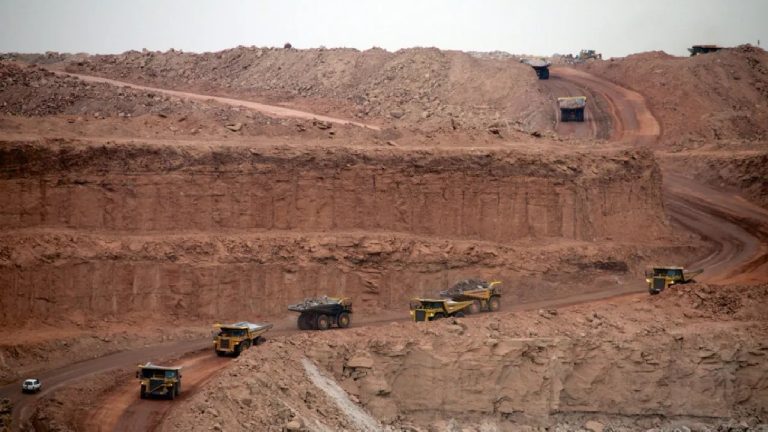
The dispute underlying this uranium movement began almost immediately after Niger’s military junta consolidated power in July 2023. The new government quickly identified strategic resource control as essential to establishing domestic legitimacy and reducing Western influence. In June 2025, Niger’s administration formally nationalized the Somair uranium mine previously operated by France’s Orano, a major multinational nuclear energy corporation, seizing approximately 1,150 metric tons of processed yellowcake uranium concentrate in the process.
The junta framed this expropriation in explicitly nationalist and sovereignty-centered terms. Officials presented the seizure as reclaiming a crucial national asset from colonial-era exploitation patterns, positioning resource extraction control as fundamental to economic independence. This rhetorical strategy resonates within post-colonial African political movements, where foreign corporate ownership of natural resources remains symbolically charged and politically vulnerable.
By November 2025, Niger’s head of state General Abdourahamane Tchiani publicly announced intentions to place the confiscated uranium on international markets, fundamentally rejecting both French legal claims and established international norms surrounding such transfers. Orano immediately protested the convoy movement as unlawful, noting that an international arbitration tribunal had ruled in September 2025 that the expropriation violated existing contractual obligations, yet this legal judgment proved inconsequential to the junta’s determination to proceed.
The Geopolitical Logic of Rule Breaking
What makes this situation especially revealing is the underlying calculation that enables such a brazen violation of international commercial law. Niger secured commitments from an external buyer—widely suspected to be Russia—before announcing its intention to export the uranium. This sequence demonstrates a critical feature of the contemporary international environment: when states believe they have secured alternative partnerships and economic relationships, compliance with established rules becomes optional rather than obligatory.
The Russian connection is itself significant. Russia signed a civil nuclear cooperation agreement with Niger in July 2025, positioning itself as a partner willing to engage with Niamey without the governance demands or regulatory scrutiny that Western partners typically impose. Additionally, Russia’s Uranium One Group reached a cooperation agreement with Niger’s state-owned Timersoi National Uranium Company in December 2025, creating an institutional framework for the transaction.
For Niger’s junta, the logic is straightforward: accepting Russian partnership provides both economic benefit and strategic insulation from Western pressure. When Beijing or Moscow proves willing to accept resource transfers without the enforcement mechanisms or governance requirements that Washington, Paris, or Brussels demand, the incentives for rule compliance collapse. A Nigerien official must weigh the abstract value of international law against the tangible benefits of securing a major buyer for a valuable commodity.
The Lethal Geography of Transport
The physical movement of radioactive material across contested territory introduces humanitarian dimensions that transcend standard commercial disputes. The convoy has remained staged at Niamey airport since late November 2025, with 34 trucks containing the yellowcake inventory awaiting departure authorization. The reason for this hesitation reveals the profound challenges facing any attempt to move these materials.
The optimal route through Benin toward the Port of Cotonou has become politically impossible. Relations between Niger and Benin deteriorated significantly after the junta closed their shared border in 2023, citing alleged French military presence on Beninese territory. Intelligence reports suggest that Niger’s junta may have supported a failed coup attempt in Benin in December 2025, with some sources indicating that Nigerien officials had begun preparing border infrastructure specifically to facilitate uranium transit through Benin had the coup succeeded.
The alternative terrestrial route presents catastrophic risks. Movement through Burkina Faso toward Togo would require crossing zones where jihadist insurgencies maintain operational control and conduct systematic attacks. The al-Qaeda-affiliated group Jama’at Nasr al-Islam wal al-Muslimin (JNIM) has conducted repeated attacks throughout the corridor between Niamey and the Burkina Faso border in 2025, and these groups have demonstrated evolving tactical sophistication, including experimentation with drone-delivered explosives.
An insurgent attack on a radioactive cargo convoy would produce cascading consequences. While low-grade yellowcake uranium has limited direct weaponizable applications and presents less acute proliferation risk than enriched nuclear materials, a security incident involving such materials would still constitute an international catastrophe. Leakage or dispersal into populated areas would exacerbate uranium pollution problems that already afflict Arlit and surrounding communities, where nearly 35 million tons of radioactive mining tailings remain uncovered and exposed to desert winds, creating long-term health hazards for over 100,000 residents.
The Air Transport Alternative and Its Complications
Given the insecurity of terrestrial routes, Russian planners have reportedly considered airlift operations. Satellite imagery and transport analysis suggest that Russia may have begun using its Antonov An-124 heavy lift aircraft to move uranium via Libya and Syria, establishing a logistical corridor that bypasses unstable land routes entirely.
However, this approach introduces different vulnerabilities. Repeated flights between Niamey and Mediterranean ports create detectable patterns of air traffic that could be monitored and potentially interdicted. The hazardous nature of airborne radioactive cargo, combined with the environmental and mechanical risks of repeated flights, makes this solution expensive, dangerous, and potentially traceable. Each flight requires multiple transits through contested airspace and exposes the cargo to potential attack during vulnerable takeoff and landing phases.
The strategic choice between dangerous land corridors and expensive, traceable aerial routes encapsulates the fundamental problem: there is no clean solution to moving these materials under current conditions. Every option carries unacceptable risks, yet the junta remains committed to proceeding because the economic incentives of monetizing the uranium exceed the risks of attempting the transfer.
The Collapse of Commercial Infrastructure as an Enforcement Mechanism
Should the uranium reach a port city—whether Lomé in Togo, Benghazi in Libya, or another Mediterranean location—it would encounter the remnants of the rules-based maritime commerce system that emerged in the post-World War II era. International uranium transport is heavily regulated under maritime law, requiring screening procedures, specialized insurance documentation, port-state control inspections, and compliance with multiple international conventions and standards.
These regulatory mechanisms represent the last functional barrier to successfully completing such a transfer. Port authorities, shipping companies, insurers, and financial institutions have developed shared interests in maintaining the integrity of international shipping and preventing sanctions evasion. These private and state actors can refuse services, deny berthing rights, or decline to provide the insurance documentation necessary for legitimate maritime transport.
Yet the effectiveness of this system depends critically on great power alignment and enforcement willingness. If Russia provides protected port access, covers insurance through Russian or third-country intermediaries, and redirects the shipment through sympathetic coastal states, the commercial regulatory system becomes less a barrier than a friction point to be circumvented through political patronage.
The Trump Administration and Selective Global Engagement
The incoming Trump administration’s National Security Strategy, released in late 2025, explicitly identifies strategic mineral access and supply chain security as core national interests. The administration simultaneously emphasizes selectivity in global engagement, favoring transactional relationships over long-term institutional commitments and reserving intensive diplomatic or military resources for regions deemed strategically vital.
This creates a profound asymmetry in enforcement. The Trump administration has pursued aggressive action against Venezuelan shipping assets and authorized military operations against political targets in the Western Hemisphere—demonstrations of willingness to enforce sanctions through coercive means when regional interests appear threatened. By contrast, the Sahel region receives minimal sustained American diplomatic attention or security engagement beyond counterterrorism training relationships.
This selective enforcement pattern signals to regional actors that some violations of international norms will trigger robust American response while others will be tolerated or ignored. For Niger’s junta and its Russian patrons, the message is clear: the United States will not prioritize enforcement of uranium transport regulations in West Africa, particularly when doing so would require sustained diplomatic pressure or confrontation with a great power competitor.
Lessons for the Fragmented International Order
The uranium convoy’s journey—whether it ultimately succeeds or fails—reveals fundamental truths about the contemporary geopolitical environment. Resource competition increasingly supersedes other considerations in state decision-making. When powerful external actors demonstrate willingness to work with rule-breaking regimes and provide the economic or security benefits that rule compliance fails to deliver, governments rationally choose to violate established norms.
The international regulatory systems developed during the Cold War and expanded through the nonproliferation regime still exist operationally, yet they depend on great power consensus and willingness to enforce compliance. When that consensus fractures and enforcement becomes selective, the systems lose their binding character and devolve into merely aspirational commitments.
For the United States and its Western allies, this presents a strategic dilemma. Responding effectively would require sustained diplomatic engagement, coordination with regional actors, pressure on sympathetic port states, and potentially enforcement actions that might trigger Russian retaliation in other theaters. The administration’s stated preference for transactional engagement and avoidance of costly, open-ended commitments makes comprehensive response unlikely.
The deeper lesson extends beyond uranium or the Sahel. As great power competition intensifies and the post-Cold War order fragments further, middle powers and even smaller states recognize that rule-breaking carries diminishing penalties when alternative partnerships exist. The international system is not quietly collapsing; rather, it is visibly being rewritten through transactions like this uranium convoy, where leverage and practical interest determine outcomes more decisively than established rules or legal precedent.
Original analysis inspired by Steven M. Radil and Raphael Parens from Foreign Policy. Additional research and verification conducted through multiple sources.