The recent civil unrest in Iran has prompted renewed discussions about potential military intervention from the United States, yet policymakers must carefully consider whether such action would achieve the promised security outcomes or instead accelerate regional collapse. History demonstrates that military adventurism in the Middle East frequently produces unintended consequences that dwarf initial objectives, making the current moment a critical juncture for strategic reassessment rather than confrontational escalation.
Understanding Iran’s Internal Crisis and External Implications
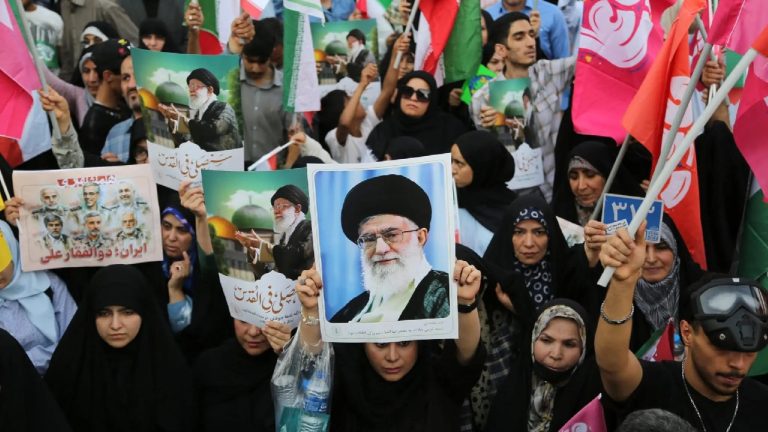
The Iranian government’s response to recent protests has been characterized by infrastructure shutdowns and suppression tactics rather than substantive political reform. Security forces disrupted communications networks and curtailed media coverage to limit coordination among demonstrators, while simultaneously neutralizing thousands of communication satellites that external actors had reportedly smuggled into the country. Despite the severity of internal security operations, however, the situation has not yet triggered the cascading state collapse that military intervention advocates envision.
The complexity of Iran’s situation demands recognition that countries experiencing severe internal upheaval often stabilize through mechanisms that defy Western expectations. Authoritarian structures, while repressive, possess institutional resilience that makes their sudden dismantling extraordinarily dangerous. The Iranian security apparatus remains unified despite recent pressures, and ideological commitment to preserving state sovereignty runs deep within military hierarchies—factors that fundamentally distinguish Iran from scenarios where rapid regime transitions appeared feasible.
The Historical Record on Military Intervention and Its Aftermath
Policymakers considering Iranian military intervention should confront the documented consequences of regime-change operations in the broader Middle Eastern context. The 2003 invasion of Iraq, which promised rapid regime transition and democratic consolidation, instead produced prolonged sectarian conflict, state fragmentation, and a humanitarian catastrophe from which the region has never fully recovered. More recent interventions demonstrate similar patterns: Libya’s 2011 NATO-led campaign succeeded in toppling the existing government but created a protracted power vacuum that enabled civil war, human trafficking networks, and ongoing instability.
Syria presents an equally instructive case where partial interventions—covert weapons transfers, proxy support, and calibrated military operations totaling nearly one billion dollars annually—prolonged conflict without achieving strategic objectives. These experiences underscore a crucial reality: military operations designed to facilitate regime change frequently generate precisely the chaos they were intended to prevent. The destruction of institutional capacity, weaponry dispersal, and sectarian mobilization that characterize post-intervention environments prove far more destabilizing than the original autocratic order.
Iran’s Scale and Complexity Distinguish It From Past Interventions
A critical distinction separates Iran from previous intervention contexts: its geopolitical significance and territorial magnitude. With a population exceeding ninety million inhabitants—more than three times Iraq’s population at the time of invasion—Iran possesses sophisticated military infrastructure, diversified international relationships, and strategic depth that would make intervention exponentially more costly. Regional neighbors including Saudi Arabia, Qatar, Turkey, and the United Arab Emirates have quietly urged restraint on military operations, citing concerns about destabilization that would inevitably cross their own borders.
The prospect of Iranian state collapse would create cascading security threats: uncontrolled weapons proliferation, refugee flows affecting multiple neighboring nations, potential nuclear facility instability, and power vacuums exploitable by extremist organizations. Unlike Libya’s 2011 scenario—where NATO intervention involved a nation with one-tenth Iran’s current population—or Kosovo and Bosnia operations where external powers could sustain indefinite stabilization missions, Iran’s scale makes such extended commitment unsustainable.
The Challenge of Identifying and Supporting Viable Successors
A fundamental obstacle confronts any regime-change strategy: the absence of credible, unified opposition forces capable of governing a country of Iran’s complexity. Decades of authoritarian suppression have prevented the emergence of institutional alternatives comparable to those that enabled democratic transitions in other contexts. Unlike Venezuela’s recent experience—where senior officials proved willing to abandon the existing leadership structure—Iranian security establishments demonstrate tight ideological cohesion and personal loyalty to supreme leadership that defies external manipulation or incentives.
Previous military strikes against Iranian targets have not produced the operational results advertised. The June 2025 bombing campaign targeting Iranian military facilities generated psychological shock to leadership but did not substantively degrade Iran’s capabilities or resolve underlying strategic tensions. Evidence suggests that subsequent Iranian military reconstruction has proceeded despite external pressure, and regime decision-makers remain unconvinced that Western security guarantees or post-intervention governance arrangements would serve national interests more effectively than maintaining current institutional structures.
Escalatory Dynamics and Regional Conflict Expansion
Military escalation against Iran carries severe risks of uncontrolled expansion that would extend beyond direct bilateral confrontation. Iran’s military possesses demonstrated operational capability to target oil infrastructure across the Middle East and disrupt maritime commerce through the Strait of Hormuz—actions with potentially catastrophic implications for global energy markets. Moreover, while Iran’s network of regional proxy organizations has been substantially degraded through recent Israeli operations in Gaza and Lebanon, remnant forces including Houthi elements, Iraqi militia factions, and Hezbollah contingents retain capacity for coordinated retaliation against American bases and allied facilities throughout the region.
The dynamics of escalation create particular vulnerability for decision-makers seeking rapid, decisive military outcomes. Initial strikes may encourage proponents to demand deeper intervention when targets survive, proliferate, or reconstitute. This pattern of incremental expansion—whereby initial limited operations generate pressure for expanded missions—characterized both Iraq and Syria interventions, ultimately consuming vastly greater resources than planners initially envisioned.
The Nuclear Dimension and Long-Term Strategic Consequences
Iran’s nuclear program represents another critical consideration that complicates intervention calculus. Current monitoring efforts by international agencies face access restrictions and verification challenges that would intensify dramatically in the context of military hostilities. Regime collapse scenarios risk creating conditions where nuclear materials remain unsecured, reactor facilities become vulnerable to sabotage, or succession struggles involve factions with widely divergent security orientations. The prospect of a post-conflict Iran unencumbered by institutional constraints and potentially governed by extremist elements with nuclear capabilities represents a catastrophic outcome that defensive measures cannot adequately address.
Alternative Strategic Approaches and Realistic Support Options
Rather than pursuing regime change through military intervention, American and European policymakers could employ alternative instruments to influence Iranian political developments while avoiding escalatory spirals. Direct sanctions targeting specific officials responsible for human rights violations, sophisticated information warfare to counteract communication blackouts, financial support for humanitarian organizations documenting abuses, and coordinated diplomatic pressure through international forums all represent viable approaches that impose costs on repressive governance without the catastrophic risks inherent in military intervention.
These alternatives acknowledge a fundamental reality: Western military power cannot reliably determine Iranian political outcomes, particularly given the nationalist sentiment and historical anti-foreign sentiment that pervades Iranian political culture. Any externally-imposed regime would confront immediate delegitimacy as a foreign creation, a problem that cannot be overcome through military dominance. Conversely, indigenous political movements supported indirectly through economic and informational mechanisms may prove more durable and authentically representative of Iranian preferences.
Conclusion: Strategic Humility and Long-Term Interests
The temptation to pursue dramatic regime change through military means reflects historical patterns of overconfidence in military instruments’ political utility. Yet the documented experiences of Iraq, Libya, and Syria demonstrate that destroying existing governmental structures frequently produces worse outcomes than the objectionable status quo interventions purport to resolve. Iran’s scale, complexity, and strategic significance make this calculus even more consequential.
A strategic approach grounded in realistic assessment of intervention risks does not require abandonment of support for Iranian civil society or opposition to governmental human rights abuses. Rather, it demands recognition that American military action represents one instrument among many—and often a counterproductive one—for advancing long-term interests in regional stability, Iranian political development, and prevention of extremism. Pursuing sustainability over spectacular short-term victories represents the most responsible course for policymakers evaluating options in this critical moment.
Original analysis inspired by Marco Carnelos from Middle East Eye. Additional research and verification conducted through multiple sources.