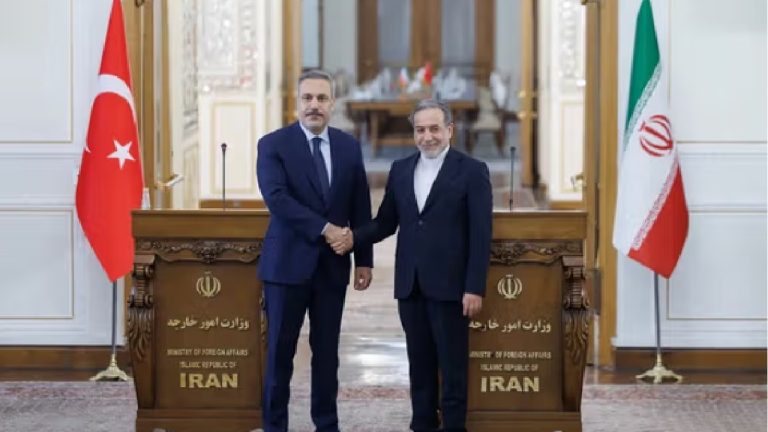
Turkish Foreign Minister Hakan Fidan’s recent high-stakes visit to Tehran marks a pivotal shift in the geopolitical landscape of the Middle East. Against a backdrop of escalating regional instability—defined by the collapse of traditional security orders and the aggressive expansionism of state actors—Türkiye and Iran are moving beyond transactional diplomacy toward a comprehensive structural partnership. The talks, which included meetings with Iranian President Masoud Pezeshkian and Foreign Minister Abbas Araghchi, were not merely preparatory for the upcoming High-Level Cooperation Council but represented a concerted effort to integrate Iran into a “regional solutions for regional problems” framework.
Economic Integration as a Strategic Buffer
At the heart of this rapprochement lies a mutual recognition that economic interdependence is the most effective buffer against external shocks. The two nations have recommitted to an ambitious trade volume target of $30 billion, a goal that has long been aspirational but now appears increasingly necessary. The discussions in Tehran prioritized the removal of non-tariff barriers and the modernization of border infrastructure, including the opening of a new consulate in Van to facilitate smoother logistics.1
Crucially, energy cooperation has emerged as the linchpin of this economic strategy. Ankara has signaled its intent to extend existing natural gas contracts with Tehran, ensuring energy security for Türkiye while providing Iran with a vital economic lifeline amidst ongoing Western sanctions. furthermore, the implementation of the gas swap deal involving Turkmenistan represents a significant geopolitical maneuver. By utilizing Iran’s infrastructure to transport Turkmen gas to Türkiye and Europe, Ankara is actively integrating Tehran into the East-West energy corridor, effectively countering efforts to isolate the Islamic Republic.2
The Zangezur Dilemma and the “Trump Corridor”
A significant portion of the diplomatic engagement focused on addressing Iran’s deep-seated anxieties regarding the Zangezur Corridor. Often referred to in Tehran as the “Trump Corridor,” this transport route connecting Azerbaijan to its Nakhchivan exclave has been viewed by Iranian strategists as a potential tool for encirclement and a threat to their border with Armenia.3 The intensification of these fears followed the 12-day war involving Israel, which Tehran perceived as part of a broader reconfiguration of the region’s security architecture.
Türkiye’s diplomatic approach has been to reframe the corridor not as a threat, but as a vehicle for shared prosperity. By emphasizing a “balanced and inclusive” architecture, Ankara is working to convince Tehran that the corridor can serve Iranian interests if the region remains stable. This aligns with Türkiye’s broader doctrine that regional disputes require local ownership, reducing the pretext for extra-regional intervention. The convergence of views on Syria’s territorial integrity, reiterated by Minister Araghchi, signals that this message of mutual security is beginning to resonate.
A United Front Against Expansionism
The most immediate driver of this aligned strategic vision is the shared perception of Israel as the primary threat to regional stability.4 Following the collapse of the Syrian regime in the December 2024 revolution, the subsequent vacuum has been exploited by aggressive military posturing. Both Fidan and Araghchi identified Israel’s operations in Gaza, Lebanon, and Syria as the “number one security threat,” necessitating a coordinated response.5
The urgency of this coordination is underscored by recent military escalations, including reported Israeli airstrikes on Beirut that violated the November 2024 ceasefire. The simulation of airstrikes on Iran via Iraqi airspace has further solidified the view in both Ankara and Tehran that passive defense is no longer sufficient. By harmonizing their stance—supporting the political integrity of post-revolution Syria and demanding accountability for actions in Gaza—the two powers are attempting to create a diplomatic shield against further territorial fragmentation in the Levant.
Securing the Flanks: Terrorism and Migration
Beyond state-level threats, the talks addressed the chronic challenges posed by non-state actors and irregular migration.6 Türkiye’s “Terror-free Türkiye” initiative, which has seen significant successes against the PKK, requires sustained cooperation from Tehran to prevent cross-border movements of disbanded militant groups. The commitment from Iranian officials to support these counter-terrorism efforts marks a maturing of security ties that have historically been marred by mistrust.
Simultaneously, the management of irregular migration, particularly from Afghanistan, remains a critical area of cooperation.7 As both nations host massive refugee populations, they are exploring joint mechanisms to manage these flows, treating them as a shared humanitarian and security responsibility rather than a point of contention. This functional cooperation, alongside the presence of Saudi diplomats in Tehran during Fidan’s visit, points to a broader trend: the Middle East is slowly but steadily constructing a new security architecture defined by integration, dialogue, and the exclusion of destabilizing external influences.
Original analysis inspired by Hursit Dingil from TRT World. Additional research and verification conducted through multiple sources.