
Tag: Middle East

A close-up of Donald Trump speaking at a summit table with a "United States" nameplate and a small American flag in front of him

Middle East Strategic Reorientation: From Direct Engagement to Containment

The 2025 National Security Strategy marks a significant shift in U.S. policy towards the Middle East, transitioning from extensive political and military involvement to a limited engagement prioritizing energy security and hindering regional adversaries. This change prompts important inquiries regarding the alignment of the new assumptions with the actual dynamics of the region.

Read More »
Donald Trump sitting at his desk in the Oval Office, speaking to a delegation of officials seated across from him

Damascus Gains International Legitimacy Through White House Visit Yet Internal Challenges Persist

Ahmed al-Sharaa’s meeting with President Trump on November 10 marked a significant diplomatic achievement for Syria, resulting in the removal of UN Security Council sanctions and a suspension of the Caesar Act for six months. However, consolidating this international recognition domestically is challenging due to Kurdish forces’ resistance to integration, demands for autonomy from Druze leaders, and Israeli military expansion in southern Syria.

Read More »
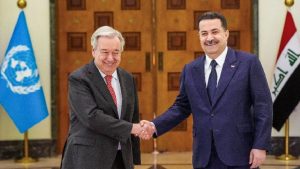
United Nations Secretary-General António Guterres shaking hands with Iraqi Prime Minister Mohammed Shia' al-Sudani in front of UN and Iraqi flags

Regional Powers Position Mediation Capacity as Alternative to Civilizational Conflict Paradigm

UN Secretary-General António Guterres’s visits to Saudi Arabia, Oman, and Iraq mark a potential shift from external crisis management to regional diplomatic leadership, particularly highlighted by the formal closure of UNAMI after 22 years. This development challenges Samuel Huntington’s “clash of civilizations” framework by illustrating how culturally connected states can effectively mediate conflicts that hinder international institutions.

Read More »